Content Menu
● Gas vs Electric Golf Cart: Quick Comparison
● Purchase Price and Total Ownership Cost
>> Compare Equivalent Specifications
>> Calculate Energy Costs Using Local Rates
● Range, Charging, and Daily Availability
>> Gas Golf Cart Range vs Electric Golf Cart Range
>> Size the Battery Around the Working Route
>> Treat Charging as Part of the Vehicle System
● Maintenance and Battery Replacement
>> Electric Does Not Mean Maintenance-Free
● Performance: Hills, Payload, Speed, and Braking
>> Which Golf Cart Is Better for Hills?
>> Payload Matters More Than Seat Count
>> Faster Is Not Necessarily Better
● Noise, Emissions, Weather, and Storage
● Match the Powertrain to the Application
● Three Checks That Improve Fleet Purchasing Decisions
>> 1. Run a Loaded Route Acceptance Test
>> 2. Measure Availability, Not Just Range
>> 3. Audit Supplier Support and Compliance
● Choosing a Customized Electric Golf Cart with BorCart
>> Is a gas or electric golf cart cheaper to own?
>> How long do electric golf cart batteries last?
>> Can an electric golf cart handle steep hills?
>> How much does it cost to charge an electric golf cart?
>> Are gas golf carts better for farms?
>> Can I drive either type on public roads?
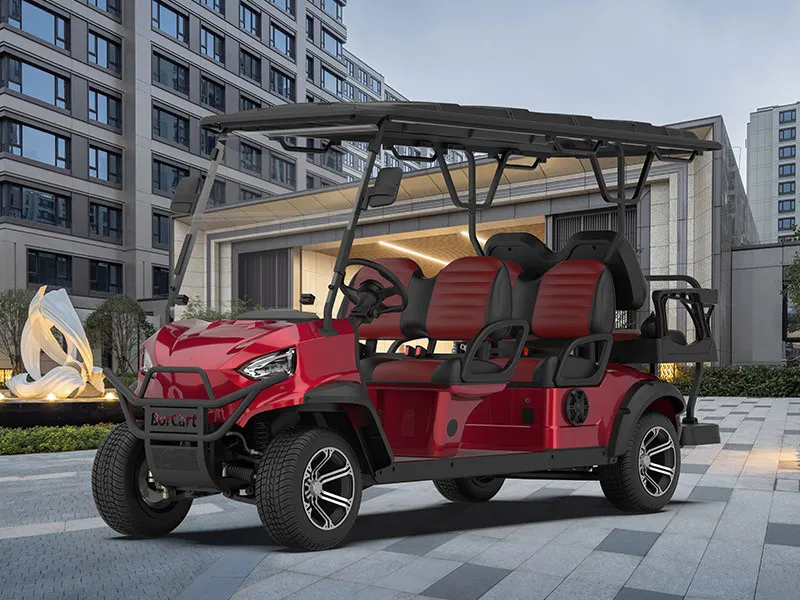
Choosing between a gas vs electric golf cart starts with one practical question: what must the vehicle accomplish every day? Electric carts suit predictable routes, overnight charging, and noise-sensitive environments. Gas carts remain useful where operating hours are long and electrical access is limited.
At Guangzhou BorCart Electric Vehicle Co., Ltd., our perspective comes from 26 years in four-wheel low-speed electric vehicle development, manufacturing, and customization. We focus on electric solutions, but a responsible comparison must acknowledge where gasoline still works.
This guide compares costs, range, batteries, performance, and fleet planning to help golf courses, resorts, distributors, and commercial operators make a defensible purchasing decision.
Gas vs Electric Golf Cart: Quick Comparison
| Buying factor | Gas golf cart | Electric golf cart |
|---|---|---|
| Energy source | Gasoline engine | Battery-powered motor |
| Best operating pattern | Extended use with limited charging access | Predictable routes with scheduled charging |
| Replenishing energy | Quick refueling | Charging time depends on battery and charger |
| Routine servicing | Engine, fuel system, drivetrain, and chassis | Battery system, electrical components, drivetrain, and chassis |
| Noise | Engine and exhaust noise | Generally quieter, but not silent |
| Local emissions | Produces exhaust | No tailpipe exhaust |
| Main ownership uncertainty | Fuel, engine condition, and service costs | Battery condition and replacement cost |
| Hill performance | Depends on engine, gearing, and load | Depends on motor, controller, battery, gearing, and load |
| Customization priority | Fuel access and task suitability | Battery capacity, charging, payload, and task suitability |
The best choice is the vehicle that completes your busiest realistic shift safely—not the one with the most impressive brochure figure.
Purchase Price and Total Ownership Cost
Compare Equivalent Specifications
A gas golf cart is not automatically cheaper, and an electric golf cart is not automatically more economical overall.
Compare vehicles with equivalent seating, payload, braking equipment, accessories, warranty coverage, and delivery terms. For electric models, confirm whether the quotation includes batteries and a compatible charger.
For international procurement, add freight, duties, destination compliance, spare parts, and local service arrangements.
A low factory price can become expensive if replacement components are difficult to obtain.
Calculate Energy Costs Using Local Rates
The following example is illustrative, not a BorCart performance claim or a current national price average.
Assume:
- Annual driving: 3,000 miles.
- Gasoline consumption: 45 mpg.
- Gasoline price: $4.00 per US gallon.
- Electric consumption measured at the outlet: 0.15 kWh per mile.
- Electricity price: $0.20 per kWh.
| Energy calculation | Gas cart | Electric cart |
|---|---|---|
| Annual energy requirement | Approximately 66.7 gallons | 450 kWh |
| Annual energy cost | Approximately $267 | $90 |
| Five-year energy cost | Approximately $1,333 | $450 |
The gasoline efficiency is a published Yamaha estimate; the other figures are scenario assumptions. Measuring electricity at the outlet includes charging losses.
Here, electricity saves approximately $177 annually. If the electric vehicle costs $2,000 more, energy savings alone would take over 11 years to recover that premium.
That is why total ownership cost matters more than charging cost alone.
Include purchase price, financing, maintenance, charging infrastructure, battery replacement, downtime, and eventual resale value.
Range, Charging, and Daily Availability
Gas Golf Cart Range vs Electric Golf Cart Range
Gas carts can offer substantial range between refueling stops. Yamaha publishes a 5.8-gallon tank and estimated 45 mpg for its Drive² PTV QuieTech EFI. Multiplying those figures gives approximately 261 miles theoretically, not a guaranteed working range.
Electric range is equally dependent on conditions. Yamaha’s 2026 fleet brochure lists 38 miles for its PowerTech Li under flat-track conditions.
Neither figure describes every golf cart. Passenger weight, hills, tires, speed, accessories, temperature, and battery condition all affect results.
For commercial purchasing, ask for test conditions before comparing advertised mileage.
Size the Battery Around the Working Route
Start with daily distance and energy consumption, then add an operating reserve.
For example, a 24-mile route using an assumed 0.15 kWh per mile requires 3.6 kWh. Adding a 25% planning allowance increases that requirement to 4.5 kWh of usable energy.
Nominal battery capacity and usable capacity are not necessarily identical.
Ask the supplier to explain discharge limits, reserve capacity, and expected performance as the battery ages.
Treat Charging as Part of the Vehicle System
Charging time depends on the energy being replaced, charger output, temperature, and charging controls.
Replacing 4.5 kWh with an average 1.5 kW reaching the battery takes approximately three hours before allowing for charging taper or interruptions.
For fleets, verify electrical capacity before ordering. Twenty chargers drawing 1.5 kW each could represent a simultaneous 30 kW load.
A qualified electrician should assess circuits, protection, installation conditions, and load management.
Maintenance and Battery Replacement
What Gas Golf Carts Need
Gas vehicles require engine-related servicing alongside normal chassis maintenance:
- Engine oil changes.
- Air filter inspection or replacement.
- Spark plug servicing.
- Fuel-system checks.
- Drive-belt inspection where applicable.
- Tire, brake, steering, and suspension checks.
Service intervals depend on the model and operating conditions. Dusty agricultural routes may require different attention from paved resort paths.
Electric Does Not Mean Maintenance-Free
Electric carts eliminate engine oil, spark plugs, and gasoline-system servicing. However, brakes, tires, suspension, cables, connectors, and drivetrain components still require inspection.
Battery chemistry makes a significant difference.
| Battery type | Main advantage | Main consideration |
|---|---|---|
| Flooded lead-acid | Established technology; potentially lower initial cost | Watering, ventilation, corrosion control, and charging discipline |
| AGM | No routine watering | Compatible charging and manufacturer-specific care remain necessary |
| Lithium-ion | No watering; often lighter than comparable lead-acid systems | Battery management, temperature limits, warranty, and replacement support |
Trojan’s guidance specifies distilled water for flooded batteries, normally added after charging. If plates are exposed, add only enough water to cover them before charging.
Lithium removes watering tasks, not the need for inspections.
Before purchasing, obtain a written battery replacement quotation and warranty terms. Warranty duration is not a guaranteed service life.
Performance: Hills, Payload, Speed, and Braking
Which Golf Cart Is Better for Hills?
Neither power source wins automatically.
Electric motors can provide strong low-speed torque, but sustained climbing depends on the complete system. Battery current limits, controller settings, motor temperature, gearing, traction, and vehicle weight all matter.
Gas performance likewise depends on engine output, transmission behavior, gearing, and cooling.
Do not compare an electric motor’s continuous rating directly with an engine’s peak horsepower and assume that settles the question.
Request a loaded demonstration on your actual route, including repeated climbs.
Payload Matters More Than Seat Count
A six-seat vehicle does not necessarily have adequate capacity for six adults, luggage, and added equipment under every configuration.
Verify:
- Rated payload and gross vehicle weight.
- Cargo-bed capacity.
- Towing limits, if approved.
- Loaded climbing capability.
- Braking and parking-brake performance.
- Effects of accessories and modifications.
For patrol vehicles, radios, lighting, enclosures, and tools affect both weight and energy demand.
Faster Is Not Necessarily Better
Maximum speed is model-specific, not determined solely by gas or electric power.
Busy resorts and pedestrian areas often benefit more from controlled acceleration, predictable braking, and appropriate speed limits than from higher top speed.
Noise, Emissions, Weather, and Storage
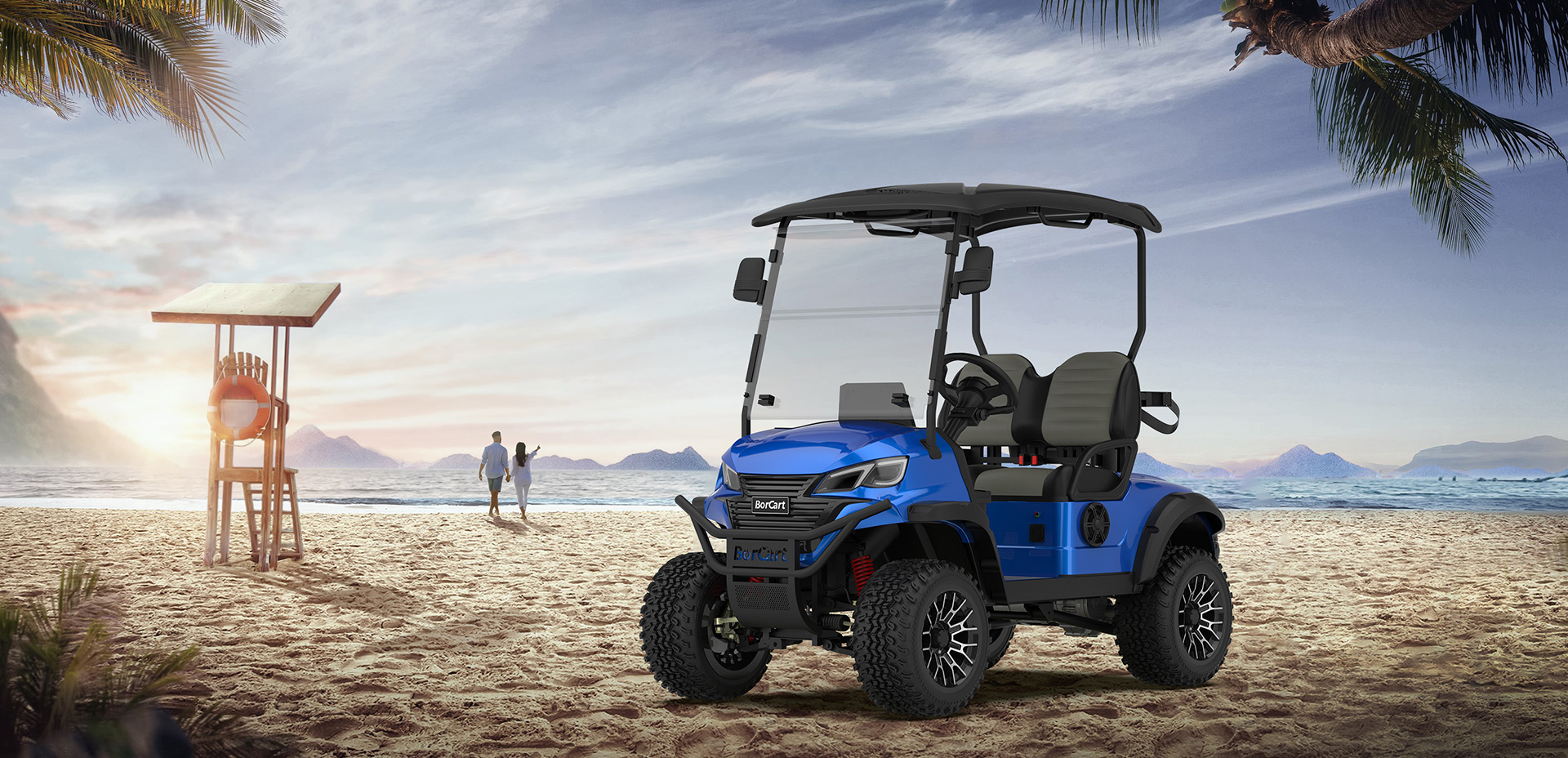
Electric golf carts generally create less propulsion noise, making them attractive around guest rooms, residential areas, and early-morning golf operations.
They are not silent. Tires, gears, reversing alarms, and road surfaces remain audible. Quiet operation also makes pedestrian awareness important.
Electric carts produce zero tailpipe emissions, but that does not mean zero environmental impact. Electricity generation, battery manufacturing, and end-of-life handling remain relevant.
Gas vehicles introduce exhaust and fuel-handling requirements. Keep refueling and operation consistent with manufacturer instructions and site safety procedures.
Cold weather also requires planning. Trojan specifies that certain lithium products temporarily disable charging below 32°F (0°C). Other systems may use different limits or heating provisions.
Always follow the installed battery’s instructions. Neither gas nor electric carts should be stored for months without preparation.
Match the Powertrain to the Application
| Application | Usually worth prioritizing | Decision-changing factor |
|---|---|---|
| Golf course | Electric | Charging availability and busiest-day utilization |
| Resort or hotel | Electric | Quiet operation, passenger comfort, and luggage capacity |
| Scenic attraction | Electric | Route length, gradients, and turnaround windows |
| Campus patrol | Electric | Shift duration and accessory demand |
| Remote agricultural property | Either | Charging access, terrain, payload, and repair support |
| Continuous multi-shift work | Site-specific assessment | Refueling speed versus charging opportunities and spare vehicles |
My purchasing principle is simple: choose the operating system first, then the powertrain.
A remote property without dependable electricity may reasonably choose gas. A hotel with overnight parking and short shuttle loops has a different problem to solve.
Three Checks That Improve Fleet Purchasing Decisions
1. Run a Loaded Route Acceptance Test
Before approving a fleet order:
- Define the busiest normal route.
- Load the vehicle with representative passengers or cargo.
- Record distance, temperature, gradients, and stops.
- Measure fuel consumed or electricity drawn during recharge.
- Repeat enough cycles to reveal charging or thermal constraints.
- Confirm braking, comfort, and remaining operating reserve.
This produces more useful evidence than an unloaded demonstration around a showroom.
2. Measure Availability, Not Just Range
A cart with ample range can still disrupt operations if charging access is poorly organized.
Consider a hypothetical resort with 12 vehicles and daily overnight parking. Electric operation may fit naturally if all vehicles can recharge safely.
A different site running vehicles almost continuously may need scheduled charging, spare units, or another powertrain arrangement.
These are planning examples, not documented BorCart customer results.
Track missed trips, charger faults, maintenance hours, and vehicle availability during a pilot.
3. Audit Supplier Support and Compliance
Request a procurement package covering:
- Battery chemistry, usable capacity, and management protections.
- Charger specifications and destination electrical compatibility.
- Written vehicle and battery warranties.
- Maintenance manuals and wiring diagrams.
- Spare-parts availability and diagnostic support.
- Applicable testing and destination-market documentation.
A golf cart is not automatically road-legal.
In the United States, low-speed vehicle classification includes specific speed, wheel-count, and weight criteria. Equipment compliance and state or local operating rules also matter. Reaching 25 mph alone does not establish eligibility.
Choosing a Customized Electric Golf Cart with BorCart
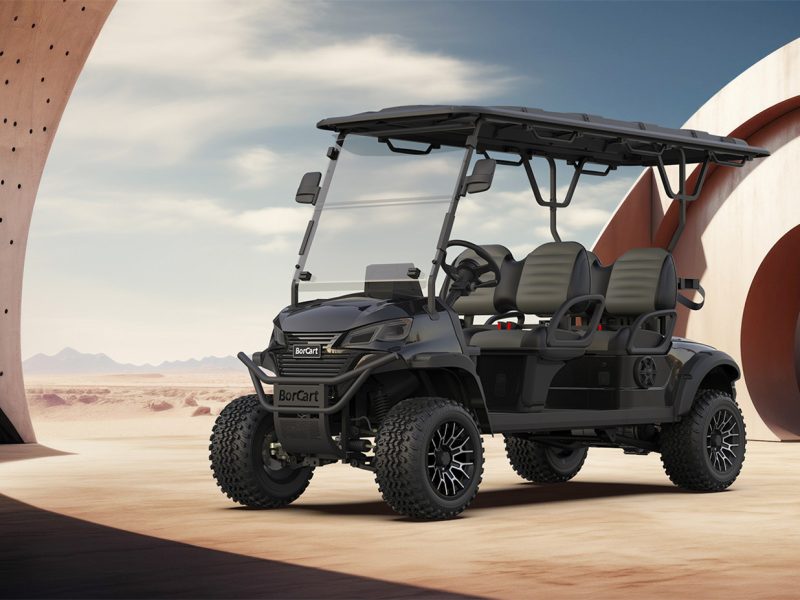
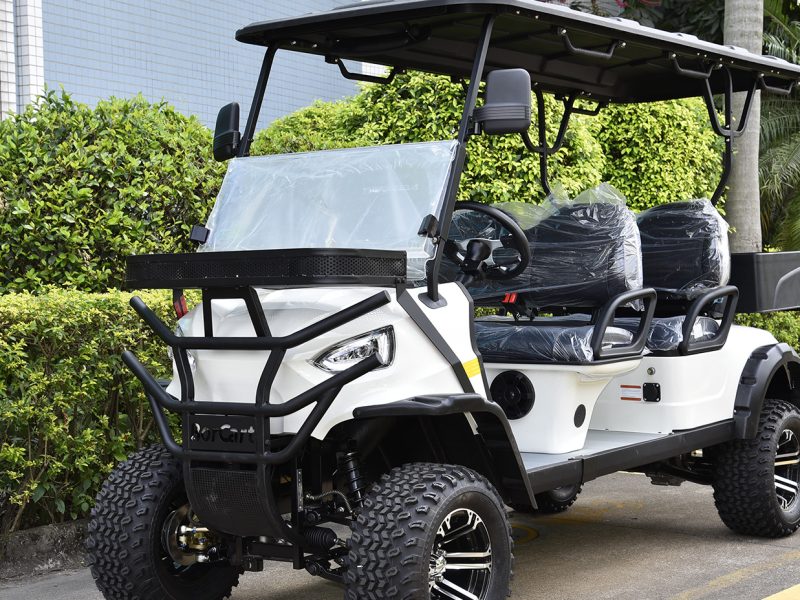
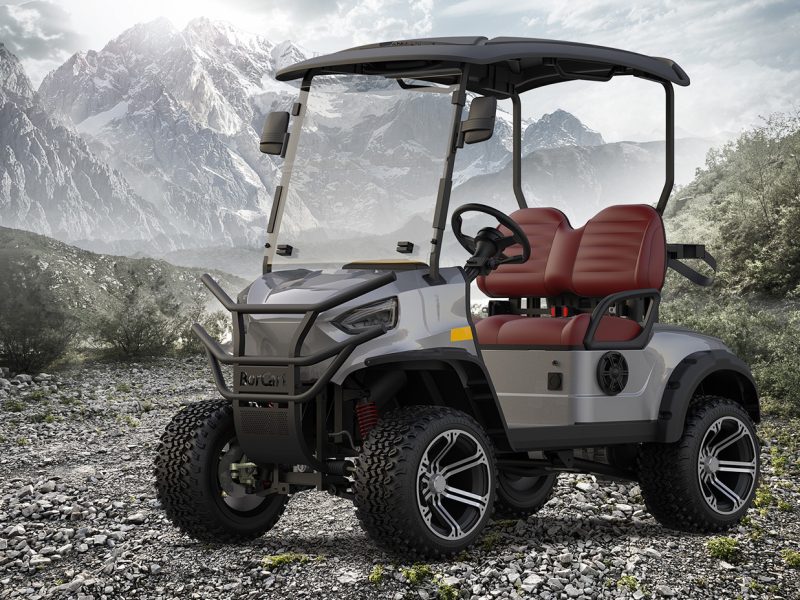
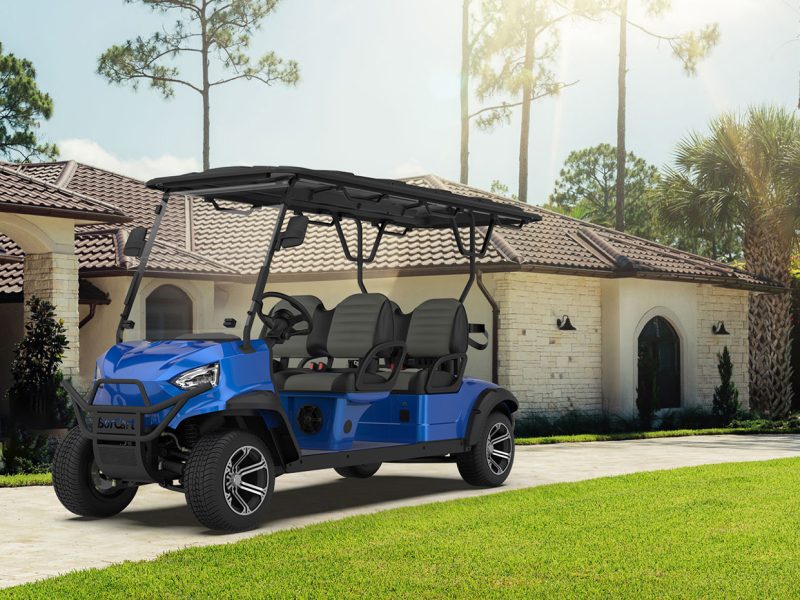
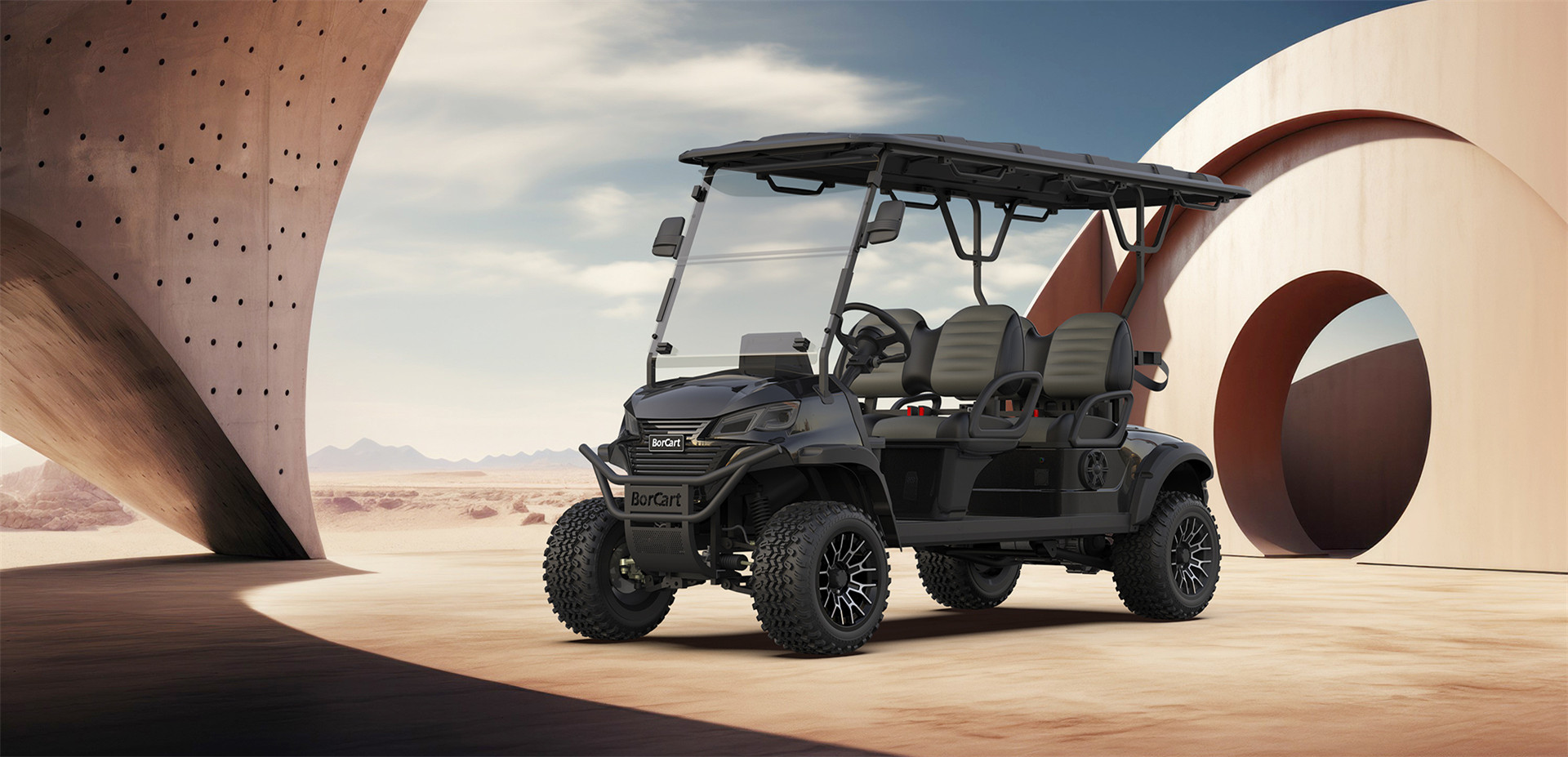
BorCart develops and manufactures electric golf carts, sightseeing buses, cargo vehicles, patrol vehicles, and multipurpose work vehicles, with OEM/ODM customization for different operating environments.
Customization should begin with the duty cycle—not just colors or seating layout.
For a meaningful proposal, provide daily mileage, maximum load, steepest gradient, operating temperature, charging windows, destination market, and required accessories.
Our electric-vehicle focus informs this recommendation, but it does not make electric the answer to every application.
Contact Guangzhou BorCart Electric Vehicle Co., Ltd. with your route and fleet requirements to request a configuration proposal, an itemized quotation, and an agreed acceptance-test plan.
Frequently Asked Questions
Is a gas or electric golf cart cheaper to own?
Electric carts can cost less to energize and avoid engine servicing. However, purchase price, battery replacement, infrastructure, utilization, and resale value determine the overall result.
How long do electric golf cart batteries last?
There is no universal lifespan. Chemistry, temperature, discharge depth, charging practices, and storage all matter. Review the specific warranty and its capacity-retention conditions.
Can an electric golf cart handle steep hills?
Yes, when correctly specified for the gradient and load. Confirm sustained climbing, traction, thermal limits, and downhill braking through a loaded route test.
How much does it cost to charge an electric golf cart?
Multiply electricity drawn from the outlet by your tariff. A recharge consuming 5 kWh at $0.20 per kWh costs $1.00, excluding any additional demand charges.
Are gas golf carts better for farms?
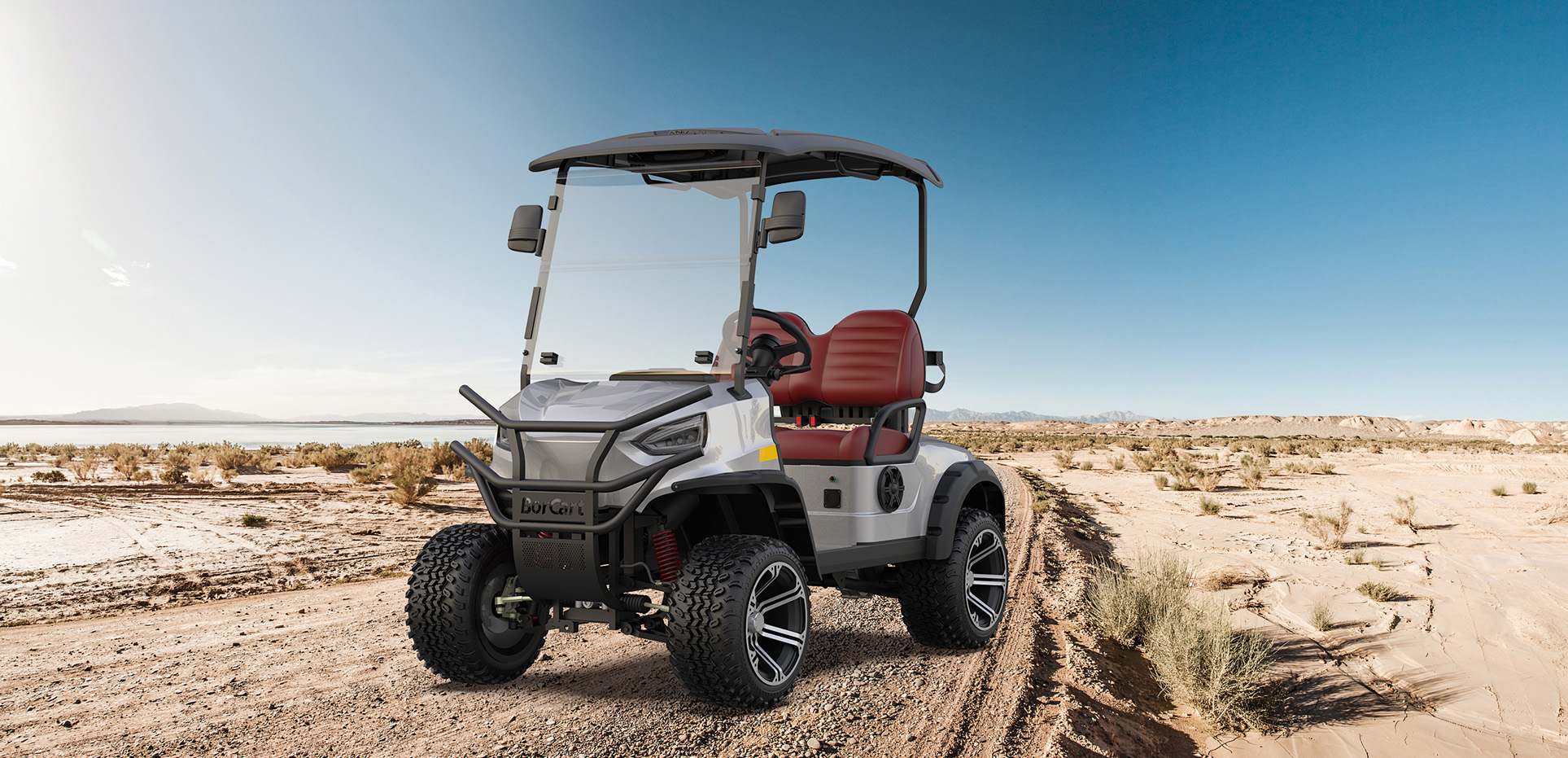
Sometimes. Gas may suit remote locations without reliable charging. Electric can suit predictable farm routes where payload, terrain capability, charging, and service support are adequate.
Can I drive either type on public roads?
Not automatically. Power source alone does not establish road legality. Confirm vehicle classification, required equipment, registration, insurance, and local route restrictions.
References
1. EA Carts — Gas vs Electric Golf Cart: Full Comparison Guide (2026). Competitive topic and comparison-scope reference; competitor pricing and savings claims were not adopted as universal benchmarks.
2. Yamaha Golf Car — Drive² PTV QuieTech EFI. Primary manufacturer source for the 5.8-gallon fuel capacity and estimated 45 mpg figure.
3. Yamaha Golf Car — 2026 Golf Cars and Light Utility Vehicles Brochure. Manufacturer reference for electric battery options and the published 38-mile flat-track range example.
4. Trojan Battery — Battery Maintenance. Technical guidance on flooded lead-acid watering, charging, ventilation, inspection, and storage.
5. Trojan Battery — Lithium Battery Resources & FAQs. Product-specific guidance on lithium maintenance, temperature protections, and charging restrictions.
6. National Highway Traffic Safety Administration — FMVSS 500 Laboratory Test Procedure. Federal reference for low-speed vehicle classification and minimum safety-equipment testing.
7. National Highway Traffic Safety Administration — Low-Speed Windshield Clarification. Explains the combined wheel-count, speed, and gross-weight criteria for low-speed vehicles.
8. National Highway Traffic Safety Administration — Interpretation: kronosport.ztv. Explains state authority over registration and permitted road use.
Hot Tags: Gas vs Electric Golf Cart, Electric Golf Cart Manufacturer, Wholesale Golf Carts, OEM Golf Carts, Custom Electric Golf Carts, Commercial Electric Vehicles, Electric Utility Vehicles, Electric Sightseeing Bus, Electric Cargo Vehicles, Electric Patrol Vehicles