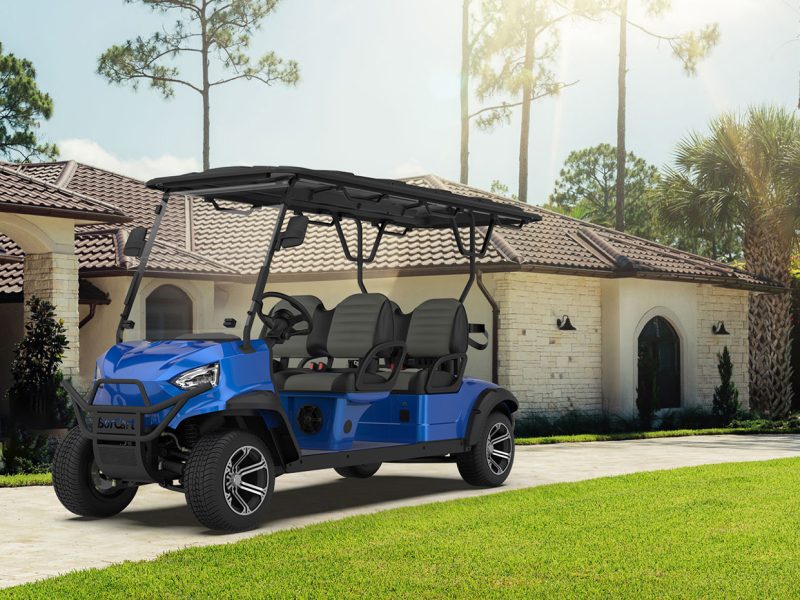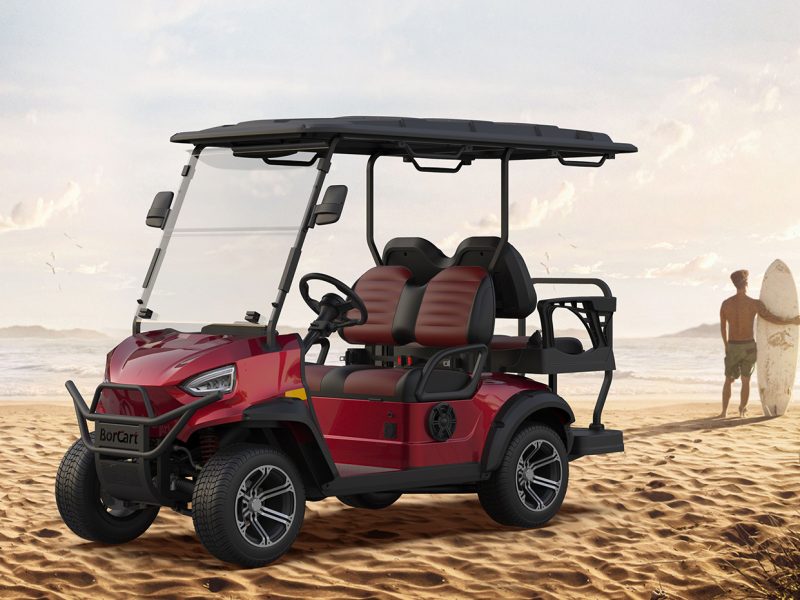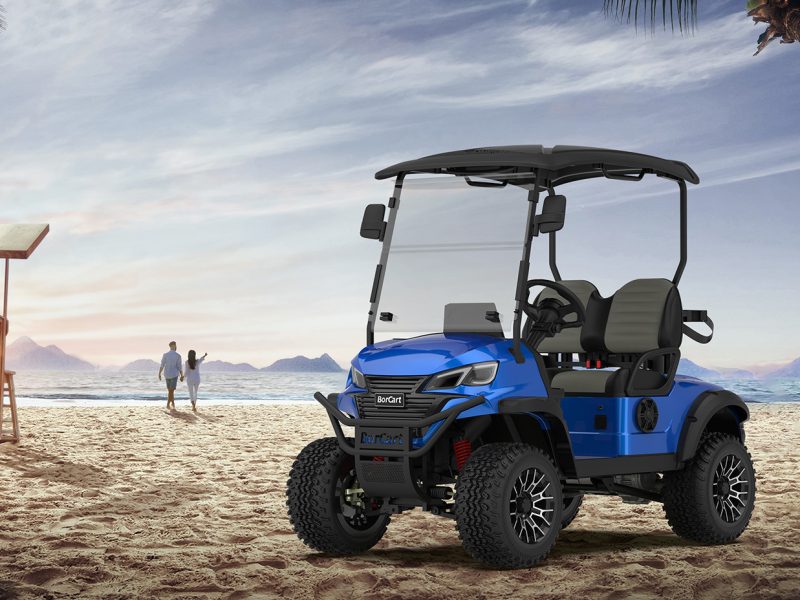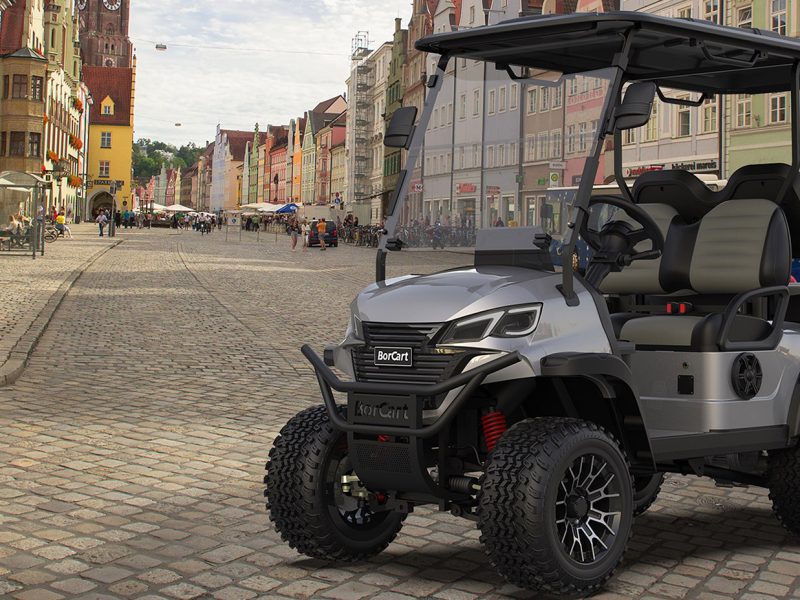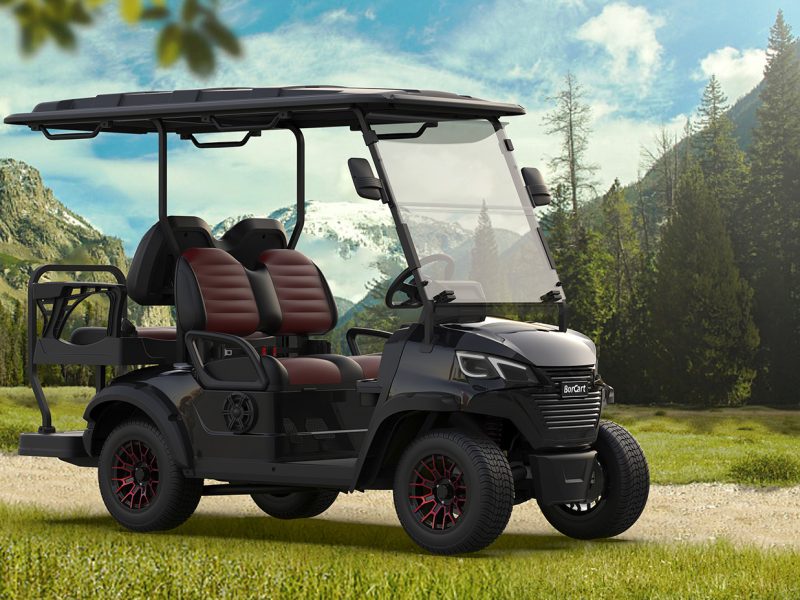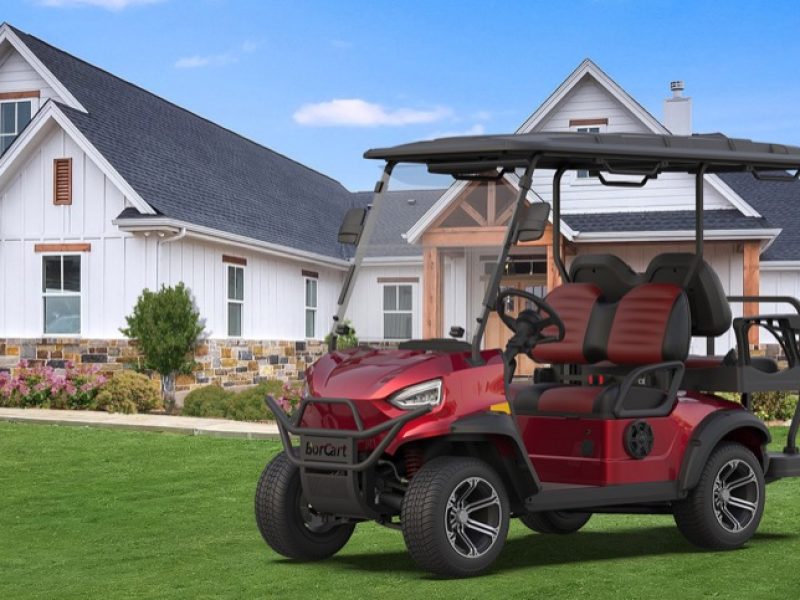
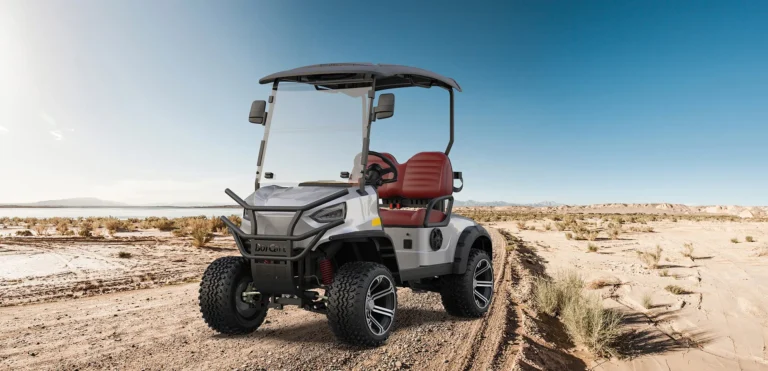
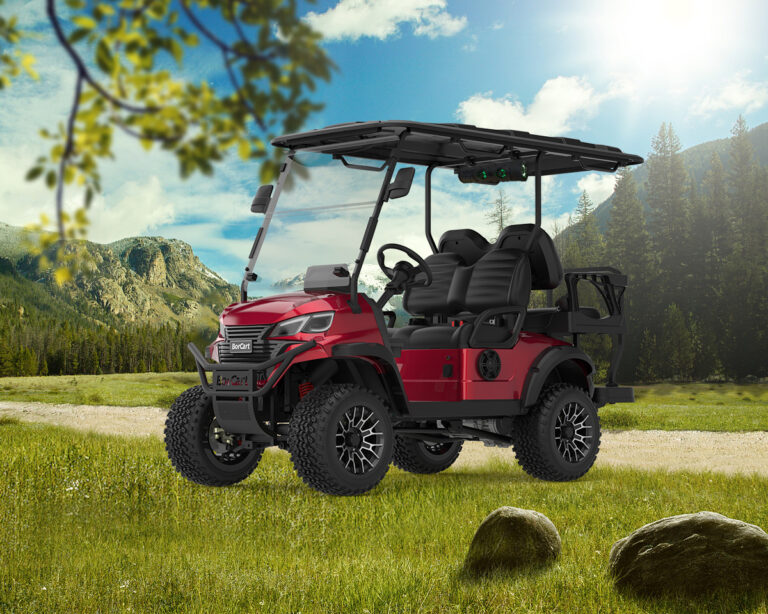
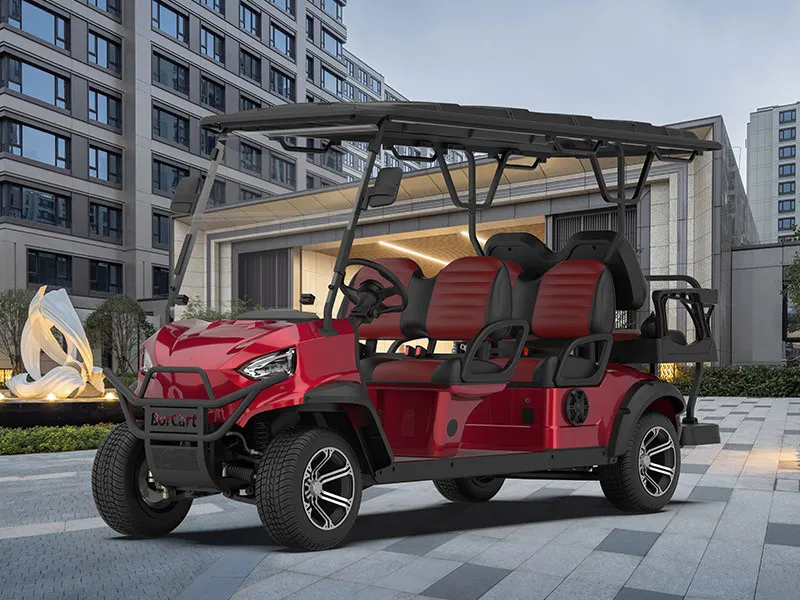
To customize electric golf carts successfully, start with the job the vehicle must perform—not the accessories available in a dealer catalog. Define your passenger load, terrain, daily distance, charging opportunities, and destination-market requirements. Then work with a manufacturer to develop a compatible configuration, validate a sample, and document exactly what production vehicles must deliver.
A standard cart may suit occasional recreational use. However, a resort transporting guests and luggage, a maintenance team carrying equipment, or a distributor developing a private-label range needs more than cosmetic upgrades.
At Guangzhou BorCart Electric Vehicle Co., Ltd., we approach customization as a complete vehicle project. Drawing on 26 years of industry experience, our focus covers electric golf carts, sightseeing buses, electric cargo vehicles, patrol vehicles, and multipurpose utility carts.
The objective is straightforward: build a vehicle that meets your requirements and maintains dependable quality after delivery.
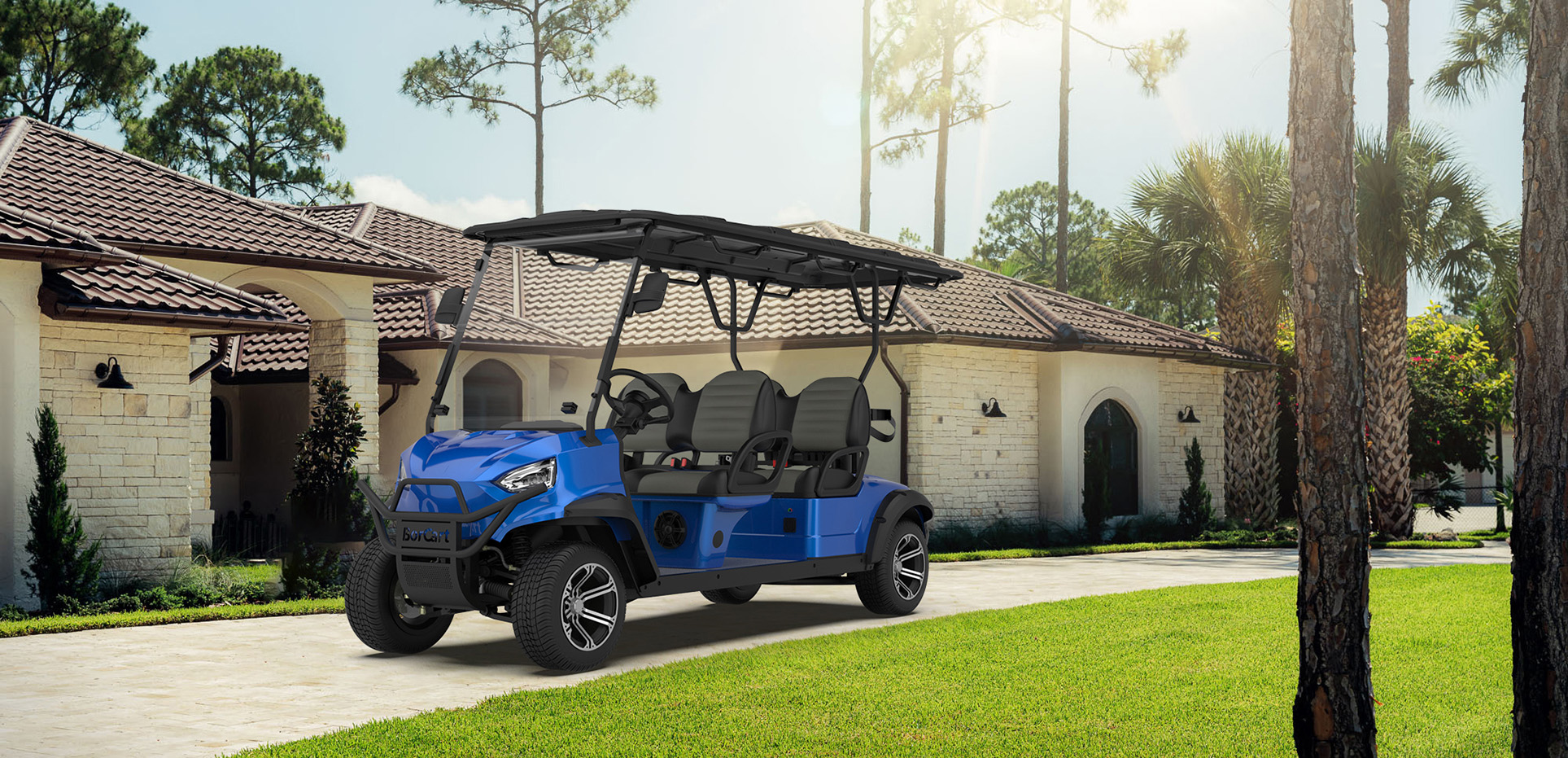
When Should You Customize Electric Golf Carts Beyond Dealer Options?
Dealer packages are convenient when an existing vehicle already meets your operational needs. Different upholstery, wheels, or a roof may be all you require.
Factory customization becomes more relevant when the changes affect how the vehicle works.
Typical reasons include:
- Transporting passengers and equipment together.
- Operating repeated routes with demanding gradients.
- Meeting specific cargo-bed dimensions.
- Matching a hotel’s visual identity across a fleet.
- Integrating patrol equipment or task-specific storage.
- Developing a consistent private-label product range.
- Adapting a configuration for a particular export market.
My recommendation is to distinguish preferences from operating constraints. A preferred paint color is a preference. A vehicle that cannot complete its assigned shift presents an operational problem.
That distinction helps direct your budget toward changes that create measurable value.
Step 1: Create a Custom Electric Golf Cart Requirements Brief
Before requesting quotations, prepare a one-page operating brief. Photos, route videos, and measured access points can communicate more than a long list of accessories.
Define the Operating Environment
Describe where the vehicle will travel and what it must encounter:
| Requirement | Information to provide | Why it matters |
|---|---|---|
| Application | Golf, hospitality, patrol, cargo, or agriculture | Establishes the vehicle’s primary function |
| Occupancy | Passenger count and seating arrangement | Influences layout and load distribution |
| Payload | People, luggage, tools, and equipment | Supports chassis and drivetrain selection |
| Terrain | Surface type, gradients, and uneven sections | Informs traction, clearance, and braking assessment |
| Duty cycle | Distance, trips, stops, and working hours | Supports battery and thermal planning |
| Charging | Available supply and charging windows | Determines practical charging arrangements |
| Access | Narrowest paths, gates, and turning areas | Prevents dimensional mismatches |
| Destination | Country and intended operating locations | Establishes the compliance review |
Measure gradients rather than describing them simply as “steep.” Also distinguish a short ramp from a long climb repeated throughout the day.
Separate Essential Features From Optional Upgrades
Organize the brief into three categories:
- Required: features necessary for the vehicle to perform its job.
- Preferred: improvements that increase comfort or efficiency.
- Optional: features that can be removed if cost or complexity increases.
This structure helps a custom golf cart manufacturer propose alternatives without compromising your core requirements.
Step 2: Choose Dealer Modification, OEM, or ODM
Not every project requires a new design. The right route depends on how far your requirements differ from an established platform.
| Route | Suitable situation | Main consideration |
|---|---|---|
| Dealer modification | Accessories on an otherwise suitable vehicle | Confirm compatibility and warranty coverage |
| Factory OEM configuration | Branding and agreed specifications on an existing platform | Document the exact component configuration |
| ODM development | Substantial layout, body, or functional changes | Allow for engineering, validation, and development costs |
Understand What OEM and ODM Mean in Your Contract
Suppliers sometimes use these terms differently. Rather than relying on the label, clarify the actual scope.
Ask who owns the drawings, who approves design changes, whether tooling charges apply, and whether exclusive components can be supplied to other buyers.
For private-label electric golf carts, also define branding rights, replacement-part availability, and responsibilities for destination-market documentation.
BorCart offers OEM/ODM services for buyers requiring branded configurations and application-specific electric vehicles. The appropriate level of development should follow an engineering review—not an assumption that every request needs a completely new platform.
Step 3: Engineer Performance as a Complete System
A larger motor does not automatically solve a performance problem. Battery capability, controller settings, gearing, vehicle mass, tires, and braking must work together.
Match Battery Capacity to the Actual Duty Cycle
Begin with usable energy demand rather than an isolated amp-hour figure.
A practical planning relationship is:
\text{Required usable energy} =
\text{daily distance} \times \text{measured energy consumption per distance}
Then agree on an operating reserve appropriate to the application. Route testing should establish consumption under representative loading, terrain, temperatures, and accessory use.
For an illustrative calculation, a route covering 40 km at 100 Wh/km would require 4 kWh before reserve. These are hypothetical planning inputs, not a BorCart range claim or battery recommendation.
Nominal battery capacity and usable capacity are different. The permitted discharge window and system protections must also be considered.
Compare Battery Options Without Blanket Promises
Flooded lead-acid batteries require electrolyte checks and watering according to the manufacturer’s instructions. Lithium systems avoid that particular maintenance task, but still require inspection and compatible charging equipment.
Ask the supplier to specify:
- Battery chemistry and nominal voltage.
- Nominal and usable energy.
- Continuous and peak current capability.
- Applicable charging and operating temperatures.
- Charger compatibility.
- Warranty conditions and diagnostic procedures.
Battery selection should also account for compartment dimensions, cable connections, service access, and vehicle weight.
Evaluate Hills, Stopping, and Repeated Operation
For hilly routes, request loaded testing rather than an unloaded demonstration.
Define the gradient, climb length, load, starting conditions, and repetition rate. Include downhill braking and parking-brake performance in the evaluation.
The question is not merely whether a cart can climb a hill once. It is whether the approved configuration can complete its intended route repeatedly within agreed operating limits.
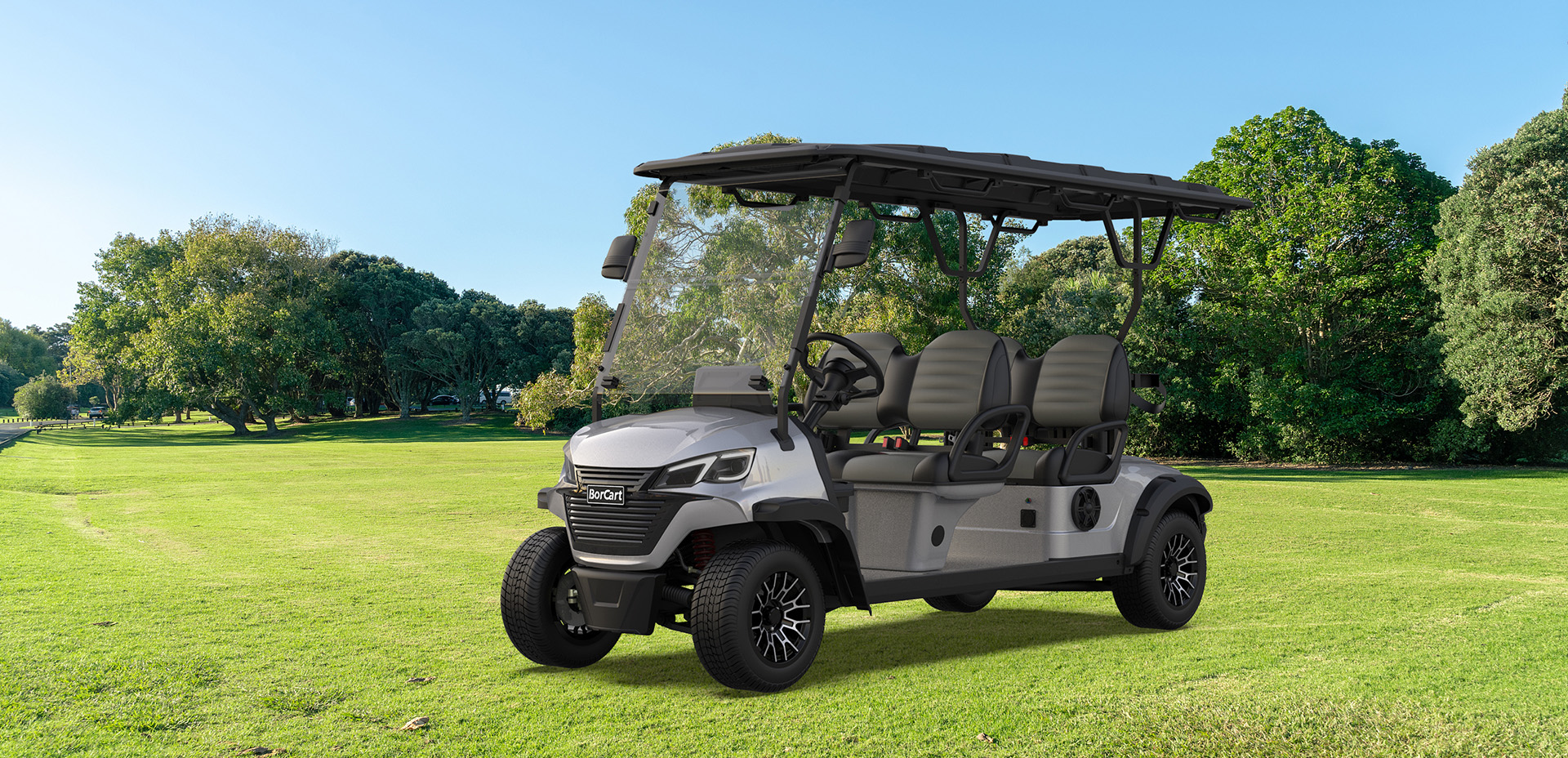
Step 4: Customize Seating, Cargo Space, and Driver Usability
The best custom electric golf carts make everyday tasks easier without creating new compromises.
Design Around Passenger and Cargo Movement
For hospitality applications, consider entry height, grab-handle placement, luggage access, and weather protection.
For cargo and maintenance applications, examine:
- Cargo-bed dimensions and loading height.
- Equipment restraints and storage compartments.
- Access to frequently used tools.
- Visibility around the load.
- Cleaning and drainage requirements.
- Safe access to service components.
A longer cargo bed or additional seat changes more than appearance. The manufacturer should reassess total mass, axle loading, weight distribution, and the suitability of the underlying platform.
Avoid Treating Lift Kits as Universal Upgrades
Additional clearance may help on uneven routes, but changes to ride height and tires can affect handling, entry access, and vehicle geometry.
Specify the obstacle or terrain problem first. Let the engineering review determine whether the answer is different tires, suspension changes, a suitable alternative platform, or a revised route.
Step 5: Make Quality Measurable Before Production
Customer feedback about “good quality” and “meeting customization needs” is valuable. However, those expectations should become acceptance criteria, not remain general promises.
Build a Requirement-to-Test Matrix
Connect each important requirement to evidence:
| Buyer requirement | Suggested verification | Acceptance record |
|---|---|---|
| Complete the assigned shift | Representative loaded route test | Distance, load, conditions, remaining charge |
| Carry specified equipment | Payload and installation checks | Approved load and mounting details |
| Match brand colors | Approved finish sample comparison | Color reference and inspection conditions |
| Charge during the available window | Charging test with specified supply | Starting charge, duration, final charge |
| Maintain consistent production | Inspection against approved configuration | Component list and inspection report |
Agree on numerical thresholds and test methods before approving the sample.
Approve a Reference Sample and Freeze the Specification
Document the accepted vehicle with photographs, drawings, component identifiers, and test results.
Then establish change control. Material substitutions or changes affecting performance, appearance, serviceability, or compliance should require written approval.
This is especially important for repeat orders. Two vehicles can look identical while using different batteries, controllers, connectors, or braking components.
An approved bill of materials helps make repeatability verifiable.
Step 6: Confirm Safety and Destination-Market Requirements
A customized golf cart is not automatically suitable for public-road use.
In the United States, the federal low-speed vehicle classification includes four-wheeled vehicles with an attainable speed above 20 mph and no more than 25 mph under specified conditions, and a gross vehicle weight rating below 3,000 pounds.
FMVSS No. 500 establishes minimum equipment requirements for that category. State and local operating rules must also be checked.
Adding lights, mirrors, or seat belts alone does not establish complete compliance. Likewise, the suitability of an individual component does not prove that the finished vehicle meets every applicable requirement.
Before ordering, clarify:
- Intended vehicle classification.
- Applicable standards and documentation.
- Responsibilities of the manufacturer and importer.
- Registration requirements where relevant.
- Restrictions on intended operating locations.
For private-property projects, document site-specific operating rules and safety expectations as well.
Step 7: Compare Total Ownership Cost, Not Just Unit Price
A useful quotation separates vehicle price from the costs of making the project operational.
Request itemized information covering:
- Engineering and tooling.
- Sample development and testing.
- Production vehicles and optional equipment.
- Packaging, freight, duties, and delivery terms.
- Charging infrastructure.
- Replacement parts and maintenance.
- Warranty support and claim handling.
Also confirm minimum order quantities, sample lead time, production timing, and the effect of later design changes.
For fleet buyers, common components across passenger, patrol, and utility vehicles may simplify parts stocking. Ask which parts are genuinely shared rather than assuming compatibility.
A Practical Customization Example: A Resort Fleet
Consider a hypothetical resort requiring six-passenger guest transport, luggage capacity, branded finishes, and repeated hill operation.
A weak brief asks for “luxury carts with powerful motors.”
A stronger brief specifies occupancy, luggage weight, daily trips, measured gradients, charging windows, access dimensions, and finish references.
The development process then becomes clear:
- Select a platform suited to the combined passenger and luggage requirement.
- Review seating, storage, loading, and service access.
- Match battery, motor, controller, and charger.
- Test the sample on representative loaded routes.
- Approve performance records and finish samples.
- Freeze the production configuration.
This is an illustrative purchasing scenario, not a reported customer project. Its value lies in showing how clear requirements become testable decisions.
Start Your BorCart Customization Project With a Clear Brief
At BorCart, our manufacturing focus spans golf, hospitality, sightseeing, cargo transport, patrol, and multipurpose applications.
Our approach is to connect customization requests with the vehicle’s intended work. Branding matters, but so do load capacity, charging compatibility, service access, and production consistency.
Send BorCart your application, destination market, passenger or cargo requirements, route conditions, daily distance, charging availability, and estimated order quantity.
Request a proposed configuration, an itemized quotation, and a sample-validation plan. That gives both teams a practical foundation for developing a vehicle that meets your requirements.
Frequently Asked Questions
Can I customize electric golf carts beyond colors and seats?
Yes. Depending on platform suitability and engineering feasibility, customization can include batteries, drivetrain configurations, cargo bodies, seating layouts, storage, suspension, controls, and branding. Structural or performance changes require appropriate assessment and validation.
Is factory customization better than dealer customization?
Neither route is always better. Dealer modification can suit straightforward accessories and local support needs. Factory customization is more relevant when changes affect integrated systems, repeat-order consistency, private labeling, or application-specific layouts.
How much does a custom electric golf cart cost?
Cost depends on the platform, battery, components, order quantity, development work, testing, and delivery terms. Request an itemized quotation against a written specification. A price without a defined configuration is difficult to compare meaningfully.
How can I verify the quality of a customized golf cart?
Approve measurable requirements, inspect a representative sample, review test records, and document the accepted configuration. For production orders, agree on inspection scope and require approval for relevant component substitutions.
Can a customized golf cart become street legal?
Potentially, but accessories alone are insufficient. The finished vehicle must satisfy the applicable classification, equipment, documentation, registration, and operating requirements in its destination. Confirm these before committing to production.
What information should I send to an OEM golf cart manufacturer?
Provide your application, market, quantity, occupancy, payload, daily distance, terrain, charging conditions, dimensional restrictions, and branding requirements. Include a target budget and distinguish essential features from optional upgrades.
References
1. BorCart — Golf Carts and OEM/ODM Manufacturing. Manufacturer-published information supporting the discussion of product categories, customization capabilities, and manufacturing services. The 26-year experience statement also follows the company background supplied for this article.
2. Trojan Battery — Battery Maintenance. Technical guidance supporting battery selection, compartment considerations, wiring compatibility, flooded-battery maintenance, and charger selection.
3. National Highway Traffic Safety Administration — Laboratory Test Procedure for FMVSS No. 500, Low-Speed Vehicles. Authoritative reference for the federal vehicle definition and minimum-equipment testing framework discussed above. Destination-specific requirements still require separate verification.
4. National Highway Traffic Safety Administration — Interpretation: Dynasty_002301. Supporting context on manufacturer certification, applicable federal requirements, and the distinction between compliance and agency approval. This historical interpretation is not a substitute for current regulatory review.
Hot Tags: Electric Golf Cart Manufacturer, Custom Electric Golf Carts, Wholesale Electric Golf Carts, Electric Golf Cart Supplier, OEM Golf Carts, ODM Golf Carts, Custom Golf Cart Manufacturer, Golf Cart Factory, Electric Utility Vehicles, Golf Cart Fleet Solutions