Content Menu
● Introduction: Why Source Luxury Golf Carts from China?
● Selection Criteria: How to Evaluate a Luxury Golf Cart Manufacturer
● What Makes a Golf Cart “Luxury”?
>> Material and Process Questions Worth Asking
● Top 10 Luxury Golf Cart Manufacturers in China
>> 1. Guangzhou BorCart Electric Vehicle Co., Ltd.
>> 2. Guangdong Lvtong New Energy Electric Vehicle Technology Co., Ltd.
>> 3. Marshell Electric Vehicle
>> 5. Suzhou Eagle Electric Vehicle Manufacturing Co., Ltd.
>> 6. CENGO / Sichuan Nuole Electric Technology Co., Ltd.
>> 8. Suzhou Lexsong Electromechanical Equipment Co., Ltd.
>> 9. XUNHU EV
>> 10. Zhejiang Taotao Vehicles Co., Ltd. / Tao Motor
● Manufacturer Comparison: Capacity, MOQ, and Certification Evidence
● Buyer’s Guide: From Supplier Shortlist to Repeat Orders
>> 1. Verify the Factory and Contracting Entity
>> 2. Approve a Production-Representative Sample
>> 3. Separate MOQ from Economic Order Quantity
>> 4. Check Compliance by Destination and Use
>> 5. Plan Shipping and Landed Cost Before Signing
● Procurement Pitfalls—and How to Avoid Them
>> Insider Pitfall: Identical Hardware Names Do Not Guarantee Identical Vehicles
● Conclusion: Select the Manufacturing System, Not Just the Showroom Vehicle
>> 1. How Can I Verify Whether a Supplier’s ISO Certificate Has Expired or Been Suspended?
>> 2. Can a CE-Marked Golf Cart Be Registered for Public-Road Use in Europe?
>> 3. How Can We Stop Component Substitution After Approving the Sample?
>> 4. Should We Accept a Five-Year Battery Warranty Without Detailed Test Data?
>> 5. Can We Reduce U.S. Trade-Remedy Exposure by Importing Knock-Down Kits?
China offers professional buyers a wide choice of luxury golf cart manufacturers, but selecting a long-term manufacturing partner requires more than comparing body designs, touchscreen sizes, or advertised driving range. The stronger purchasing decision comes from examining engineering capability, component traceability, production consistency, export documentation, and after-sales support.
This guide compares ten manufacturers worth evaluating for premium golf carts, resort vehicles, private-label product lines, and customized low-speed electric transportation. It begins with Guangzhou BorCart Electric Vehicle Co., Ltd. as a representative option for buyers seeking configurable products and direct manufacturing support.
Introduction: Why Source Luxury Golf Carts from China?
China’s relevance to golf cart sourcing rests on its combination of electric-vehicle manufacturing, component availability, export experience, and product customization.
The scale is visible in official trade data. A U.S. Department of Commerce investigation recorded imports of the covered Chinese low-speed personal transportation vehicles at 114,170 units, worth approximately $449.85 million, in 2023. These figures concern the investigation’s defined product category—not luxury golf carts alone—and should not be presented as China’s total golf cart exports.
More recent market research also points to continued demand. Mordor Intelligence estimates that China’s golf cart market reached $150.49 million in 2025 and will reach $160.01 million in 2026. Its report estimates electric propulsion accounted for 83.15% of the Chinese market in 2025. These are research estimates for the domestic market, not official export statistics.
For overseas procurement teams, the industrial geography is particularly useful:
- Guangdong offers established suppliers around Guangzhou, Dongguan, and Zhaoqing.
- Fujian includes Xiamen-based electric golf cart manufacturing.
- Jiangsu includes Suzhou manufacturers supplying golf, resort, and utility vehicles.
- Shandong and Zhejiang provide additional vehicle engineering and production options.
These locations provide multiple supplier options rather than a single interchangeable manufacturing base. Buyers should still examine which operations each supplier performs internally and which it purchases from subcontractors.
Selection Criteria: How to Evaluate a Luxury Golf Cart Manufacturer
The central purchasing principle is traceability: the delivered vehicle should match the approved specification, documented components, tested configuration, and agreed service obligations.
This shortlist considers public evidence of product relevance, manufacturing capability, engineering support, and international business activity. It does not imply that every listed supplier has passed the same physical audit.
Use the following framework when conducting your own evaluation.
| Evaluation area | Evidence to request | Why it matters |
|---|---|---|
| Factory identity | Business license, factory address, contracting entity, production walkthrough | Establishes who manufactures the vehicle and who carries contractual responsibility |
| Quality management | Current certificates, audit scope, inspection procedures, corrective-action records | Shows whether quality controls extend beyond final appearance checks |
| Engineering capability | Drawings, component specifications, validation plans, change-control records | Separates genuine development support from accessory-level customization |
| Production capacity | Model-specific output, current backlog, bottleneck analysis | Indicates whether the supplier can support your actual delivery schedule |
| Component consistency | Approved bill of materials, supplier names, serial-number records | Helps prevent substitutions between sample approval and bulk production |
| Compliance | Destination-specific documents for the exact configuration | Reduces the risk of importing a vehicle that cannot be legally sold or registered |
| Service support | Parts catalogue, diagnostic access, warranty procedure, training | Determines how quickly dealers can resolve failures after delivery |
A supplier’s advertised annual capacity is only a starting point. Available capacity for your model, battery system, paint specification, and order window is more commercially useful.
What Makes a Golf Cart “Luxury”?
For procurement purposes, “luxury” should describe measurable comfort, finish, usability, and durability—not simply decorative equipment.
A purchasing specification should address:
- Ride quality under the intended passenger load.
- Seat construction, upholstery durability, and weather exposure.
- Steering feel, brake performance, and parking security.
- Chassis material, corrosion protection, and repairability.
- Battery, controller, motor, and charger compatibility.
- Noise, vibration, panel alignment, and water management.
- Diagnostic access and replacement-parts availability.
Published product ranges illustrate the variety available. HDK lists premium configurations with touchscreens, upgraded seating, cameras, and other convenience features. Lexsong publishes models with 72V lithium systems and different seating layouts, while Tao Motor lists an aluminum-alloy-frame golf cart with a 48V AC drivetrain. These features provide specification starting points, not proof of equivalent real-world performance.
Material and Process Questions Worth Asking
Instead of accepting “automotive-grade materials,” request:
- The aluminum alloy designation and temper, or steel grade and section thickness.
- The corrosion-protection process and inspection criteria.
- Weld inspection procedures and repair rules.
- Body-panel resin identification and color-control requirements.
- Upholstery abrasion and weathering test results.
- Connector protection, harness routing, and water-ingress test procedures.
Do not impose an arbitrary test-hour figure without defining the test method and acceptance criteria. A meaningful requirement specifies what is tested, how it is tested, and what constitutes failure.
Top 10 Luxury Golf Cart Manufacturers in China
1. Guangzhou BorCart Electric Vehicle Co., Ltd.
- Established: 2000.
- Location: Guangzhou, Guangdong.
- Published overseas markets: The United States, Germany, France, the United Kingdom, Australia, Mexico, Southeast Asia, the Middle East, and other destinations.
- Relevant product range: Golf carts, sightseeing buses, utility vehicles, cargo vehicles, patrol vehicles, and other low-speed electric vehicles.
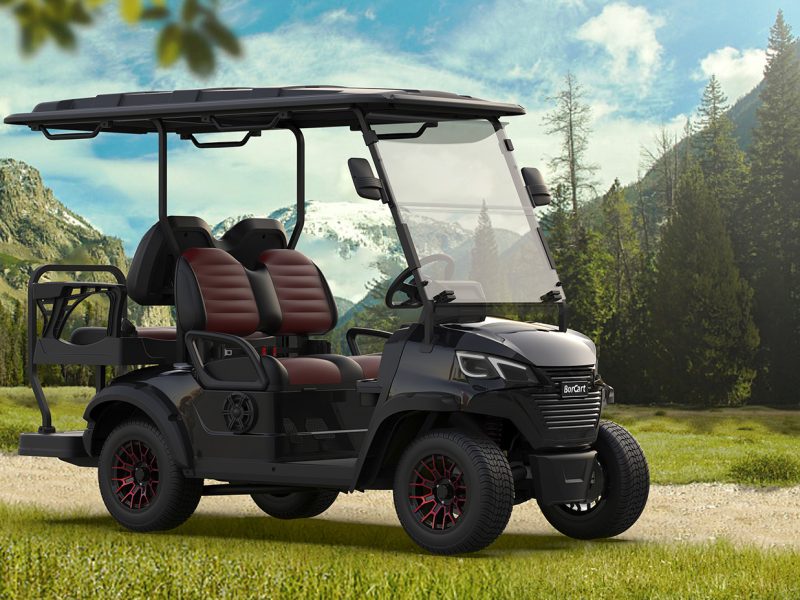
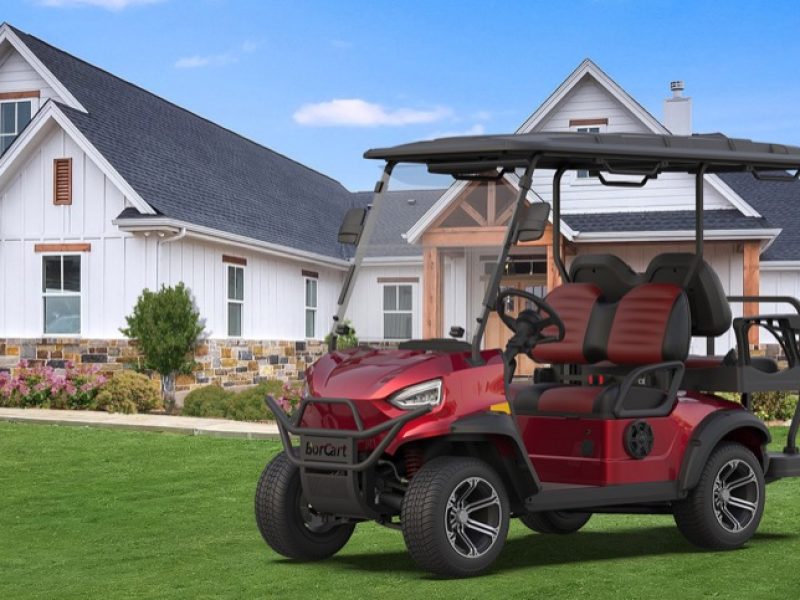
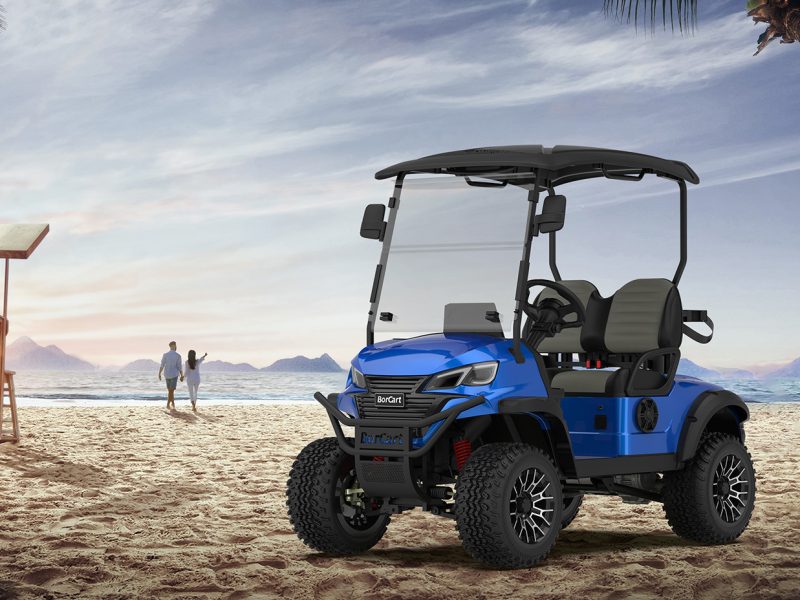
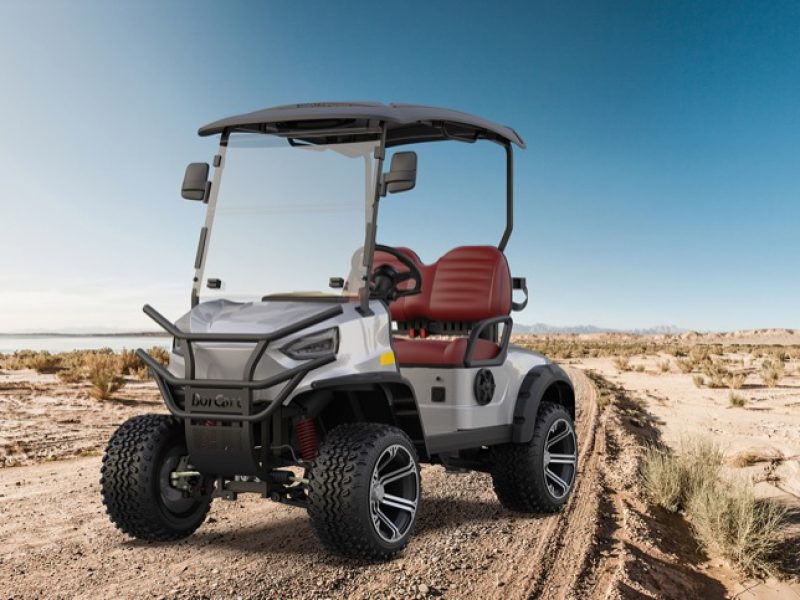
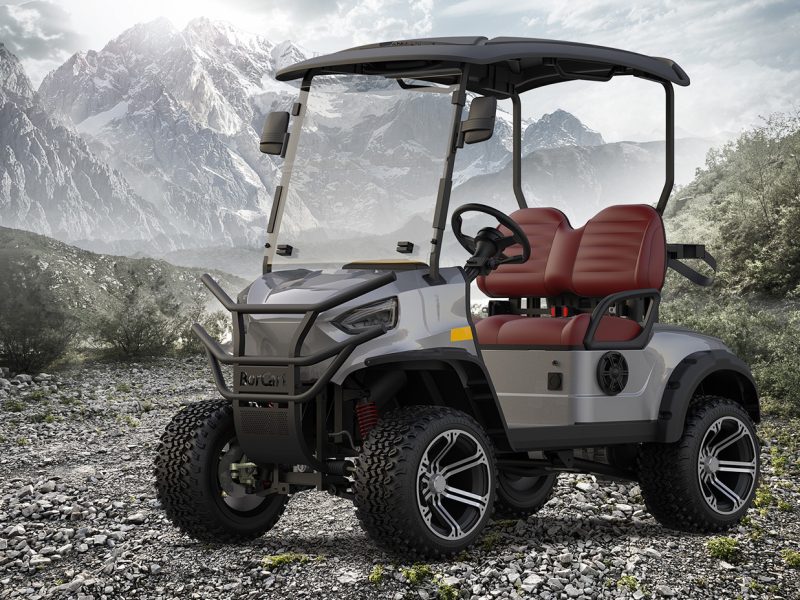
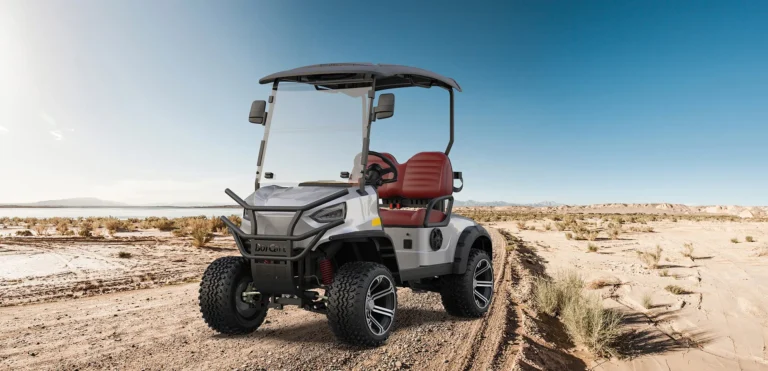
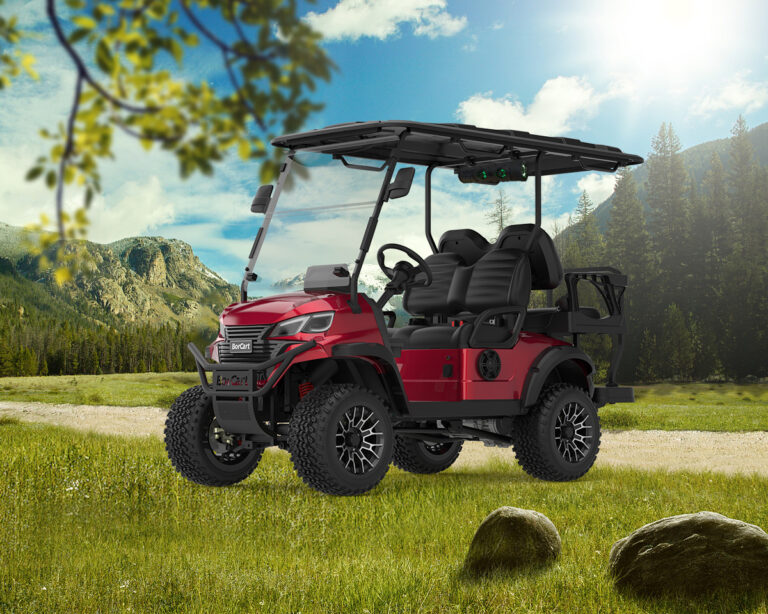
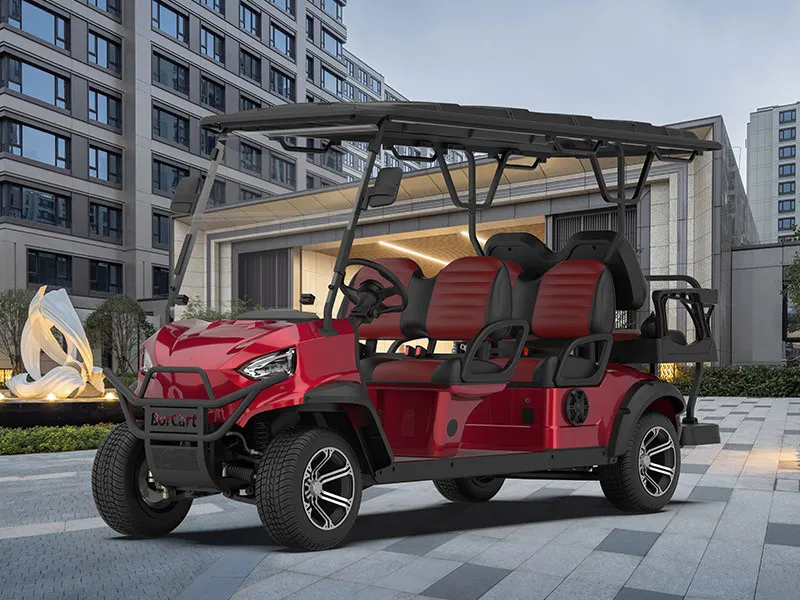
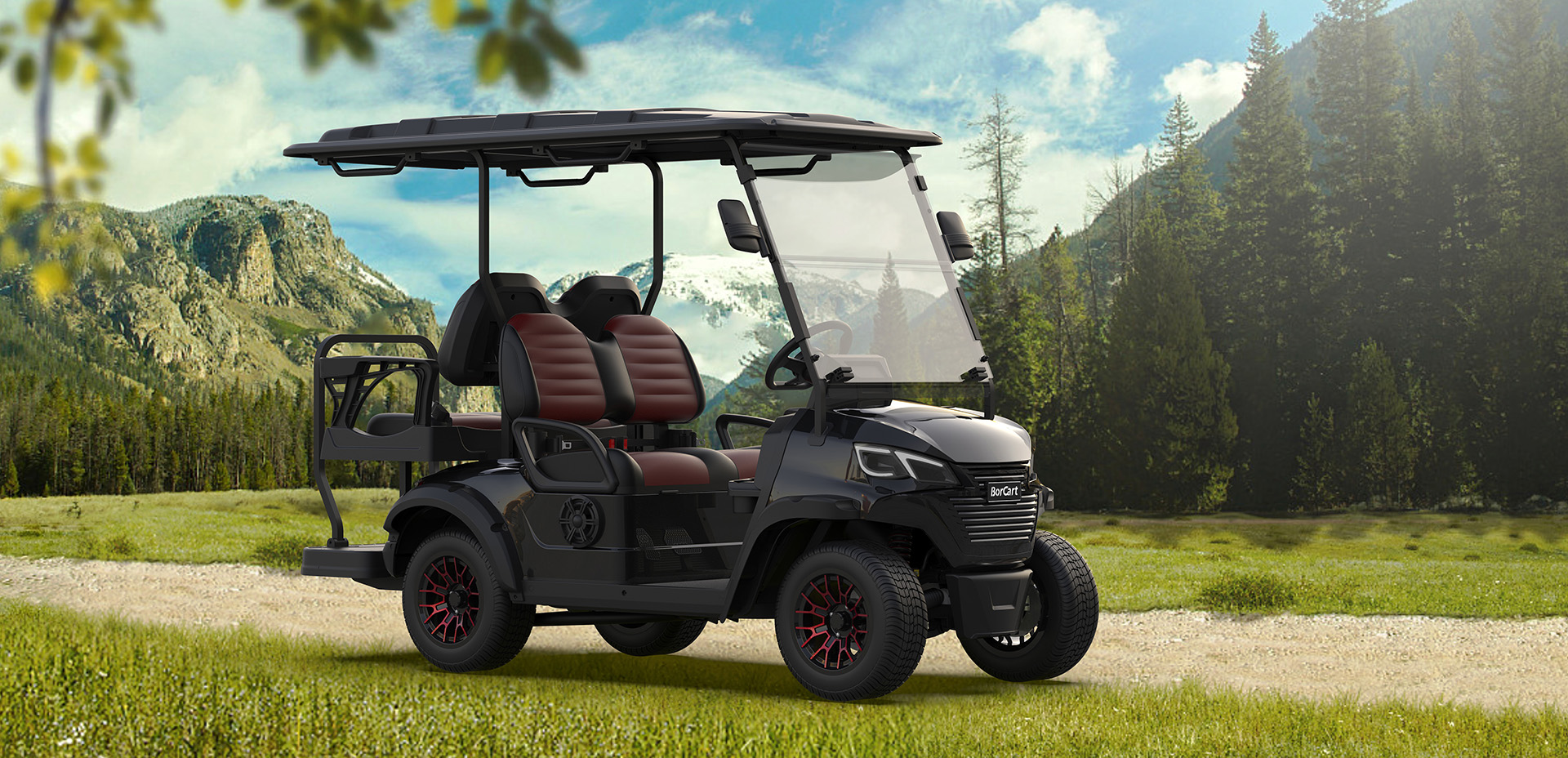
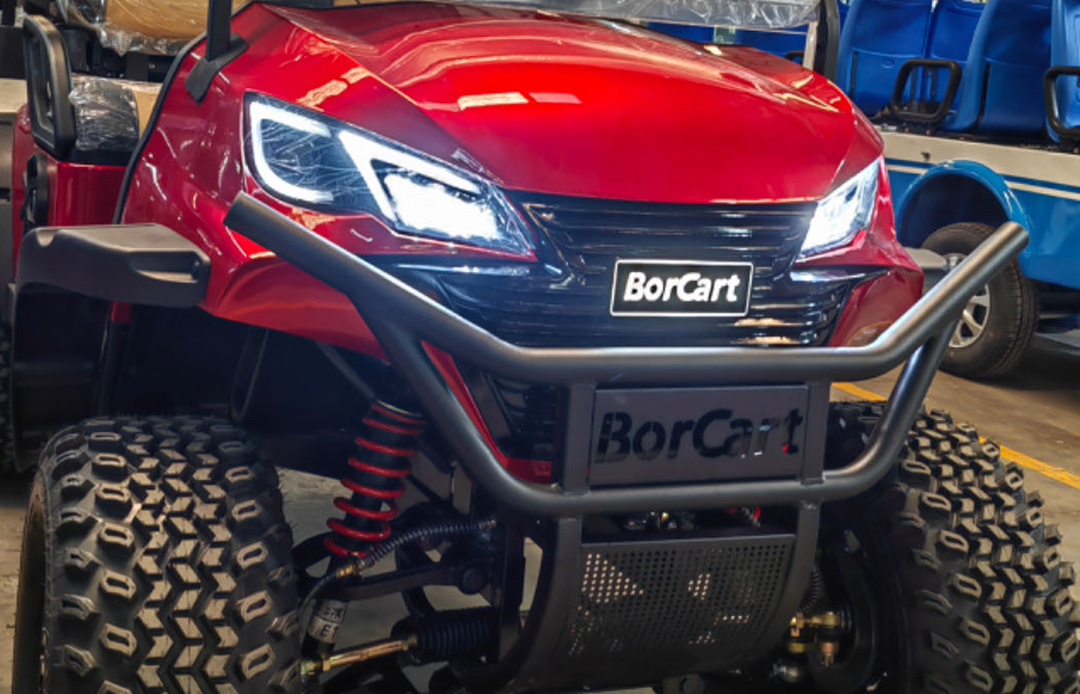
BorCart is a relevant starting point for small and midsize brands seeking a value-oriented manufacturing partner with customization support. Its official profile describes in-house production of chassis, bodies, molds, and painting-related operations, alongside OEM/ODM services and sample-order options. These capabilities provide a practical basis for discussing product differentiation without assuming that every project requires a completely new platform.
The company reports a 200,000-square-meter workshop, more than 100 engineers and technicians, four production lines, and delivery capability of ten containers daily. These are company-published figures; container output cannot be directly converted into vehicle output without knowing the model mix and packing arrangement.
BorCart also describes incoming quality control, process quality control, quality assurance, and assembly-line testing of every vehicle. Its published component examples include KDS and Mahle motors, Curtis controllers, and Delta-Q chargers. Buyers should confirm which components appear in the specific quotation rather than assuming these brands are standard across all models.
For an emerging private-label brand, BorCart’s strongest procurement proposition is its stated combination of manufacturing integration and engineering customization. Communication efficiency and flexibility should be tested during sampling through drawing turnaround, clear answers to technical questions, and a documented approval process.
2. Guangdong Lvtong New Energy Electric Vehicle Technology Co., Ltd.
- Established: 2004.
- Location: Dongguan, Guangdong.
- Market orientation: Chinese and overseas golf cart and low-speed vehicle markets.
- OEM/ODM discussion scope: Golf carts, lifted configurations, cargo applications, and related vehicle variants.
Lvtong is an established manufacturer with a broad electric-vehicle range. Its official English website states production capacity of approximately 2,000 units per month and lists golf cart and cargo vehicle configurations.
It is worth considering when a buyer wants multiple related vehicle types within one supplier relationship. However, buyers should distinguish standard catalogue options from modifications requiring engineering development.
For U.S.-bound projects, Lvtong’s commercial evaluation must include current trade-remedy treatment. U.S. authorities specifically identify the company in low-speed personal transportation vehicle proceedings; a historically competitive factory price does not establish a competitive landed cost.
3. Marshell Electric Vehicle
- Established: 2002, as reported in published supplier-profile material.
- Manufacturing footprint: Guangdong and other Chinese production locations.
- Market orientation: International customers, distributors, and OEM programs.
- OEM/ODM discussion scope: Golf carts, sightseeing vehicles, utility applications, and broader electric mobility products.
Marshell offers a diversified product portfolio that can be relevant to resorts, campuses, and distributors purchasing more than golf carts alone.
Its current homepage reports 300,000 square meters of workshop space, more than 100 engineers, and 1,600 skilled workers. Public profiles contain differing historical facility figures, so buyers should verify the current factory allocation for their selected vehicle.
Marshell’s breadth is commercially useful, but it creates an important audit question: which production line, engineering team, and after-sales organization will support the golf cart program specifically?
4. HDK Electric Vehicle
- Established: 2006.
- Location: Xiamen, Fujian.
- Published market presence: More than 30 countries, with U.S. office history.
- OEM/ODM discussion scope: Product appearance, design, branding, and configuration development, subject to commercial agreement.
HDK is particularly relevant to buyers evaluating premium personal-transportation and dealer-oriented golf cart ranges. Its published products include upgraded seating, lithium batteries, touchscreens, cameras, and multiple passenger configurations.
The company states that its main factory covers 88,000 square meters and describes an ISO 9001 facility with 100% functional testing. It also publishes a development history covering its Xiamen factory, lithium battery workshop, and successive vehicle platforms.
Before planning a private-label program, confirm territory rights, branding restrictions, component access, and the extent to which customization is available outside standard dealer offerings.
5. Suzhou Eagle Electric Vehicle Manufacturing Co., Ltd.
- Established: 1999.
- Location: Suzhou, Jiangsu.
- Market orientation: Global golf, resort, passenger-transport, and utility applications.
- OEM/ODM discussion scope: Customized vehicles developed from standard platforms.
Eagle specializes in four-wheel electric vehicles, including golf carts, personnel carriers, electric trucks, and customized vehicles.
Its official website reports a 30,000-square-meter workshop, three assembly lines, and production capacity of approximately 1,500 units per month, with adjustment according to order volume.
Eagle merits consideration when premium guest transportation must coexist with utility functions. For example, a resort may need visually coordinated passenger carts and service vehicles rather than a single luxury cart model.
Ask whether proposed seating, enclosure, or cargo modifications change payload limits, braking requirements, or maintenance access.
6. CENGO / Sichuan Nuole Electric Technology Co., Ltd.
- Established: 2015, according to its official website.
- Production locations described: Chengdu and a cooperative factory in Dongguan.
- Market orientation: Chinese dealer networks and international sales.
- OEM/ODM discussion scope: Golf carts, sightseeing vehicles, and application-specific configurations; confirm development boundaries.
CENGO offers golf carts, sightseeing buses, functional vehicles, and utility-oriented products. Its website references ISO 9001 and CE certification and describes manufacturing arrangements involving more than one location.
That production structure makes factory attribution especially important. Ask which entity manufactures the quoted model, which address appears on quality documents, and which party manages warranty claims.
Public capacity statements should be clarified rather than accepted at face value. Request recent output records for the exact vehicle family instead of relying on an aggregate daily-capacity claim.
7. KINGHIKE / Haike EV
- Established: 2011, according to its official company presentation.
- Location: Jinan, Shandong.
- Published markets: North America, South America, the European Union, Southeast Asia, and the Middle East.
- OEM/ODM discussion scope: Custom styling, body development, composite-material applications, and vehicle configuration.
KINGHIKE is relevant to buyers seeking greater visual differentiation than a logo and paint change.
Its website describes 3D printing and composite-material technology for customized vehicle shapes. It also reports 45,000 square meters of development and manufacturing facilities and annual capacity of up to 50,000 electric golf cars.
For a premium private-label project, clarify tooling ownership, design exclusivity, engineering-change charges, and the availability of replacement body panels after a model update.
8. Suzhou Lexsong Electromechanical Equipment Co., Ltd.
- Established: 2015.
- Location: Suzhou Industrial Park, Jiangsu.
- Market orientation: International distributors and low-speed electric vehicle customers.
- OEM/ODM discussion scope: Special-purpose electric vehicles and specification-based customization.
Lexsong’s published development history includes 72V AC golf carts with lithium batteries and subsequent platform upgrades. Its product information provides examples of configurable batteries, motors, seating, lighting, and storage features.
This makes it worth evaluating for buyers interested in lithium-powered premium carts and mixed golf-and-utility portfolios.
A higher system voltage is not, by itself, proof of better performance. Require loaded hill tests, thermal-performance evidence, charger details, and controller settings for the quoted configuration.
9. XUNHU EV
- Manufacturing history stated: Since 2011; confirm the incorporation date of the contracting entity.
- Location: Henan, China.
- Published export destinations: Southeast Asia, the Middle East, Latin America, Europe, Australia, and the United States.
- OEM/ODM discussion scope: Golf carts, sightseeing vehicles, shuttle buses, utility vehicles, and modified electric vehicles.
XUNHU’s broad catalogue is relevant to hospitality and tourism buyers seeking coordinated transport fleets. Its public materials describe both lead-acid and lithium options, multiple passenger capacities, and OEM/ODM services.
Procurement teams should distinguish operating history from the legal establishment date of the entity receiving payment. That distinction matters for warranty enforcement, certificate matching, and export documentation.
For luxury applications, evaluate an actual vehicle rather than transferring assumptions from the appearance of catalogue images.
10. Zhejiang Taotao Vehicles Co., Ltd. / Tao Motor
- Established: 1985, according to its company page.
- Location: Jinyun County, Zhejiang.
- Published market reach: A dealer network covering 78 countries across its broader vehicle business.
- OEM/ODM discussion scope: Confirm golf-cart-specific private-label availability, configuration options, and territory conditions.
Tao Motor offers a wider vehicle portfolio alongside electric golf carts. Its published Champion 2+2 specification includes a 48V AC motor, aluminum-alloy chassis and frame, and front independent suspension.
Its broader manufacturing and dealer experience may be useful to distributors that already sell recreational or utility vehicles.
However, company-wide certifications and dealer counts should not be treated as golf-cart-specific evidence. Request the exact model’s documentation and a clear statement of the available OEM cooperation structure.
Manufacturer Comparison: Capacity, MOQ, and Certification Evidence
The table below separates public information from items requiring quotation or verification. Workshop area, annual output, and container throughput are different measures and should not be ranked as equivalent capacity figures.
| Manufacturer | Published capacity or scale indicator | MOQ position | Certification/documentation position |
|---|---|---|---|
| BorCart | Four lines; ten containers/day stated | Sample orders offered; production MOQ requires quotation | Published quality-control process; request current certificates and exact-model documents. |
| Lvtong | Approximately 2,000 units/month | Confirm by configuration | Obtain current management-system and destination-specific documents. |
| Marshell | 300,000 m² workshop area stated | Confirm by program | Verify current certificate scope and the factory producing the order. |
| HDK | 88,000 m² main factory stated | Confirm dealer/OEM terms | ISO 9001 facility and historical CE claims published; verify current applicability. |
| Eagle | Approximately 1,500 units/month | Confirm by model | Request current certificates and configuration-specific evidence. |
| CENGO | Multiple-location manufacturing arrangement described | Confirm trial and bulk terms | ISO 9001 and CE claims published; verify issuer, site, and model. |
| KINGHIKE | Up to 50,000 units/year stated | Confirm standard versus custom-development minimums | Request current documents for the selected platform. |
| Lexsong | Capacity requires current factory confirmation | Confirm by specification | Request system-level documentation matching the battery and drivetrain. |
| XUNHU | Broad manufacturing and export capability described | Confirm sample and production terms | Verify the contracting entity, manufacturing site, and model documents. |
| Tao Motor | Broad vehicle manufacturing and dealer footprint | Confirm golf-cart-specific terms | Company lists multiple standards; do not assume all apply to golf carts. |
“Confirm” does not mean a supplier cannot support a requirement. It means a reliable, comparable commitment requires a written response.
Buyer’s Guide: From Supplier Shortlist to Repeat Orders
1. Verify the Factory and Contracting Entity
Before paying a deposit, match the following:
- Business license.
- Contracting company name.
- Bank beneficiary.
- Manufacturing address.
- Exporter identity.
- Certificate holder.
Any difference should have a documented explanation.
A factory audit should include incoming materials, welding or chassis assembly, painting, electrical assembly, final testing, packaging, and spare-parts storage. Ask to see ordinary production—not only the showroom.
2. Approve a Production-Representative Sample
Use the sample to establish an acceptance baseline.
Record:
- Vehicle identification and component serial numbers.
- Battery manufacturer, capacity, and battery-management system.
- Motor and controller part numbers.
- Charger model and software settings.
- Brake and suspension configuration.
- Upholstery, color, and finish standards.
- Test conditions and results.
Test the vehicle at the intended passenger load and on representative gradients. An unloaded demonstration on flat pavement does not answer a resort’s operational requirements.
3. Separate MOQ from Economic Order Quantity
Request separate commercial terms for:
- A standard sample vehicle.
- A trial order with existing colors and components.
- A private-label batch.
- A new-body or tooling-based development project.
A supplier may accept a small trial while requiring a larger commitment for exclusive tooling. Ask how mixed colors, different seating layouts, and battery choices affect price and delivery.
4. Check Compliance by Destination and Use
A golf cart intended for private property is not automatically approved for public-road operation.
For European projects, do not treat a CE logo as universal vehicle approval. CE marking applies under relevant product legislation; it is not a general quality award or a substitute for the applicable vehicle approval route.
RoHS also requires careful interpretation. Its scope includes electrical and electronic equipment, but the directive excludes means of transport for persons or goods, subject to the wording of the legislation. A blanket “RoHS-certified golf cart” statement therefore needs a scope explanation; separately supplied electrical equipment may require its own assessment.
Ask a qualified destination-market specialist to identify requirements for the complete vehicle, charger, battery, lighting, and intended operating environment.
5. Plan Shipping and Landed Cost Before Signing
Confirm:
- Fully assembled or partially disassembled shipment.
- Container loading plan and protection against transport damage.
- Destination assembly labor and tools.
- Battery transport documentation.
- Insurance coverage and exclusions.
- Import duties, trade remedies, and clearance costs.
- Delivery responsibilities under the agreed trade terms.
Lithium battery transport testing and operational vehicle safety are separate matters. A UN 38.3-related document does not establish the safety or road legality of the complete vehicle.
For U.S. imports, obtain current advice before committing. Antidumping and countervailing duty orders issued in 2025 cover defined low-speed personal transportation vehicles and certain subassemblies, whether assembled or unassembled. Shipping a vehicle in parts should not be assumed to remove it from scope.
Procurement Pitfalls—and How to Avoid Them
| Common problem | Why it creates risk | Practical control |
|---|---|---|
| Approved sample uses different components from bulk production | Appearance remains similar while performance changes | Attach a component-level bill of materials to the contract |
| “Lithium battery” lacks a precise specification | Capacity, current capability, serviceability, and warranty remain unclear | Identify pack manufacturer, model, BMS, serial records, and acceptance tests |
| Frame material is described only as “premium” | Material thickness and protection remain undefined | Specify grade, dimensions, process, and inspection criteria |
| Driving range has no test conditions | Buyers cannot compare quoted figures fairly | Define payload, speed, route, temperature, and usable battery conditions |
| Certificates belong to another entity or site | Documents may not support the actual order | Verify holder, address, scope, issuer, and status |
| Warranty excludes diagnosis and labor | Dealers carry unexpected service costs | Allocate parts, labor, freight, and claim-response responsibilities |
| Low factory price hides import exposure | Landed cost can exceed the business case | Obtain a destination-specific duty and logistics assessment before deposit |
Insider Pitfall: Identical Hardware Names Do Not Guarantee Identical Vehicles
One easily overlooked risk is configuration drift.
Two vehicles can list the same motor power, battery capacity, and controller brand while using different controller settings, battery discharge limits, tire dimensions, or charger profiles. The visible specification may remain unchanged even though the driving experience differs.
Treat software and settings as controlled purchasing items:
- Record controller firmware and parameter versions.
- Record battery-management-system settings relevant to operation.
- Approve charger profiles.
- Establish speed and torque settings for each market.
- Require written approval before substitutions or configuration changes.
- Retain a reference vehicle or a complete reference specification.
This is a proposed procurement safeguard, not an allegation about any manufacturer listed here.
Conclusion: Select the Manufacturing System, Not Just the Showroom Vehicle
The most useful luxury golf cart supplier is the one that can repeatedly deliver your approved specification, support destination requirements, and keep the fleet serviceable after delivery.
For buyers exploring configurable golf carts and private-label programs, Guangzhou BorCart Electric Vehicle Co., Ltd. provides a starting point backed by a published manufacturing history dating to 2000, in-house component production, sample-order support, and OEM/ODM services. Those capabilities should be evaluated through the same technical and commercial checks applied to every shortlisted supplier.
To begin a focused BorCart quotation, submit your destination market, intended operating environment, seating layout, expected annual volume, battery preference, branding requirements, and target delivery window. Request a specification sheet, component list, sample plan, applicable documentation, and written after-sales terms before finalizing the order.
Frequently Asked Questions
1. How Can I Verify Whether a Supplier’s ISO Certificate Has Expired or Been Suspended?
Request the complete certificate, including its number, issue and expiry dates, legal entity, address, and scope.
Then contact the issuing certification body through independently verified contact details. Ask whether the certificate remains active, whether surveillance requirements are current, and whether the specific manufacturing site falls within scope.
An unexpired date printed on a PDF does not, by itself, establish current status. Also distinguish management-system certification from approval of a particular golf cart model.
2. Can a CE-Marked Golf Cart Be Registered for Public-Road Use in Europe?
Do not assume so.
The relevant route depends on vehicle classification, design, intended use, and destination requirements. A CE document for a charger or another component does not establish complete-vehicle road approval. Require documentation identifying the exact vehicle variant and applicable approval framework before advertising it as road legal.
3. How Can We Stop Component Substitution After Approving the Sample?
Attach a controlled bill of materials and sample specification to the purchase agreement.
Identify critical components by manufacturer and part number, not descriptions such as “equivalent controller.” Include a written engineering-change procedure, inspection access, serial-number records, and remedies for unauthorized substitutions.
For repeat orders, require confirmation that the approved configuration remains unchanged.
4. Should We Accept a Five-Year Battery Warranty Without Detailed Test Data?
Not as the sole basis for selection.
Request the warranty’s capacity-retention terms, operating limits, cycle or usage restrictions, temperature conditions, claim procedure, and replacement responsibilities. Clarify who pays for diagnosis, removal, installation, and transport.
Evaluate the battery as part of the complete system. A commercially attractive warranty cannot compensate for an unsuitable pack, unsupported diagnostics, or unavailable replacement units.
5. Can We Reduce U.S. Trade-Remedy Exposure by Importing Knock-Down Kits?
Do not rely on that assumption.
The 2025 U.S. orders expressly describe certain subassemblies and unfinished or unassembled vehicles within their scope. The outcome depends on the actual merchandise, exporter and producer, applicable orders, and current customs treatment—not simply the shipment’s marketing description. Obtain specialist advice before structuring the order.
References
3. U.S. International Trade Commission: Low-Speed Personal Transportation Vehicles from China
4. European Commission: RoHS Directive Overview
5. EUR-Lex: Directive 2011/65/EU, Including Scope Exclusions
6. European Commission: Blue Guide on Product Rules
7. Mordor Intelligence: China Golf Cart Market, 2026–2031
8. Guangzhou BorCart Electric Vehicle Co., Ltd.
10. Marshell
12. Suzhou Eagle
13. CENGO
14. KINGHIKE
15. Suzhou Lexsong
16. XUNHU EV
Hot Tags: Luxury Golf Cart, Luxury Golf Cart Manufacturers, Golf Cart Manufacturers In China, Electric Golf Cart Manufacturers, Wholesale Golf Carts, OEM Golf Cart Manufacturer, Custom Golf Cart Manufacturer, Golf Cart Suppliers, Electric Golf Carts For Sale, ODM Golf Cart Manufacturer