
Content Menu
● 36V vs 48V Golf Cart: Key Differences at a Glance
● Understanding Golf Cart Voltage, Power, and Battery Capacity
>> Why Lower Current Can Matter
● 36V vs 48V Golf Cart Performance
>> Speed: Check the Model, Not Just the Voltage
>> Torque and Hill Climbing: Demand Loaded Specifications
● 36V vs 48V Golf Cart Range: Compare Energy Fairly
● Lead-Acid vs Lithium Batteries in 36V and 48V Carts
>> Flooded Lead-Acid Batteries
>> Lithium Iron Phosphate Batteries
● Charging Time and Maintenance Requirements
● Ownership Costs: Calculate Cost per Operating Hour
● Can You Convert a 36V Golf Cart to 48V?
● A Practical Fleet Test Before You Buy
>> Step 1: Define the Actual Assignment
>> Step 2: Test a Representative Route
>> Step 3: Measure Energy and Availability
>> Step 4: Set Written Acceptance Criteria
● Choosing a Golf Cart for Your Application
● Specify the Right Cart with BorCart
>> 1. Is a 48V Golf Cart Better Than a 36V Golf Cart?
>> 2. Does a 48V Golf Cart Always Travel Farther?
>> 3. How Can I Identify My Golf Cart’s Voltage?
>> 4. Can I Use a 36V Charger on a 48V Golf Cart?
>> 5. Should I Upgrade to Lithium or Convert to 48V?
>> 6. Is a 48V Golf Cart Automatically Road Legal?
Choosing between a 36V vs 48V golf cart involves more than comparing voltage labels. For golf courses, hotels, resorts, industrial parks, and agricultural properties, the right choice depends on passenger loads, terrain, operating hours, and maintenance resources.
My recommendation is to prioritize the duty cycle: what the vehicle must accomplish during a normal working day. A well-maintained 36V cart can remain economical for light use. A properly engineered 48V platform is generally the stronger starting point for new, demanding applications—but voltage alone does not guarantee speed, range, or hill-climbing ability.
At Guangzhou BorCart Electric Vehicle Co., Ltd., our focus on electric golf carts and multifunctional vehicles reflects this application-first approach. With 26 years of industry experience, we help buyers translate operating requirements into practical vehicle specifications.
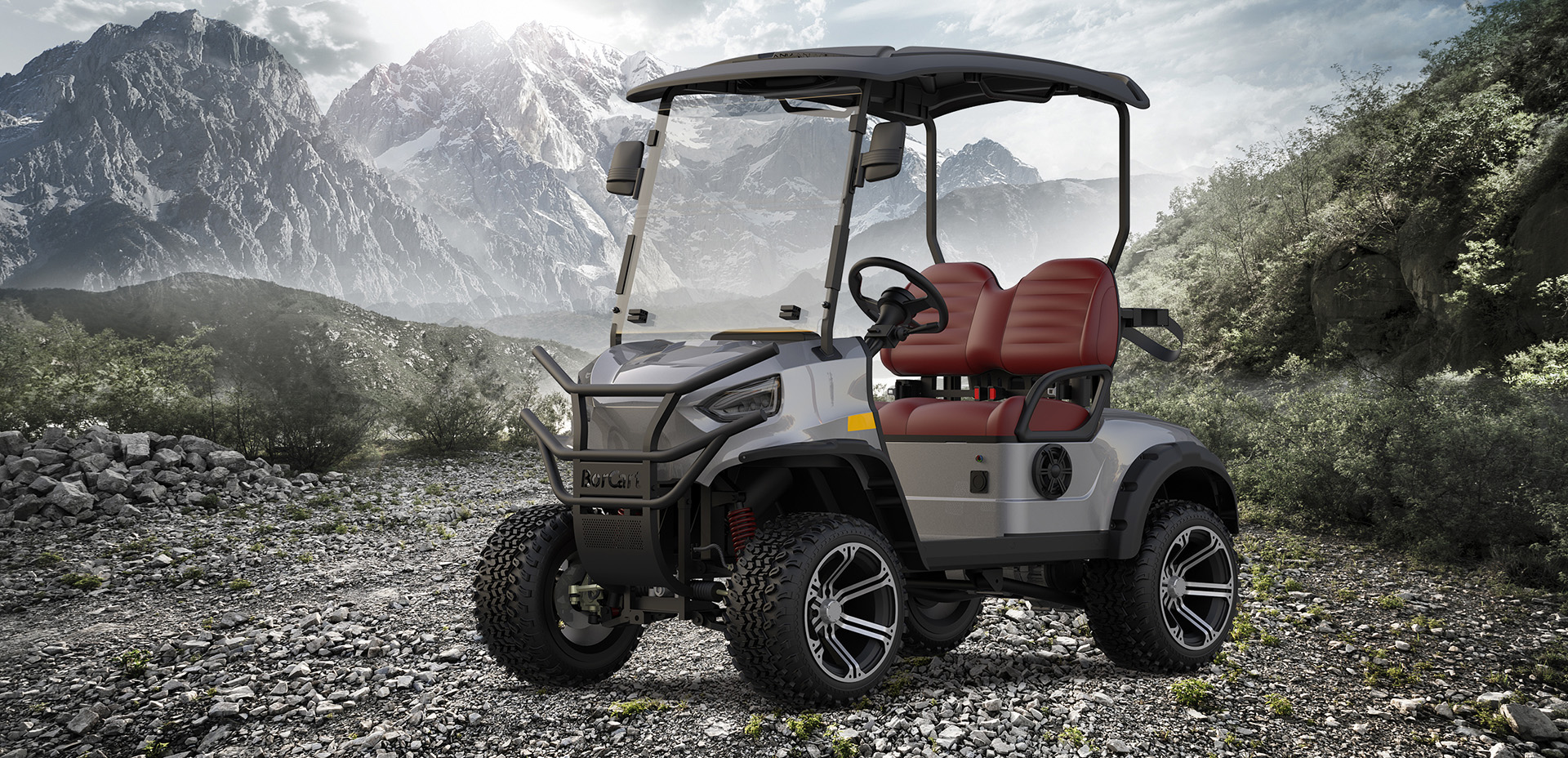
36V vs 48V Golf Cart: Key Differences at a Glance
| Comparison | 36V Golf Cart | 48V Golf Cart |
|---|---|---|
| Common flooded lead-acid arrangement | Six 6V batteries | Six 8V, eight 6V, or four 12V batteries |
| Current required for equal electrical power | Higher | Lower |
| Energy at an identical Ah rating | Lower | 33.3% higher nominal energy |
| Speed | Determined by the complete drivetrain | Determined by the complete drivetrain |
| Hill performance | Depends on motor, gearing, current limits, and load | Offers useful electrical design flexibility |
| Practical buying position | Maintaining suitable existing vehicles | Evaluating new or more demanding applications |
| Conversion requirements | Not applicable when retaining voltage | Full compatibility assessment required |
These comparisons assume appropriately matched components. They are not guarantees that every 48V cart outperforms every 36V cart.
Understanding Golf Cart Voltage, Power, and Battery Capacity
Three measurements explain most differences between 36V and 48V golf carts:
- Volts describe electrical potential.
- Amps describe current flow.
- Watt-hours describe stored energy.
Electrical input power equals voltage multiplied by current. Battery energy can be estimated by multiplying nominal voltage by amp-hour capacity.
For example:
- A 36V, 100Ah battery stores approximately 3.6kWh.
- A 48V, 100Ah battery stores approximately 4.8kWh.
The 48V pack has 33.3% more nominal energy in this example. That does not make it 33.3% more efficient; it starts with a larger energy supply.
Also, batteries connected in series add voltage, not amp-hour capacity. Six matched 6V, 200Ah batteries form a nominal 36V, 200Ah bank—not a 1,200Ah bank.
Why Lower Current Can Matter
Consider a theoretical 3,600W electrical load:
- At 36V, current is 100A.
- At 48V, current is 75A.
The 48V system draws 25% less current at equal input power.
For an identical resistive path, heating follows current squared multiplied by resistance. Reducing current from 100A to 75A reduces losses in that path by approximately 43.8%.
However, this is not a 43.8% improvement in whole-vehicle efficiency. Motors, controllers, tires, gearing, and driving conditions introduce other losses.
36V vs 48V Golf Cart Performance
Speed: Check the Model, Not Just the Voltage
A 48V golf cart can support a more capable drivetrain, but it is not automatically faster.
Maximum speed depends on:
- Motor characteristics and operating limits.
- Controller programming.
- Axle ratio and tire diameter.
- Vehicle load and battery condition.
As a real-world reference point, a production 48V electric passenger cart can be specified at 19mph. That figure belongs to a particular model—not every vehicle using the same voltage.
For resorts and campuses, controlled acceleration and predictable braking may be more valuable than a higher maximum speed.
Torque and Hill Climbing: Demand Loaded Specifications
Higher voltage does not directly create a fixed increase in torque. Motor torque depends on motor design and controlled motor current, while wheel torque also depends on gearing.
For a hilly property, ask suppliers for:
- Maximum permitted gradient at the specified load.
- Sustained climbing capability and test duration.
- Starting ability on a slope.
- Downhill speed-control and braking performance.
- Ambient temperature and thermal limitations.
Do not confuse degrees with percentage grades. A 15% grade is not a 15-degree slope.
A lightly loaded demonstration cannot establish whether a cart will repeatedly transport passengers uphill throughout a working shift.
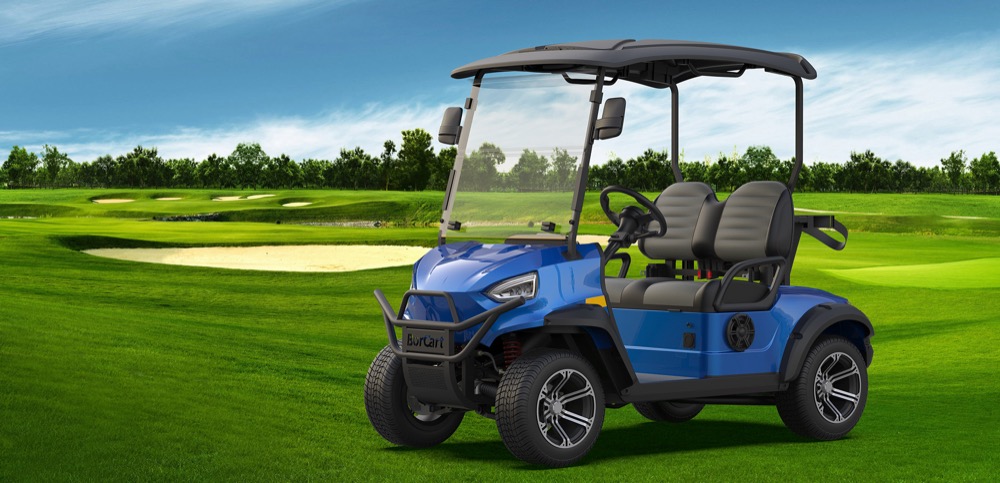
36V vs 48V Golf Cart Range: Compare Energy Fairly
Published mileage claims become meaningful only when their test conditions are clear.
Range depends on usable battery energy, vehicle weight, terrain, tire pressure, temperature, accessories, and driving behavior.
An illustrative calculation shows why equal amp-hours can mislead:
| Hypothetical Specification | 36V System | 48V System |
|---|---|---|
| Battery capacity | 100Ah | 100Ah |
| Nominal energy | 3.6kWh | 4.8kWh |
| Assumed usable proportion | 80% | 80% |
| Usable energy | 2.88kWh | 3.84kWh |
| Assumed consumption | 120Wh per mile | 120Wh per mile |
| Calculated range | 24 miles | 32 miles |
These are calculation examples, not BorCart test results or universal battery recommendations.
For an equal-energy comparison, a nominal 36V, 200Ah pack and a 48V, 150Ah pack both store approximately 7.2kWh. Their actual range then depends on usable capacity and vehicle consumption.
For commercial purchasing, request a loaded route test rather than accepting an unexplained mileage figure.
Lead-Acid vs Lithium Batteries in 36V and 48V Carts
Battery chemistry deserves a separate decision from system voltage.
Flooded Lead-Acid Batteries
Flooded lead-acid batteries can suit buyers who prioritize initial cost and have established maintenance procedures.
They require appropriate charging, terminal inspections, electrolyte checks, and watering according to the battery manufacturer’s instructions.
Their available capacity also changes with discharge rate. A capacity rating measured over 20 hours does not mean the battery will deliver the same amp-hours under heavy acceleration or sustained climbing.
Lithium Iron Phosphate Batteries
Lithium iron phosphate batteries eliminate electrolyte watering and can offer lower weight and convenient opportunity charging.
However, “lithium” does not guarantee unlimited output or maintenance-free vehicle ownership. Buyers must check:
- Continuous and peak discharge ratings.
- Battery management system limits.
- Charger compatibility.
- Permitted charging temperatures.
- Warranty conditions and service support.
A battery with adequate energy can still be unsuitable if its protection system disconnects during acceleration.
A compatible 36V lithium replacement may also improve an existing cart without converting it to 48V. Retaining system voltage can avoid unnecessary drivetrain changes.
Charging Time and Maintenance Requirements
A 48V golf cart does not automatically charge faster than a 36V model.
Charging time depends on energy replenished, charger output, battery chemistry, temperature, and the charging profile.
For example, replenishing 3kWh through a charger delivering a steady 600W would require five hours before accounting for losses and charging taper.
Match the charger to the exact battery specification, including chemistry and charging limits—not simply the connector.
For flooded batteries, follow ventilation requirements and keep ignition sources away. For lithium batteries, check temperature restrictions and any heating provisions before planning winter charging.
Charging infrastructure should also match the fleet schedule. A hotel operating split shifts may need a different charging plan from a golf course parking vehicles overnight.
Ownership Costs: Calculate Cost per Operating Hour
There is no universal rule that 48V costs less over its lifetime. Purchase price, battery quality, utilization, maintenance, and downtime can outweigh small electricity differences.
Compare:
- Vehicle purchase and delivery.
- Batteries and chargers.
- Scheduled maintenance labor.
- Replacement components.
- Energy purchased at the wall.
- Downtime and substitute vehicles.
- Residual value.
A useful comparison is:
Total ownership cost ÷ productive operating hours.
For illustration, a vehicle costing $8,000 to own and operate over 4,000 productive hours costs $2 per hour.
A cheaper vehicle can become more expensive if charging interruptions or repairs reduce its availability. Conversely, a lightly used 36V cart may remain economical when it already meets the assignment.
Avoid treating battery warranty length as a guaranteed service life.
Can You Convert a 36V Golf Cart to 48V?
Some vehicles can be converted, but changing batteries alone is not a responsible conversion plan.
A qualified technician should assess:
- Motor compatibility and permitted operating limits.
- Controller voltage range and programming.
- Solenoid, contactor, fuse, and cable ratings.
- Charger and charging connector compatibility.
- Battery mounting and compartment dimensions.
- Accessory circuits and DC–DC converters.
- Braking, tires, suspension, and intended speed.
Check the battery’s maximum charging voltage, not just its nominal label. Components must tolerate the actual operating range.
Never assume that a 36V motor or controller can safely accept 48V because another vehicle survived the modification.
Obtain an itemized conversion quotation and compare it with a purpose-built replacement. Include installation, testing, warranty implications, and the condition of the original chassis.
A Practical Fleet Test Before You Buy
For commercial buyers, a repeatable trial often reveals more than a specification sheet.
Step 1: Define the Actual Assignment
Record passenger count, cargo weight, daily distance, stops, slopes, surface conditions, and accessory use.
A housekeeping cart carrying supplies has a different workload from a two-passenger golf vehicle.
Step 2: Test a Representative Route
Use the intended load and normal operating speeds. Record travel time, climbing behavior, braking, and remaining charge.
Where conditions vary substantially, repeat the test in representative temperatures.
Step 3: Measure Energy and Availability
Measure wall energy needed to restore the starting charge level. Record charging time and any thermal warnings or interruptions.
Step 4: Set Written Acceptance Criteria
Agree on required distance, payload, grade capability, charging window, and reserve before ordering.
This converts “good performance” into a measurable purchasing requirement and makes competing quotations easier to compare.
Choosing a Golf Cart for Your Application
Retain or purchase a suitable 36V cart when:
- Routes are short and relatively flat.
- Passenger and cargo requirements are modest.
- The vehicle is mechanically sound.
- Compatible parts and qualified service remain available.
Evaluate a purpose-built 48V platform when:
- You are replacing or expanding a commercial fleet.
- Routes include repeated climbs or frequent stops.
- Passenger and cargo requirements are increasing.
- You need a coordinated battery, motor, controller, and charging package.
For heavy cargo, long shifts, or large passenger vehicles, do not assume either voltage automatically meets the requirement. Start with the workload and assess the complete engineered vehicle.
Specify the Right Cart with BorCart
The best 36V vs 48V golf cart decision starts with your route, payload, and operating schedule—not a voltage claim.
Guangzhou BorCart Electric Vehicle Co., Ltd. develops electric golf carts, sightseeing buses, cargo vehicles, patrol vehicles, and multipurpose work vehicles, with flexible OEM/ODM customization.
Send our team your passenger or cargo requirements, daily distance, steepest gradient, charging window, and destination market. Request a configuration proposal with clearly stated battery specifications, loaded performance conditions, charging requirements, and customization options.
Frequently Asked Questions
1. Is a 48V Golf Cart Better Than a 36V Golf Cart?
Often for new, demanding applications, but not universally. Compare loaded performance, usable battery energy, charging requirements, service support, and ownership costs.
2. Does a 48V Golf Cart Always Travel Farther?
No. At equal amp-hours, it has more nominal energy. At equal kilowatt-hours, range depends more directly on usable capacity and vehicle consumption.
3. How Can I Identify My Golf Cart’s Voltage?
Check the vehicle documentation and battery labels. For a conventional series-connected bank, add the individual battery voltages. Battery count alone is insufficient.
4. Can I Use a 36V Charger on a 48V Golf Cart?
No. Use a charger approved for the battery’s voltage, chemistry, charging profile, and connection system.
5. Should I Upgrade to Lithium or Convert to 48V?
These are separate decisions. A compatible 36V lithium pack may suit an existing cart. A voltage conversion requires a broader electrical and mechanical assessment.
6. Is a 48V Golf Cart Automatically Road Legal?
No. Voltage does not establish road-use eligibility. Vehicle classification, required equipment, registration, and permitted operating locations depend on the applicable jurisdiction.
References
1. EA Carts — “36v vs 48v Golf Cart: Which Delivers Better Performance?”. Original comparison supplied as the topic reference. Its generalized performance, lifespan, and cost claims were not adopted as universal specifications.
2. Trojan Battery — “Battery Maintenance.” Technical guidance covering series-connected battery configurations, charging settings, watering, and charging-area ventilation.
3. Trojan Battery — “Lead Acid FAQs.” Background on discharge-rate-dependent capacity, temperature effects, and lead-acid battery maintenance.
4. Club Car — “Onward 2 Passenger Specifications, Dimensions.” Manufacturer specifications supporting the model-specific example of six 8V batteries, a 48V charger, and a listed 19mph maximum speed. These are not BorCart specifications.
5. Trojan Battery — “OnePack 36V 105Ah Lithium Battery Pack.” An example of a lithium replacement designed for compatible legacy 36V carts without voltage conversion.
6. Trojan Battery — “Lithium Battery Resources & FAQs.” Battery-specific information on installation resources, charger compatibility, and temperature-related charging restrictions.
7. Trojan Battery — “OnePack High Performance HP 48V 171Ah Lithium Battery Pack.” Manufacturer data distinguishing stored energy, continuous discharge current, and short-duration peak output.
Hot Tags: Electric Golf Cart, 36V Golf Cart, 48V Golf Cart, Golf Cart Manufacturer, Golf Cart Supplier, Wholesale Golf Carts, Custom Golf Carts, OEM Golf Carts, Lithium Battery Golf Cart, Commercial Electric Vehicles