Content Menu
● What Makes the Best Electric Golf Cart for Your Application?
● How to Compare Electric Golf Cart Brands Without Misleading Rankings
● Best Lithium Electric Golf Carts: Compare Energy, Not Just Voltage
>> Understand Battery Capacity in Kilowatt-Hours
>> Compare Lithium and Lead-Acid Against Actual Ownership Needs
● How Much Range Do You Actually Need?
>> Build a Route-Based Range Requirement
● Best Electric Golf Carts for Hills: Test the Complete Powertrain
>> Request a Loaded Hill Demonstration
● Electric Golf Cart Prices: Calculate the Complete Ownership Cost
>> Use a Practical Cost Framework
● Charging Electric Golf Carts: Design Around Your Schedule
>> Plan Charging Before Delivery
● Golf Cart vs. Street-Legal LSV: Understand the Difference
● OEM/ODM Electric Golf Carts: Turn Customization Into a Clear Specification
>> Separate Appearance Changes From Engineering Changes
● A Five-Step Acceptance Plan for Fleet Buyers
>> 1. Write the Operating Brief
>> 2. Freeze the Sample Specification
>> 3. Run a Representative Trial
>> 4. Inspect Production Consistency
>> 5. Prepare the Service Handover
● How to Use Customer Reviews Responsibly
● Discuss Your Electric Golf Cart Project With BorCart
>> What is the best electric golf cart for a resort?
>> Are lithium electric golf carts always the better investment?
>> How can I verify an electric golf cart’s range?
>> What should I check when buying a used electric golf cart?
>> Can an electric golf cart operate on public roads?
>> Can BorCart customize vehicles for dealers and fleet projects?
The best electric golf carts are not simply the fastest models or those advertising the longest range. They are the vehicles that fit your routes, passenger loads, charging schedule, and service requirements. Whether you manage a golf course, operate a resort, or source customized vehicles for distribution, the right choice starts with understanding the work each cart must perform.
At Guangzhou BorCart Electric Vehicle Co., Ltd., our perspective comes from 26 years in the low-speed electric vehicle industry. We develop, manufacture, and customize electric golf carts and multipurpose vehicles for commercial applications.
Our central buying principle is fit: evaluate the complete vehicle against its intended job, rather than judging it by one impressive specification.
What Makes the Best Electric Golf Cart for Your Application?
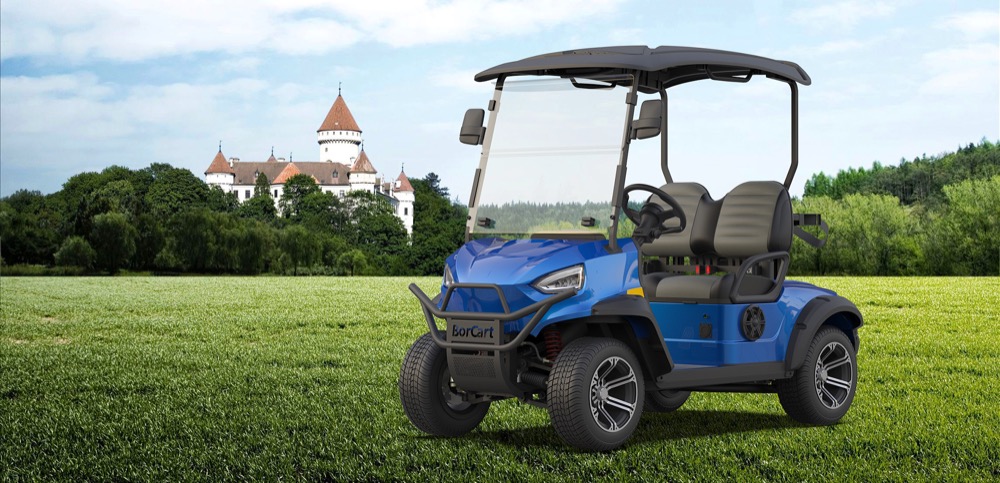
A golf course, hotel, and agricultural property may all need electric transportation, but their operating priorities differ.
Before comparing models, define passenger capacity, daily distance, steepest gradients, surface conditions, and available charging time.
| Application | Main buying priority | Configuration to evaluate |
|---|---|---|
| Golf courses | Reliable daily operation | Golf-bag storage, turf-friendly tires, practical charging |
| Hotels and resorts | Guest comfort and accessibility | Suitable seating, weather protection, luggage space |
| Tourist attractions | Passenger movement | Appropriate capacity, boarding access, route suitability |
| Campuses and business parks | Frequent short journeys | Maneuverability, visibility, easy maintenance |
| Farms and estates | Utility and load handling | Cargo capacity, traction, suitable ground clearance |
| Dealers and distributors | Consistent supply and support | Repeatable specifications, documentation, spare parts |
Avoid choosing passenger count alone. Four seats do not establish how much luggage, equipment, or additional cargo a vehicle can safely carry.
Request the rated payload and confirm exactly what that rating includes.
How to Compare Electric Golf Cart Brands Without Misleading Rankings
Brand comparisons help buyers build a shortlist. However, declaring one manufacturer universally “best” requires comparable testing and reliable ownership data.
Club Car’s Onward range provides a useful example of configuration-dependent performance. Its published specifications distinguish seating layouts, battery options, and operating conditions rather than presenting one range figure for every vehicle.
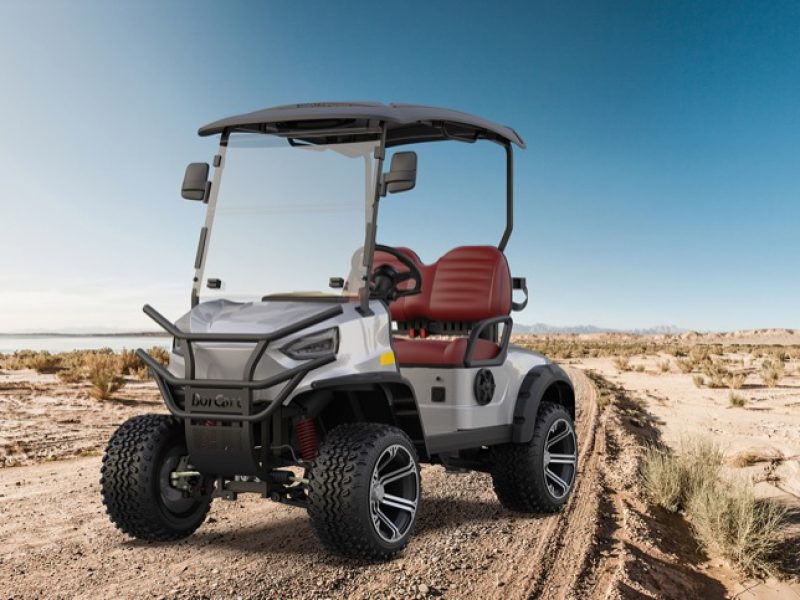
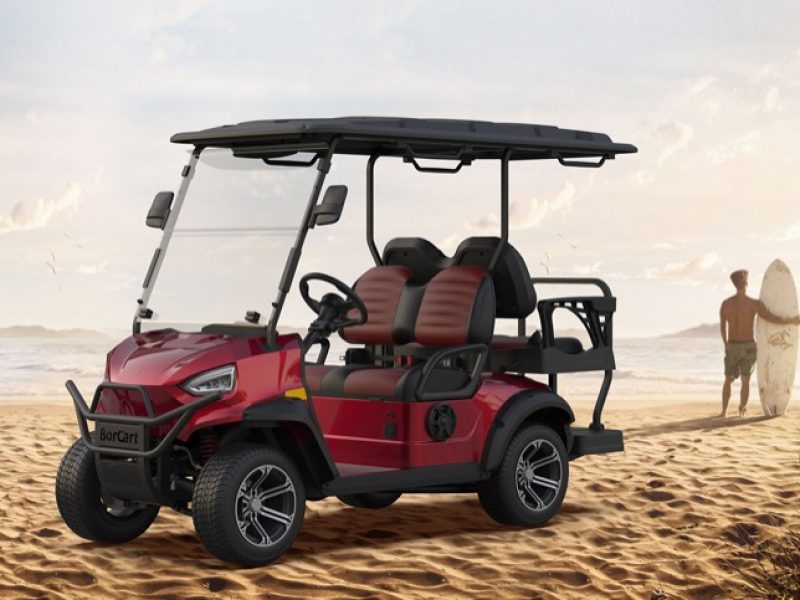
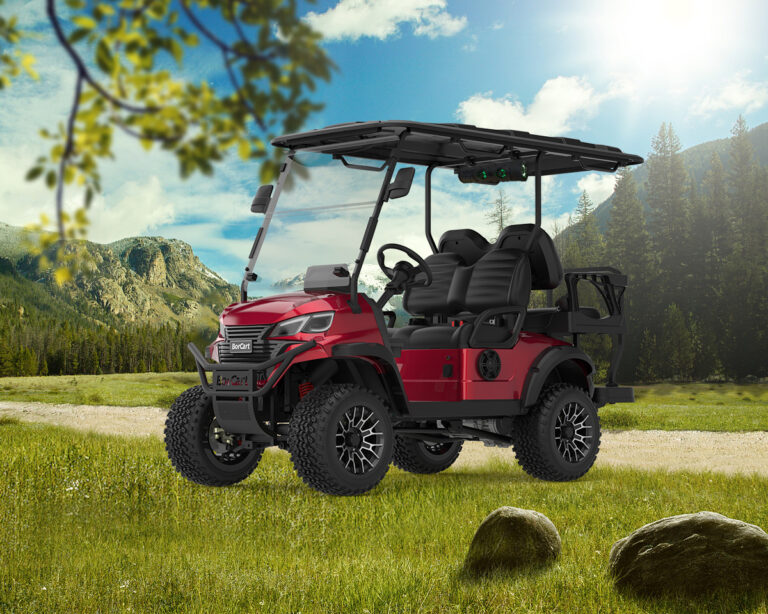
BorCart addresses a different purchasing requirement: configurable vehicles and OEM/ODM manufacturing for distributors, brand owners, and project buyers.
Neither approach automatically suits every customer.
For a private buyer, nearby service access may outweigh customization. For an importer, a documented specification, repeatable production, and replacement-parts plan may matter more.
Evaluate each supplier using the same questions:
- Is the quoted configuration clearly identified?
- Are performance claims supported by stated conditions?
- Who handles diagnostics and warranty repairs?
- Which replacement parts are available locally?
- What changes between the sample vehicle and production order?
A useful comparison ranks suppliers against your requirements, not against an unsupported universal leaderboard.
Best Lithium Electric Golf Carts: Compare Energy, Not Just Voltage
Battery voltage attracts attention, but it does not independently establish range or hill-climbing performance.
Understand Battery Capacity in Kilowatt-Hours
For an initial comparison, nominal battery energy can be estimated as:
Nominal energy in kWh = nominal voltage × amp-hour capacity ÷ 1,000.
For example, a hypothetical 51.2V, 100Ah battery stores approximately 5.12kWh of nominal energy.
That does not mean all 5.12kWh will be available for driving. Usable energy depends on battery-management settings, operating limits, temperature, and battery condition.
Ask suppliers to identify:
- Battery chemistry and manufacturer.
- Nominal and usable energy.
- Charger compatibility.
- Battery-management protections.
- Warranty conditions and exclusions.
- Replacement availability and cost.
Lithium iron phosphate, or LiFePO4, is one lithium-ion chemistry—not a separate alternative to all lithium-ion batteries.
Compare Lithium and Lead-Acid Against Actual Ownership Needs
Lithium systems can reduce routine battery maintenance, particularly compared with flooded lead-acid batteries that require electrolyte checks.
However, “maintenance-free battery” does not mean “maintenance-free vehicle.”
Brakes, steering, tires, suspension, electrical connections, and charging equipment still require inspection.
Instead of accepting a universal battery-lifespan promise, request the conditions behind it: discharge depth, temperature, capacity-retention threshold, and any energy-throughput limit.
How Much Range Do You Actually Need?
Advertised range becomes useful only when you understand how it was measured.
Club Car’s published Onward specifications explicitly link estimated range to operating conditions. Its lower estimates reflect heavier loading and moderate hills, while higher estimates reflect lighter loading on flat terrain.
That distinction matters more than a headline mileage figure.
Build a Route-Based Range Requirement
Consider a hypothetical resort shuttle:
- Eight daily return trips.
- Three kilometers per return trip.
- Six additional kilometers for repositioning.
The planned distance is 30 kilometers per day.
If the buyer chooses a 25% planning allowance, the target becomes 37.5 kilometers under representative operating conditions. This allowance is an illustrative procurement assumption, not a universal technical standard.
The vehicle should demonstrate the required duty cycle with realistic passengers, luggage, gradients, and accessories.
A route test is more informative than asking whether the cart can achieve its advertised maximum distance.
Best Electric Golf Carts for Hills: Test the Complete Powertrain
A higher-voltage battery does not automatically create more wheel torque.
Hill performance depends on the motor, controller settings, gearing, tire diameter, battery discharge capability, vehicle weight, and payload.
For sloping properties, ask suppliers to define climbing capability using measurable conditions.
Request a Loaded Hill Demonstration
A useful test should establish:
- The gradient and length of the climb.
- Total passenger and cargo load.
- Battery state of charge.
- Starting and sustained climbing behavior.
- Restart performance on the incline.
- Braking and parking performance on the descent.
Also clarify whether a quoted gradeability figure describes a brief climb or repeated operation.
Regenerative braking may assist deceleration when the system supports it, but it does not replace correctly specified service and parking brakes.
For resort and agricultural routes, controlled operation matters more than an impressive unloaded demonstration.
Electric Golf Cart Prices: Calculate the Complete Ownership Cost
Purchase price is only the first line of the budget.
For commercial buyers, the relevant comparison includes delivery, charging infrastructure, maintenance, replacement batteries, downtime, and eventual resale.
Use a Practical Cost Framework
Compare shortlisted vehicles over the same ownership period and expected operating distance.
| Cost category | What to request |
|---|---|
| Vehicle purchase | Exact configuration, included accessories, warranty |
| Import and delivery | Freight, insurance, duties, local transport |
| Charging | Charger specifications and electrical requirements |
| Maintenance | Inspection schedule, labor needs, consumable parts |
| Battery replacement | Compatible replacement options and current quotation |
| Downtime | Parts lead times and repair arrangements |
| Residual value | Conservative estimate with stated assumptions |
A cheaper cart may become expensive if a minor failure creates weeks of downtime.
Likewise, a premium vehicle needs to justify its additional cost through relevant benefits—not simply larger screens or decorative accessories.
For fleets, compare cost per operating day or passenger journey alongside purchase price.
Charging Electric Golf Carts: Design Around Your Schedule
Do not assume every electric cart charges from the same outlet or reaches full charge overnight.
Charging requirements depend on the battery, charger output, supported input voltage, and installation conditions.
Confirm the supplied charger’s nameplate specifications before preparing the charging area.
Plan Charging Before Delivery
A charging plan should address:
- Available electrical supply and circuit capacity.
- Number of vehicles charging simultaneously.
- Charger ventilation and environmental protection.
- Safe cable placement.
- Suitable protection devices and grounding.
- Manufacturer instructions for temperature and storage.
- Procedures for damaged batteries or charging equipment.
Have a qualified electrical professional assess the installation.
For fleets, also consider turnaround time. A cart that completes the route but cannot recharge within the available operating window may still be unsuitable.
Golf Cart vs. Street-Legal LSV: Understand the Difference
A golf cart and a road-compliant low-speed vehicle are not interchangeable categories.
In the United States, qualifying low-speed vehicles fall within a specific federal framework. The relevant classification includes four wheels, a maximum attainable speed above 20mph and no more than 25mph under prescribed conditions, and a gross vehicle weight rating below 3,000 pounds.
Federal Motor Vehicle Safety Standard No. 500 specifies required safety equipment.
However, federal vehicle compliance does not automatically authorize operation on every local road.
State and local rules govern permitted routes and may impose registration, licensing, insurance, or other requirements.
Adding lights, mirrors, and seat belts to an ordinary golf cart does not, by itself, establish full compliance.
For international orders, confirm the destination market’s classification and documentation requirements before approving production.
OEM/ODM Electric Golf Carts: Turn Customization Into a Clear Specification
Customization should solve operating problems, not merely change appearance.
BorCart’s portfolio includes electric golf carts, sightseeing buses, cargo vehicles, patrol vehicles, and multipurpose work vehicles. Its OEM/ODM services support buyers seeking vehicle configurations and branding suited to their markets.
Separate Appearance Changes From Engineering Changes
Appearance-related requests may include body colors, upholstery, logos, and trim.
Functional changes require closer evaluation:
- Seating orientation and passenger access.
- Cargo platforms and equipment storage.
- Battery and charger selection.
- Lighting and electrical accessories.
- Tires, suspension, and ground clearance.
- Weather protection.
- Market-specific documentation.
A change to seating, tires, accessories, or load distribution can affect performance and suitability.
Specify the required outcome, then ask the manufacturer to confirm feasibility, limitations, price, and lead time in writing.
Never assume that a customized sample establishes compliance for every destination or configuration.
A Five-Step Acceptance Plan for Fleet Buyers
This is where purchasing discipline can prevent expensive surprises.
1. Write the Operating Brief
Document routes, passengers, cargo, gradients, climate, storage, charging windows, and expected daily use.
2. Freeze the Sample Specification
Identify the battery, motor, controller, charger, brakes, tires, seating, accessories, and approved drawings.
Record which substitutions require written approval.
3. Run a Representative Trial
Test the sample on the intended route, or a documented equivalent, with realistic loading.
Record distance, charging behavior, braking, steering, comfort, and any faults.
4. Inspect Production Consistency
Check vehicle identification, configuration, finish, fasteners, electrical connections, and supplied documentation against the approved specification.
Use an agreed inspection checklist rather than relying on appearance alone.
5. Prepare the Service Handover
Agree on warranty procedures, diagnostic support, spare-parts identification, maintenance records, and operator instruction before shipment.
Acceptance should confirm that the vehicles match the agreed specification—not simply that they arrived.
How to Use Customer Reviews Responsibly
Reviews can reveal ownership issues that a specification sheet misses. However, a short positive comment is not proof of long-term reliability.
Prioritize reviews that identify the model, battery configuration, purchase period, usage pattern, and service experience.
Look for repeated, specific observations about:
- Loaded range.
- Charging consistency.
- Ride comfort.
- Parts availability.
- Warranty response.
- Repair turnaround.
Separate a vehicle defect from a delivery problem or dealer-service issue.
No verified customer-review dataset was supplied for this guide, so no customer quotations or satisfaction scores are presented.
Discuss Your Electric Golf Cart Project With BorCart
Send BorCart your passenger capacity, daily distance, terrain, destination market, order quantity, and customization requirements.
Request a configuration proposal, itemized quotation, warranty terms, spare-parts plan, and sample-validation process. A clear operating brief makes the discussion more productive—and helps turn an attractive vehicle into a dependable working asset.
Frequently Asked Questions
What is the best electric golf cart for a resort?
Choose a vehicle that meets guest capacity, luggage requirements, boarding needs, route gradients, and charging windows. Validate those requirements through a representative loaded trial.
Are lithium electric golf carts always the better investment?
Not automatically. Compare purchase price, charging arrangements, maintenance, warranty terms, replacement availability, and expected utilization over the same ownership period.
How can I verify an electric golf cart’s range?
Request the test conditions, then evaluate the specified vehicle with realistic loading and terrain. Record the starting charge, distance, accessories used, and remaining charge.
What should I check when buying a used electric golf cart?
Inspect battery condition, charger compatibility, brakes, steering, tires, corrosion, and maintenance records. Obtain an independent inspection and investigate replacement-parts availability before purchase.
Can an electric golf cart operate on public roads?
Only where the vehicle and its use satisfy the applicable rules. Golf-cart status, federal LSV compliance, and local road-use permission are separate matters.
Can BorCart customize vehicles for dealers and fleet projects?
BorCart offers OEM/ODM services. Buyers should submit branding, configuration, operating, and destination-market requirements, then confirm the approved specification and commercial terms in writing.
References
1. The Cart Finder — “Best Electric Golf Carts: How to Compare Today’s Top Options”. Original article reviewed for structure, comparison approach, and information gaps. Its individual price and performance claims have not been adopted as independently verified facts.
2. BorCart — Official Company and Product Website. Company history, founding year, product categories, and customization information. The 26-year statement also reflects the company information supplied for this assignment. Manufacturer statements are not independent product-test results.
3. BorCart — Four-Seat Forward-Facing Golf Cart: Manufacturer’s Guide. Manufacturer perspective on applications, production, private labeling, and OEM customization.
4. Club Car — Onward Two-Passenger Specifications. Battery-energy specifications and explanation of estimated range under different loading and terrain conditions. These figures concern the identified Club Car configurations, not BorCart vehicles.
5. Club Car — Onward Six-Passenger Specifications. Configuration-dependent range estimates and battery-maintenance information.
6. Club Car — Vehicle Warranty Information. Examples of warranty conditions that combine time limits with cumulative energy-throughput limits. Terms vary by vehicle and application.
7. Electronic Code of Federal Regulations — 49 CFR § 571.500, Standard No. 500: Low-Speed Vehicles. Federal maximum-speed testing requirements and required vehicle safety equipment.
8. National Highway Traffic Safety Administration — Low-Speed Vehicle Laboratory Test Procedure, TP-500-02. Federal LSV classification parameters and compliance-testing context. Local road-use authorization requires separate verification.
Hot Tags: Electric Golf Cart Manufacturer, Electric Golf Cart Supplier, Wholesale Electric Golf Carts, OEM Golf Carts, ODM Golf Carts, Custom Electric Golf Carts, Commercial Electric Golf Carts, Lithium Battery Golf Carts, Electric Utility Vehicles, Golf Cart Fleet Solutions