Content Menu
● How We Selected These Golf Cart Manufacturers
● China’s Golf Cart Manufacturing Opportunity in 2026
>> Demand Extends Beyond Traditional Golf Courses
>> Manufacturing Clusters Provide Different Sourcing Options
● Golf Cart Manufacturer Comparison: Capacity, MOQ, and Certification
● The Top 10 Golf Cart Manufacturers in China
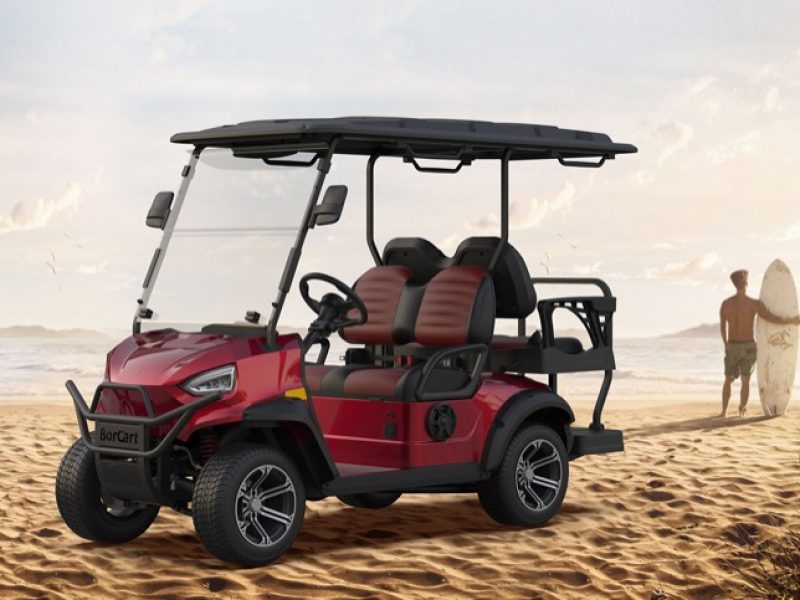
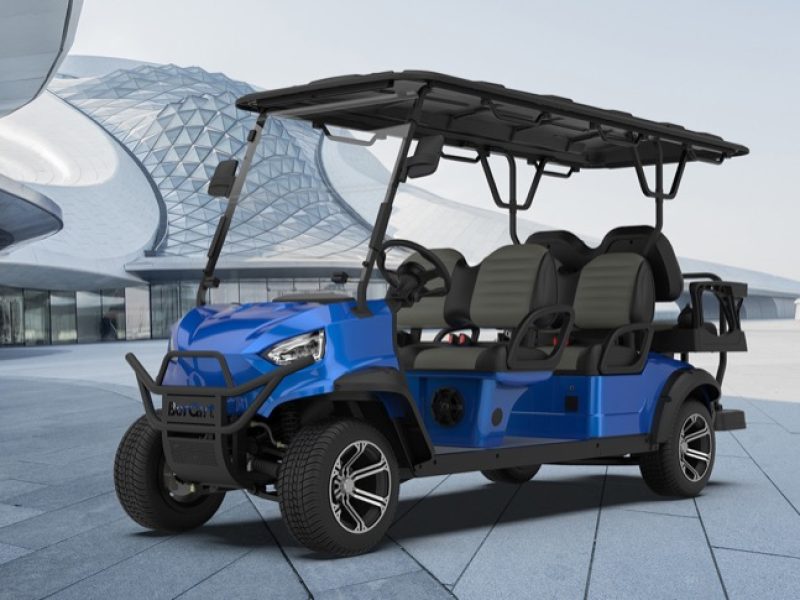
>> 1. Guangzhou BorCart Electric Vehicle Co., Ltd.
>> 2. Guangdong Lvtong New Energy Electric Vehicle Technology Co., Ltd.
>> 3. Marshell Electric Vehicle
>> 5. Suzhou Eagle Electric Vehicle Manufacturing Co., Ltd.
>> 6. Guangdong Yatian Industrial Co., Ltd.
>> 7. Guangzhou Langqing Electric Car Co., Ltd.
>> 9. Shenzhen Aoxiang Industrial Development Co., Ltd.
● Technical Buyer’s Guide: What to Specify Before Requesting Prices
>> Define the Vehicle’s Intended Legal Category First
>> Turn Material Descriptions into Measurable Requirements
>> Treat CE and RoHS Claims Precisely
● The Less-Discussed Procurement Trap: A Matching Parts List Can Still Hide a Different Vehicle
● How to Verify a Factory and Approve a Sample
>> Step 1: Confirm the Responsible Legal Entity
>> Step 2: Verify Certificates Independently
>> Step 3: Purchase a Production-Representative Sample
>> Step 4: Preserve the Approved Baseline
>> Step 5: Link Shipment Release to Acceptance
● Logistics and Landed-Cost Risks
>> Battery Documentation Must Match the Supplied Pack
>> U.S. Buyers Must Assess Trade Remedies Before Ordering
>> Compare the Whole Import Program
● Select a Manufacturing Partner, Not Just a Vehicle
>> 1. How Can I Check Whether a Manufacturer’s ISO Certificate Has Expired or Been Suspended?
>> 2. Does a CE-Marked Golf Cart Automatically Qualify for Public-Road Registration?
>> 3. How Can We Prevent Component Substitution After Sample Approval?
>> 4. What MOQ Should We Expect for a Private-Label Golf Cart?
Choosing a Chinese golf cart manufacturer is not simply a matter of comparing vehicle prices. For professional buyers, the more important questions concern production consistency, engineering support, market compliance, replacement parts, and the supplier’s ability to deliver the same approved specification repeatedly.
China offers a broad selection of manufacturers serving golf courses, resorts, residential communities, industrial facilities, and agricultural operations. Established production bases include Guangzhou, Dongguan, Shenzhen, Zhaoqing, Suzhou, and Xiamen, where the manufacturers in this guide produce golf carts and related electric vehicles. These locations give buyers access to several distinct manufacturing and engineering networks rather than a single sourcing center.
The essential purchasing principle is traceability: buyers should be able to connect a finished vehicle to its approved components, inspection records, technical documentation, and responsible manufacturing entity.
This guide presents ten manufacturers worth investigating, beginning with Guangzhou BorCart Electric Vehicle Co., Ltd. It explains their different commercial strengths, identifies information that requires verification, and provides a practical framework for qualifying a long-term supplier.
How We Selected These Golf Cart Manufacturers
A useful supplier assessment must go beyond an attractive catalog. The following criteria provide the framework for evaluating the companies in this guide.
| Evaluation dimension | What a buyer should examine | Why it matters |
|---|---|---|
| Manufacturing identity | Registered entity, factory address, production ownership, subcontracting arrangements | Establishes who actually builds and warrants the vehicle |
| Engineering capability | Technical drawings, prototype development, change control, application-specific design | Separates substantive customization from cosmetic relabeling |
| Quality management | Incoming inspection, process checks, final testing, corrective-action records | Helps assess repeat-order consistency |
| Production reliability | Available capacity, order backlog, bottlenecks, delivery records | Tests whether quoted lead times are realistic |
| Compliance documentation | Current management-system certificates and model-specific regulatory evidence | Reduces import and registration risk |
| OEM/ODM support | Branding, component selection, tooling, documentation, spare parts | Determines suitability for private-label programs |
| Lifecycle support | Diagnostic access, parts identification, warranty procedures | Influences operating costs after delivery |
For certification checks, buyers can use IAF CertSearch to review certificate status, scope, company identity, and issuing bodies. A certificate image alone is not enough to establish current validity.
Published production claims also require careful interpretation. “Vehicles per month,” “containers per day,” and “factory floor area” measure different things and should not be treated as interchangeable indicators of usable golf cart capacity.
China’s Golf Cart Manufacturing Opportunity in 2026
Demand Extends Beyond Traditional Golf Courses
Golf remains a substantial demand driver. The National Golf Foundation’s 2026 industry information reports that 48.1 million Americans participated in on-course or off-course golf during 2025, including 29.1 million on-course players. These are participation figures—not golf cart sales—but they help explain the continuing importance of the golf facility market.
For a direct market estimate, Future Market Insights values the global golf cart industry at approximately USD 2.30 billion in 2025 and estimates USD 2.41 billion for 2026. These are the research publisher’s estimates, not official government production totals.
Chinese manufacturers also offer utility carts, sightseeing vehicles, patrol vehicles, and cargo configurations. This product overlap can benefit buyers seeking passenger transport and maintenance vehicles from the same supplier, although common branding does not automatically mean common service parts.
Manufacturing Clusters Provide Different Sourcing Options
The suppliers reviewed here illustrate three useful sourcing networks:
- Guangdong: BorCart, Lvtong, Marshell, Yatian, Langqing, Aoxiang, and EDACAR.
- Jiangsu: Suzhou Eagle.
- Fujian: HDK in Xiamen.
- Sichuan: CENGO’s stated Chengdu production base, supplemented by a cooperative factory in Dongguan.
For buyers, the practical advantage is the opportunity to compare different factories and production approaches. Geographic proximity, however, should never substitute for a supplier-specific audit.
Golf Cart Manufacturer Comparison: Capacity, MOQ, and Certification
The table distinguishes published claims from information that still requires a written quotation or document review. “Not established” means the reviewed evidence did not provide a sufficiently clear figure; it does not mean the supplier lacks that capability.
| Manufacturer | Establishment or manufacturing history | Published capacity indicator | MOQ position | Certification/documentation position |
|---|---|---|---|---|
| Guangzhou BorCart | Founded 2000 | Four lines; claims dispatch capability of 10 containers daily across vehicle categories | Sample orders offered; production MOQ requires quotation | Publishes IQC, PQC, QA, and assembly-line testing procedures; request current certificates |
| Lvtong | Founded 2004 | Older official profile states approximately 2,000 units/month; current capacity needs reconfirmation | Not established | Supplier materials report ISO 9001 and ISO 14001; verify current scope and validity |
| Marshell | Manufacturing history since 2002 | Eight lines; claims 15 containers daily across multiple product categories | Not established | Claims ISO 9001, CE, and EEC-related documentation; verify exact model coverage |
| HDK | Public company profile lists 2006; confirm contracting entity history | Main factory stated as 88,000 m²; unit output not established | Not established | Request current system certificates and destination-specific model documents |
| Suzhou Eagle | Founded 1999 | Claims 1,500 units/month and three assembly lines | Not established | Publishes E-Mark-related claims; verify whether evidence covers components or complete vehicles |
| Guangdong Yatian | Established 2001 | Comparable unit output not established | Not established | Request certificates and test evidence for the selected vehicle |
| Guangzhou Langqing | Founded 2000 | Comparable unit output not established | Not established | Request current factory and model-specific documentation |
| CENGO | Website states established 2015 | Claims 1,000 units/day for its stated production arrangement; independently verify allocation and scope | Not established | Claims ISO 9001 and CE; request certificate numbers and model coverage |
| Shenzhen Aoxiang | Official website states 2003 | Factory area stated as 30,000 m²; unit output not established | Not established | States conformity with ISO 9001:2015 management-system requirements; verify certification status |
| EDACAR EV | Manufacturing heritage traced to predecessor established 2008 | Comparable unit output not established | Not established | Request evidence under the current contracting entity and selected model |
A quotation should state MOQ separately for standard vehicles, custom colors, proprietary bodywork, battery configurations, and branded packaging. One general MOQ cannot adequately describe all five.
The Top 10 Golf Cart Manufacturers in China
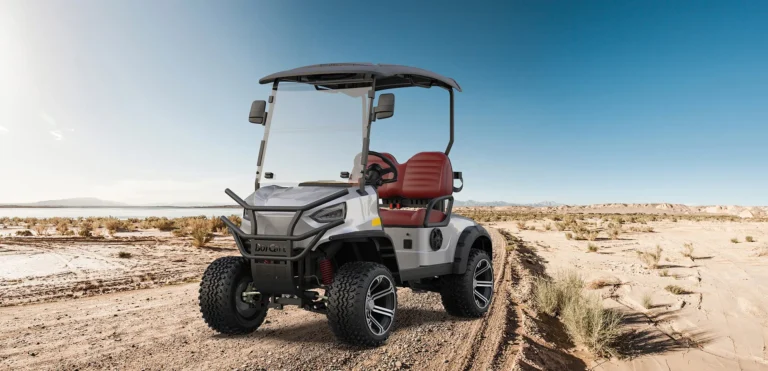
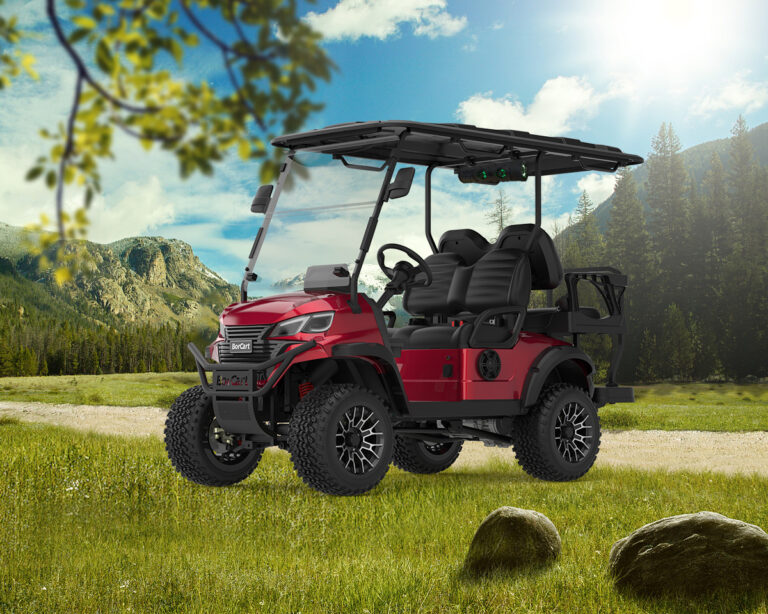
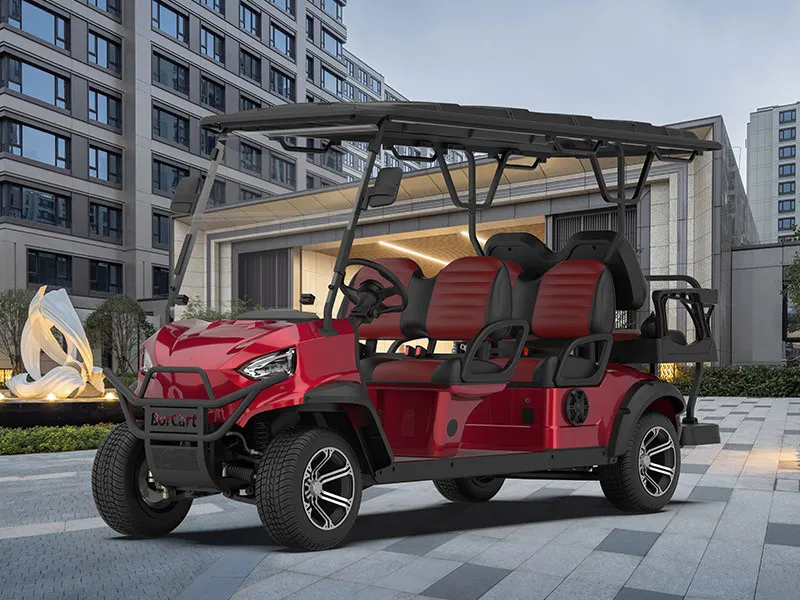
1. Guangzhou BorCart Electric Vehicle Co., Ltd.
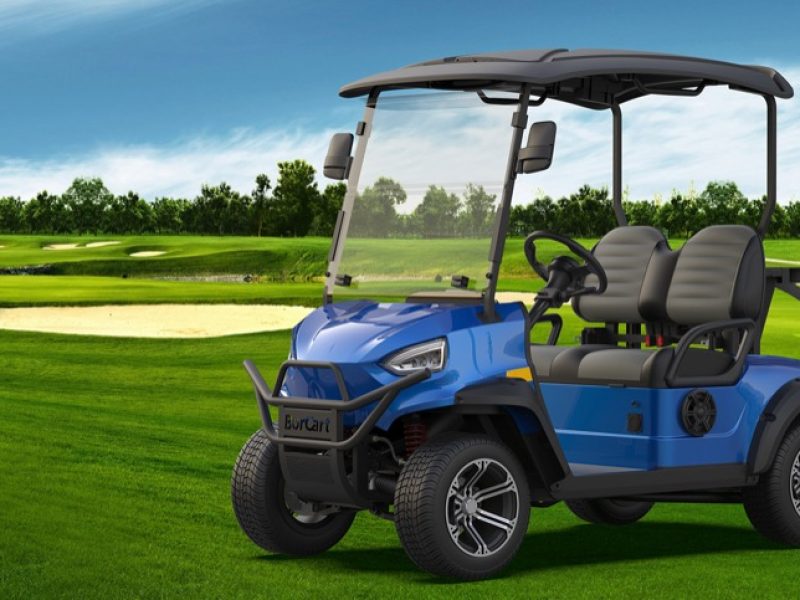
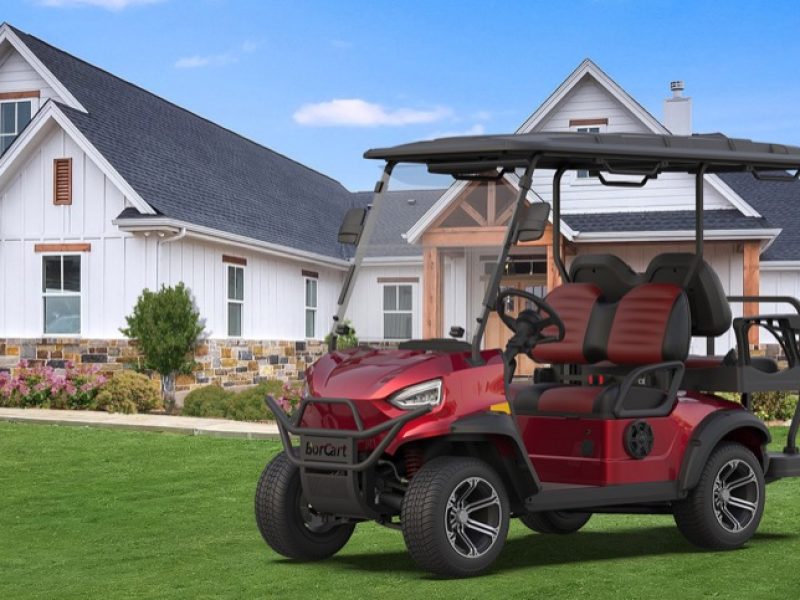
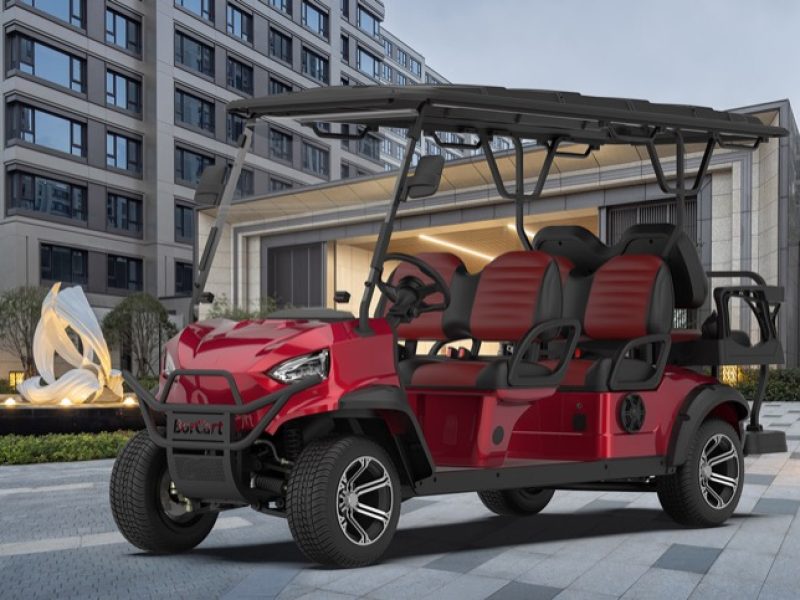
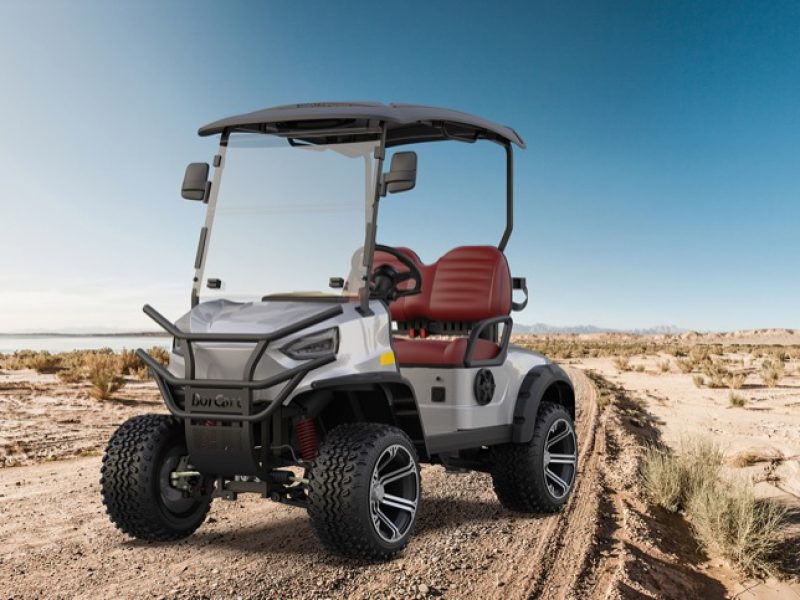
BorCart was founded in 2000, giving it approximately 26 years of operating history in 2026. Its published portfolio includes golf carts, sightseeing buses, freight vehicles, patrol vehicles, and other specialized electric vehicles. The company reports a 200,000 m² workshop, more than 100 engineers and technicians, and four production lines. These remain company-published figures rather than independently audited measurements.
Its strongest procurement proposition is the combination of in-house component production and customization support. BorCart states that it produces chassis, bodies, molds, and paint-related work internally, while offering OEM/ODM development and sample orders. This makes it a relevant candidate for smaller and medium-sized brands seeking more than a logo change on a standard golf cart.
The company names KDS and Mahle motors, Curtis controllers, and Delta-Q chargers among its component options. Buyers should nevertheless specify exact part numbers: a supplier’s access to a component brand does not establish that every quoted model includes it.
- Core advantage: Potential cost control and configuration flexibility through in-house production and engineering support.
- Published market reach: More than 30 countries, including the United States, Germany, France, the United Kingdom, Mexico, Australia, and several Southeast Asian markets.
- OEM/ODM scope: Customer-specific designs, functional adaptations, branding, and development around multiple vehicle categories.
- Buyer verification priority: Request a named engineering contact, agreed response times, a controlled bill of materials, and a written sample-to-production approval procedure.
For buyers evaluating communication efficiency, a practical test is to submit one consolidated technical questionnaire and assess whether the response resolves engineering questions clearly. Treat responsiveness as something to measure during qualification, not assume from promotional language.
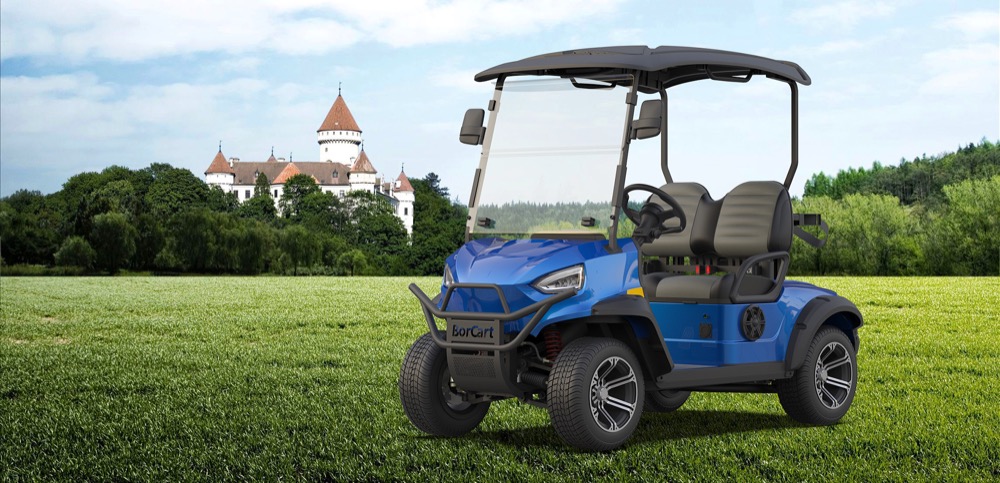
2. Guangdong Lvtong New Energy Electric Vehicle Technology Co., Ltd.
Founded in 2004, Lvtong manufactures golf carts, sightseeing vehicles, and other electric mobility products in Dongguan. Its official English profile states approximately 2,000 units of monthly capacity, while other company materials describe larger facilities. Buyers should therefore request a current production statement rather than rely on an undated webpage figure.
Lvtong is particularly relevant to buyers comparing an established golf cart platform with broader commercial vehicle options. Its current marketing explicitly addresses dealers, distributors, commercial fleet buyers, and OEM/ODM configurations.
- Core advantage: Established golf cart product families and a broad commercial vehicle offering.
- Published market focus: International dealers, distributors, and fleet customers; a verified revenue-by-region breakdown was not established.
- OEM/ODM scope: Market-specific configurations and private-label supply discussions.
- Buyer verification priority: Confirm current factory capacity, the exact manufacturing entity, certificate scope, and the configuration available for the intended destination.
Lvtong is worth considering when platform availability and ongoing fleet procurement matter more than highly experimental styling.
3. Marshell Electric Vehicle
Marshell states that its manufacturing experience dates to 2002. Its current profile identifies production facilities in Zhaoqing and Anhui, more than 500,000 m² of workshop space, and eight production lines. Its advertised dispatch capacity spans multiple vehicle categories, not golf carts alone.
Its portfolio includes golf carts, low-speed vehicles, personal transportation vehicles, sightseeing buses, utility vehicles, and industrial equipment. That breadth makes it a candidate for buyers consolidating several mobility requirements into one supplier relationship.
- Core advantage: Broad engineering and vehicle-category coverage.
- Published market focus: International markets; the reviewed profile does not establish which regions represent the largest sales share.
- OEM/ODM scope: Design, prototyping, themed aesthetics, and function-specific development.
- Buyer verification priority: Establish which factory and line will produce the order, then review the corresponding inspection and delivery records.
A broad portfolio is useful only if the supplier can support the selected platform consistently after delivery.
4. HDK Electric Vehicles
HDK manufactures golf carts, hunting buggies, sightseeing carts, and utility vehicles. Its website identifies an 88,000 m² main factory in Xiamen. A public company profile lists 2006 as its founding year; buyers should confirm the history and identity of the legal entity signing their contract.
The company’s published positioning covers personal, commercial, utility, and fleet applications. It is therefore relevant to distributors comparing a multi-application electric vehicle range rather than sourcing a single golf course cart.
- Core advantage: Broad electric golf cart and utility platform coverage.
- Published market focus: International fleet, personal mobility, and commercial customers; principal regional sales shares were not established.
- OEM/ODM scope: Obtain written confirmation of private-label rights, permitted engineering changes, tooling ownership, and minimum commitments.
- Buyer verification priority: Clarify controller diagnostics, battery warranty responsibility, and access to platform-specific replacement parts.
Do not assume that a dealer arrangement automatically includes unrestricted customization rights.
5. Suzhou Eagle Electric Vehicle Manufacturing Co., Ltd.
Suzhou Eagle was founded in 1999 and specializes in four-wheel electric vehicles, including golf carts, passenger carriers, trucks, and customized derivatives. Its website reports three assembly lines and approximately 1,500 units of monthly capacity.
The company explicitly offers customization based on standard vehicles, which can suit buyers seeking cargo or passenger configurations without commissioning an entirely new vehicle architecture. It also advertises exports to more than 100 countries.
- Core advantage: A long-established four-wheel electric vehicle portfolio.
- Published market reach: More than 100 countries; the source does not provide audited rankings of its largest markets.
- OEM/ODM scope: Seating arrangements, colors, accessories, utility bodies, and specialized adaptations.
- Buyer verification priority: Examine drawings and test evidence for modified payloads, seating layouts, and braking configurations.
A standard platform with a new body or seating layout still requires application-specific technical review.
6. Guangdong Yatian Industrial Co., Ltd.
Yatian was established in 2001. Its portfolio includes golf carts, vintage-style vehicles, utility vehicles, and off-road-oriented products. The company’s current materials emphasize hospitality, tourism, events, agriculture, and property operations.
Its distinguishing feature is design variety. Buyers seeking a themed resort fleet or a vehicle with a different visual identity may find Yatian more relevant than a supplier focused narrowly on conventional golf course carts.
- Core advantage: Distinctive styling and multiple application categories.
- Published market focus: Worldwide customers in tourism, hospitality, commercial venues, and utility applications; principal export destinations were not quantified.
- OEM/ODM scope: Discuss branded finishes, passenger layouts, commercial bodies, and application-specific structures.
- Buyer verification priority: Check whether styling changes affect access to service points, visibility, turning clearance, or replacement body-panel availability.
Visual differentiation should be evaluated alongside repairability, not separately from it.
7. Guangzhou Langqing Electric Car Co., Ltd.
Langqing was founded in 2000 and produces golf carts, tourist vehicles, freight vehicles, patrol vehicles, and towing equipment. Its published applications include hotels, resorts, airports, parks, factories, and campuses.
The company is relevant to procurement teams managing several internal transport needs. A resort, for example, may need passenger carts, maintenance vehicles, and small cargo vehicles, each with different operating requirements. Langqing’s product range provides a basis for that discussion.
- Core advantage: Broad internal-transport vehicle coverage.
- Published market focus: Domestic and international buyers; the reviewed sources do not establish leading export regions by sales.
- OEM/ODM scope: Confirm the engineering scope for passenger, cargo, patrol, and specialized configurations.
- Buyer verification priority: Request a component commonality matrix showing which parts are shared across the proposed fleet.
Buying several categories from one manufacturer can simplify procurement, but only documented parts commonality can establish the maintenance benefit.
8. CENGO Electric Vehicles
CENGO’s website states that the company was established in 2015 and describes a Chengdu production base plus a cooperative factory in Dongguan. It advertises golf carts and utility vehicles and claims ISO 9001 and CE certification.
Its published material also contains unusually large daily production claims and experience statements that do not align neatly with the stated founding year. These should be treated as verification questions, not repeated as independently established facts.
- Core advantage: A stated production network spanning southwestern and southern China.
- Published market focus: A domestic dealer network and international sales; largest export regions were not established.
- OEM/ODM scope: Request a project-specific proposal identifying branding options, engineering responsibilities, and the actual producing factory.
- Buyer verification priority: Audit the facility assigned to the order and confirm whether advertised capacity belongs to that facility, a partner, or a wider network.
The key issue is not whether a supplier uses a cooperative factory, but whether that arrangement is transparent and contractually controlled.
9. Shenzhen Aoxiang Industrial Development Co., Ltd.
Aoxiang’s official website states that it was established in 2003. It produces golf carts, sightseeing vehicles, patrol vehicles, and related accessories, and reports exports to more than 50 countries and regions.
Its range makes it relevant to buyers sourcing passenger carts together with off-highway commercial vehicles. The company also publishes an ISO 9001:2015-related management-system statement, which buyers should validate through the issuing certification body or a recognized verification database.
- Core advantage: Golf cart and off-highway vehicle coverage with an established export presence.
- Published market reach: More than 50 countries and regions; principal sales destinations were not quantified on the official page reviewed.
- OEM/ODM scope: Obtain a written customization matrix covering bodywork, drivetrain, seating, cargo equipment, and brand identification.
- Buyer verification priority: Reconcile the registered company details, factory address, certification holder, and payment beneficiary before placing a deposit.
Where supplier profiles show different historical dates or facility figures, use registration and audit evidence to resolve the discrepancy.
10. EDACAR EV
EDACAR traces its manufacturing heritage to Dongguan EDA Electric Vehicle Technology Co., Ltd., established in 2008. Its published history distinguishes earlier golf cart parts and accessories experience from the subsequent development of complete electric vehicles. That distinction matters: predecessor experience should not be presented as an identical period of complete-vehicle production.
The company offers golf carts and related light electric vehicles and states that it exports to Europe, America, and Australia.
- Core advantage: A product-development background connected to golf cart parts and accessories.
- Published markets: Europe, America, and Australia.
- OEM/ODM scope: Request a written proposal defining branding, configuration changes, engineering ownership, and proprietary tooling.
- Buyer verification priority: Separate predecessor-company records from current-entity approvals, warranties, and production responsibilities.
Parts experience can be commercially useful, but complete-vehicle validation must still be demonstrated for the model being purchased.
Technical Buyer’s Guide: What to Specify Before Requesting Prices
Define the Vehicle’s Intended Legal Category First
A private-property golf cart and a road-going low-speed vehicle are not interchangeable purchasing categories.
In the United States, NHTSA identifies low-speed vehicles by specific criteria, including four wheels, an attainable speed above 20 mph and no more than 25 mph, and a gross vehicle weight rating below 3,000 pounds. Applicable federal requirements must be assessed alongside state and local operating rules.
NHTSA also states that it does not approve vehicles. Manufacturers self-certify compliance with applicable federal standards. Consequently, an “NHTSA-approved golf cart” claim deserves careful scrutiny.
For European destinations, distinguish CE marking from vehicle type approval. CE marking applies only where relevant legislation requires it; it is not a universal vehicle approval or road-registration document. The applicable vehicle approval route depends on the vehicle’s classification and intended use.
Turn Material Descriptions into Measurable Requirements
The following are recommended contract questions, not claims that every manufacturer above follows the same specification:
| System | Requirement to define | Evidence to request |
|---|---|---|
| Chassis | Material grade, section dimensions, wall thickness, welding requirements | Controlled drawing and material records |
| Corrosion protection | Pretreatment, coating system, coverage, agreed test method | Process specification and representative test report |
| Bodywork | Resin type, color reference, UV-performance requirements | Material identification and approved sample |
| Battery | Chemistry, manufacturer, pack model, usable energy, warranty | Pack datasheet and relevant test documentation |
| Motor | Exact model, rated operating conditions, thermal limits | Manufacturer datasheet |
| Controller | Model, current settings, firmware, diagnostic access | Configuration record |
| Brakes | Configuration, load conditions, acceptance criteria | Agreed test procedure and results |
| Electrical system | Harness identification, connector specification, protection arrangements | Wiring diagram and inspection checklist |
Avoid accepting “premium aluminum,” “automotive paint,” or “high-performance battery” as complete specifications. Each description should lead to a measurable requirement and an acceptance method.
Treat CE and RoHS Claims Precisely
CE is a conformity marking, not a blanket quality award. European Commission guidance states that manufacturers must identify applicable requirements, gather technical evidence, and issue the appropriate declaration of conformity. There is no central EU authority issuing a universal permission to use the mark.
Similarly, do not request a generic “RoHS certificate for everything.” Ask the supplier to identify the applicable legislation, product or component scope, and supporting evidence. RoHS-related documentation does not replace vehicle approval, braking validation, or battery transport documentation.
The Less-Discussed Procurement Trap: A Matching Parts List Can Still Hide a Different Vehicle
An important inspection principle is to approve the vehicle’s configuration—not only its component brands.
Two vehicles can list the same motor and controller while using different controller settings or firmware. A branded component list therefore should be supplemented by an approved configuration record.
For procurement purposes, request that the supplier preserve:
- Controller model, firmware version, and parameter file.
- Battery pack model and approved battery-management settings.
- Charger model and approved charging profile.
- Tire size and drivetrain configuration.
- A written engineering-change procedure.
- Serial-number-linked final inspection records.
This is a recommended control strategy, not an allegation about any manufacturer in this list. Its purpose is to make repeat orders reproducible and prevent unapproved changes from becoming warranty disputes.
BorCart’s published NPI, IQC, PQC, and QA framework provides an appropriate starting point for asking how a supplier manages such configuration control in practice. The same question should be put to every shortlisted factory.
How to Verify a Factory and Approve a Sample
Step 1: Confirm the Responsible Legal Entity
Before paying a deposit, request:
- Business registration details.
- Registered and production addresses.
- Factory ownership or operating arrangements.
- Exporting entity details.
- Bank beneficiary information.
- Written identification of any subcontracted production.
Investigate discrepancies rather than assuming that different company names are interchangeable.
Step 2: Verify Certificates Independently
Search the full certificate number and legal company name. Check the standard, active status, manufacturing address, scope, certification body, and accreditation information. IAF CertSearch provides these verification fields. If a certificate cannot be located, contact the issuer directly rather than concluding immediately that it is fraudulent.
Step 3: Purchase a Production-Representative Sample
The sample order should identify the intended mass-production configuration. Record any differences between the sample and the eventual order before approval.
Recommended evaluation items include loaded operation, braking, steering, charging, finish quality, service access, and performance on the buyer’s actual route. Acceptance conditions should be agreed in writing rather than negotiated after testing.
Step 4: Preserve the Approved Baseline
Retain the approved specification, photographs, part numbers, software records, and signed deviation list. Require written approval before material substitutions or configuration changes.
Step 5: Link Shipment Release to Acceptance
Agree inspection timing, defect classification, reinspection responsibility, and shipment-release documentation before production begins. A final inspection should verify conformity with the approved specification, not merely whether the cart moves.
Logistics and Landed-Cost Risks
Battery Documentation Must Match the Supplied Pack
For lithium-powered golf carts, request the relevant UN 38.3 test summary and verify that it identifies the supplied battery type. UNECE’s testing framework includes lithium cell and battery testing and test-summary requirements. A generic safety data sheet should not be treated as a substitute for the relevant transport evidence.
Confirm shipping classification, documentation, packing, and carrier acceptance with a qualified dangerous-goods forwarder for the actual shipment.
U.S. Buyers Must Assess Trade Remedies Before Ordering
For U.S.-bound projects, customs exposure can outweigh differences in factory pricing. Antidumping and countervailing duty orders covering certain low-speed personal transportation vehicles from China were published in August 2025. Applicability depends on the order scope and transaction details, not simply the supplier’s product name.
Before committing funds, obtain a broker or trade specialist’s assessment of classification, origin, producer/exporter identity, applicable deposits, and current instructions. Historical headline rates should not be used as a guaranteed landed-cost quotation.
Compare the Whole Import Program
Use the same cost structure for each supplier:
Vehicle price + customization + inspection + inland transport + export packing + freight + insurance + import charges + destination handling + assembly + initial spare parts + warranty support.
For partly assembled shipments, include local labor, tools, training, inspection, and waste disposal. A denser container load is not automatically the lower-cost delivery method.
Select a Manufacturing Partner, Not Just a Vehicle
The manufacturers in this guide offer different starting points: conventional golf cart platforms, broader commercial vehicle ranges, themed designs, and engineering-led customization. Their published information provides a basis for shortlisting, but it cannot replace factory verification, sample testing, and destination-specific compliance review.
BorCart is a relevant candidate for buyers seeking OEM/ODM support, sample validation, and customization across golf carts and related electric vehicles. Its published in-house production and quality-control processes provide concrete subjects for a technical qualification discussion rather than reasons to skip one.
To begin a BorCart project, submit your destination market, intended use, seating or payload requirement, route conditions, battery preference, branding needs, and expected order volume. Request a configuration-specific quotation, sample plan, documentation package, spare-parts proposal, and written production schedule before moving to volume purchasing.
Frequently Asked Questions
1. How Can I Check Whether a Manufacturer’s ISO Certificate Has Expired or Been Suspended?
Use the exact certificate number and company name in IAF CertSearch, then inspect the status, scope, address, issuing body, and last update. An apparently unexpired PDF does not prove that the certificate remains active. If the database does not resolve the question, request direct confirmation from the certification body.
2. Does a CE-Marked Golf Cart Automatically Qualify for Public-Road Registration?
No. CE marking is not a universal road-registration approval. Establish the vehicle category and applicable approval route with the destination authority, then verify the documents for the exact model and configuration. European vehicle type approval and conformity documentation are distinct from general CE requirements.
3. How Can We Prevent Component Substitution After Sample Approval?
Use a controlled bill of materials specifying manufacturer, model, revision, and approved alternatives. Add a written change-approval requirement and require production inspection to compare the finished vehicles with that baseline.
Do not rely solely on visual similarity or a component brand name. Preserve configuration information as well as hardware identification.
4. What MOQ Should We Expect for a Private-Label Golf Cart?
There is no reliable universal MOQ across these manufacturers. Standard vehicles, custom colors, dedicated molds, and exclusive body designs involve different commitments.
Request separate quotations for a sample, a pilot order, and a repeat production order. BorCart explicitly offers sample orders, but buyers should still confirm the MOQ and development charges for their particular customization package.
5. Who Bears Responsibility if an Imported Golf Cart Cannot Be Registered or Attracts Unexpected Duties?
Do not leave this question to implication. The contract should allocate responsibility for technical documents, conformity claims, customs information, inspection, and remedies for misrepresentation. Obtain destination-specific legal and customs advice before ordering.
For U.S. projects, assess both vehicle compliance and trade-remedy exposure. NHTSA’s self-certification framework and the China-related duty orders address different obligations; satisfying one does not resolve the other.
Resources
1. National Golf Foundation: 2026 industry facts covering 2025 participation and playing activity. https://www.ngf.org/the-clubhouse/golf-industry-research/
2. Future Market Insights: Golf cart market estimates and forecasts. https://www.futuremarketinsights.com/reports/golf-cart-market
3. European Union: CE marking requirements and manufacturer responsibilities. https://europa.eu/youreurope/business/product-rules-compliance/general-product-compliance/ce-marking/index_en.htm
4. European Commission: Vehicle type approval and conformity documentation. https://single-market-economy.ec.europa.eu/sectors/automotive-industry/technical-harmonisation/technical-harmonisation-eu_en
5. NHTSA: Low-speed vehicle test procedure and self-certification interpretation. https://www.nhtsa.gov/sites/nhtsa.gov/files/tp-500-02.pdf | https://www.nhtsa.gov/interpretations/dynasty002301
6. IAF CertSearch: Management-system certificate verification. https://www.iafcertsearch.org/ | https://www.iafcertsearch.org/services/certificate-search
7. UNECE: Lithium battery testing and transport-documentation framework. https://unece.org/DAM/trans/danger/publi/manual/Rev.6/ST-SG-AC10-11-Rev6-Amend1e.pdf | https://unece.org/transport/dangerous-goods/rev8-files
8. U.S. Federal Register: August 2025 antidumping and countervailing duty orders on certain Chinese low-speed personal transportation vehicles. https://www.federalregister.gov/documents/2025/08/12/2025-15244/certain-low-speed-personal-transportation-vehicles-from-the-peoples-republic-of-china-amended-final
9. U.S. International Trade Commission: Investigation findings and information on its 2025 industry report. https://www.usitc.gov/press_room/news_release/2025/er0717_67310.htm
10. BorCart: Company history, manufacturing claims, quality-control procedures, and OEM/ODM services. https://www.borcart.com/aboutus.html
Hot Tags: Golf Cart Manufacturers in China, Electric Golf Cart Manufacturers, Golf Cart Suppliers in China, Wholesale Golf Carts, OEM Golf Cart Manufacturer, ODM Golf Cart Manufacturer, Custom Golf Carts, Electric Utility Vehicle Manufacturers, Commercial Golf Carts, Golf Cart Factory