Content Menu
● Start With Your Golf Cart’s Daily Job
● How to Choose the Right Golf Cart Color
>> Balance Appearance With Your Operating Environment
>> Consider Heat Without Overstating Color Benefits
>> Specify Custom Colors Precisely
● Choose Golf Cart Seating Capacity by People and Payload
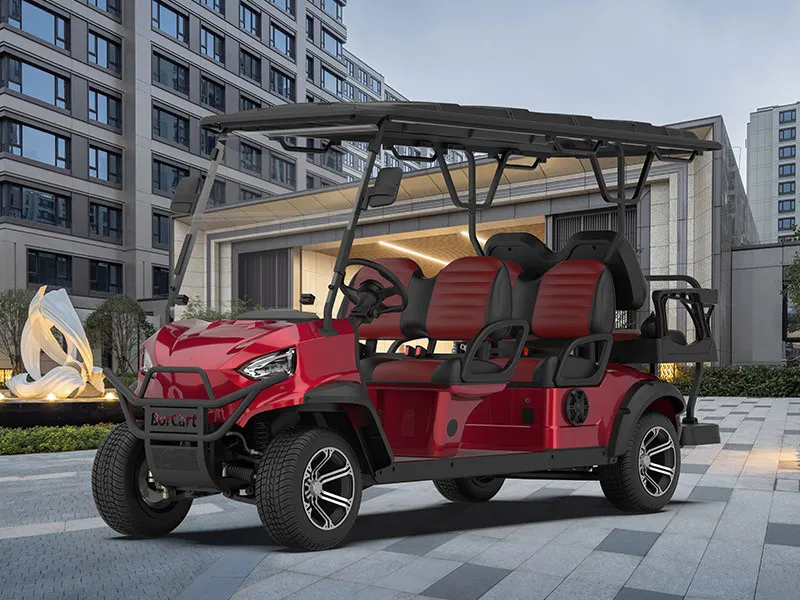
>> Compare Two-, Four-, and Six-Passenger Layouts
>> Seat Count Is Not Load Capacity
>> Check Seat Direction and Boarding Access
● Prioritize Golf Cart Features That Solve Real Problems
>> Battery and Charging: Match the Duty Cycle
>> Tires, Suspension, and Ground Clearance
>> Comfort and Utility Equipment
● Understand Safety and Public-Road Requirements
● Use a Configuration Scorecard Before Buying
● Run a Loaded Acceptance Test
● Evaluate Sales Support as Part of the Purchase
● Build Your BorCart Configuration Brief
>> What is the best golf cart color for hot climates?
>> Should I choose a four-seat or six-seat golf cart?
>> Does adding rear seats increase a golf cart’s load capacity?
>> Which golf cart features should I prioritize first?
>> Can BorCart customize golf cart colors and features?
>> How do I know whether a golf cart is street legal?
Choosing the right golf cart color, seating capacity, and features starts with one question: what must your cart do every day? A vehicle for weekend golf has different priorities from a hotel shuttle, agricultural workhorse, or family transporter. The best configuration balances appearance, passenger comfort, practical capability, and long-term support.
At Guangzhou BorCart Electric Vehicle Co., Ltd., our focus is on matching four-wheel low-speed electric vehicles to their intended applications. Drawing on 26 years of industry experience, we approach customization as a complete vehicle decision—not simply a selection of attractive accessories.
My starting recommendation is straightforward: define the route, confirm the passenger and cargo requirements, and then choose the finish and equipment. Here is how to turn that approach into a confident purchasing decision.
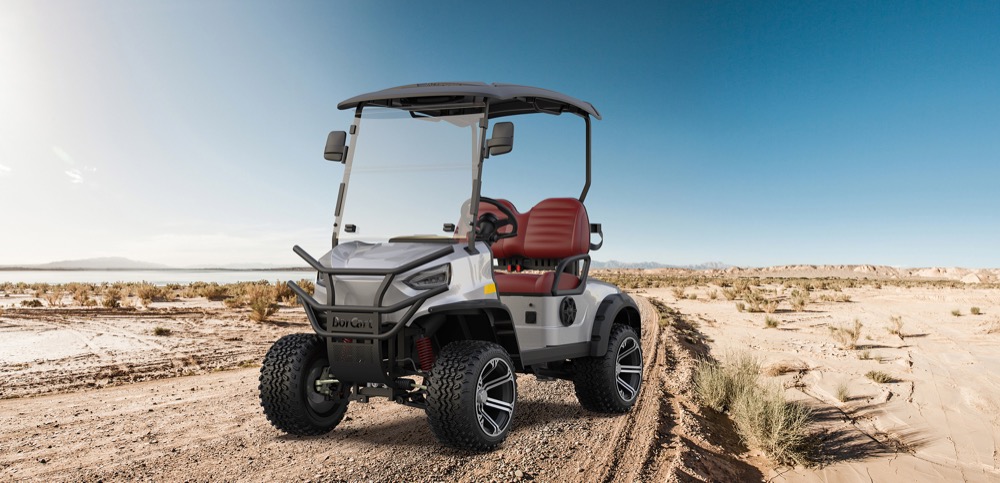
Start With Your Golf Cart’s Daily Job
Before comparing models, write a short operating brief. Include the typical journey, busiest operating period, parking space, charging arrangements, and people using the vehicle.
A useful brief answers five questions:
- Where will the cart operate: golf course, resort, community, industrial park, or farm?
- How many people will travel regularly, including the driver?
- What additional equipment, luggage, or tools must travel with them?
- Are there hills, narrow paths, tight turns, or uneven surfaces?
- Will the vehicle operate exclusively on private property or potentially use public roads?
These answers prevent expensive mismatches. Extra seating cannot compensate for insufficient luggage space. A striking paint finish cannot solve difficult boarding access. A larger battery is not a substitute for confirming that the vehicle suits the route.
How to Choose the Right Golf Cart Color
Balance Appearance With Your Operating Environment
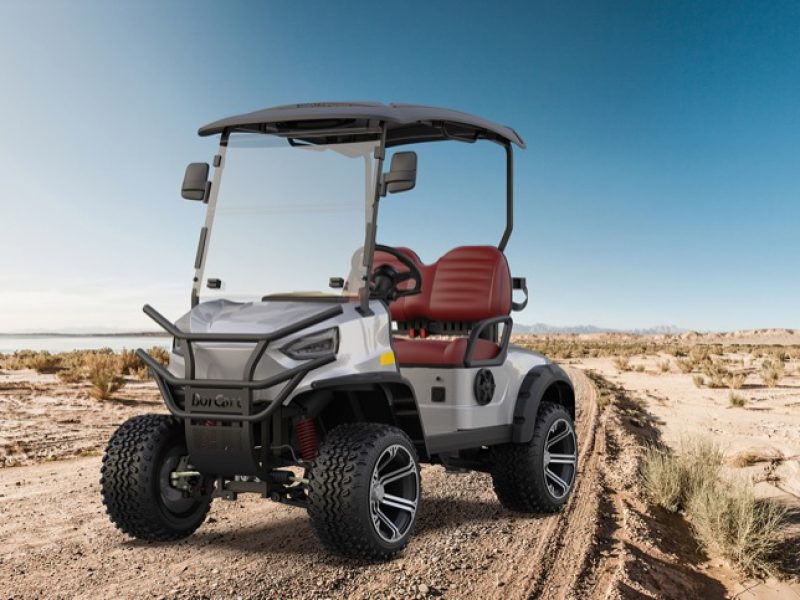
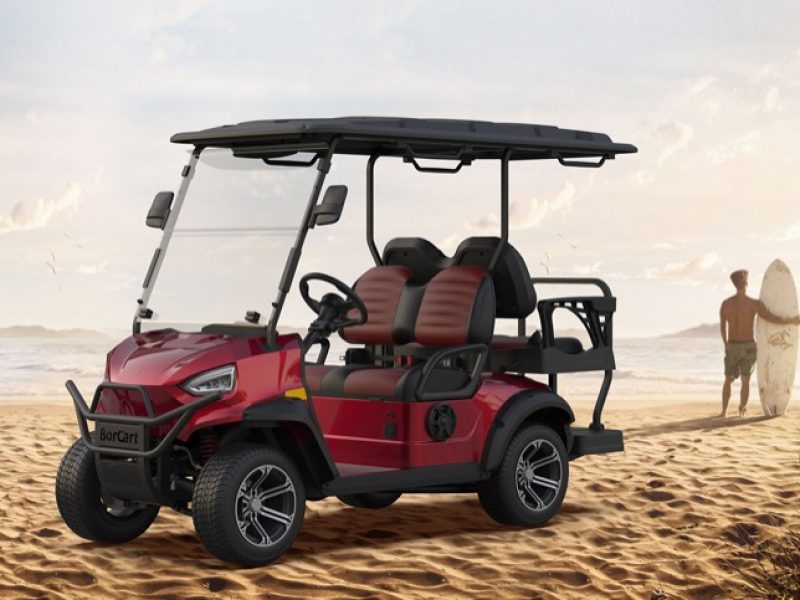
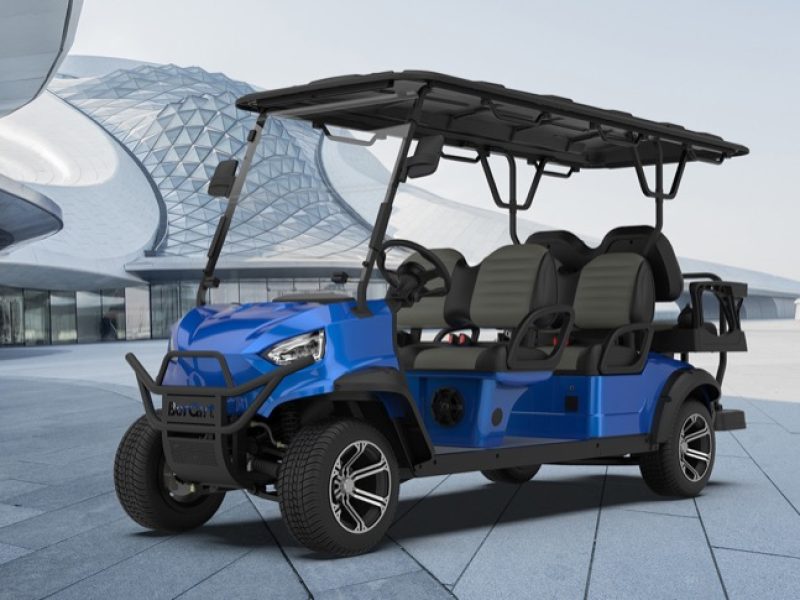
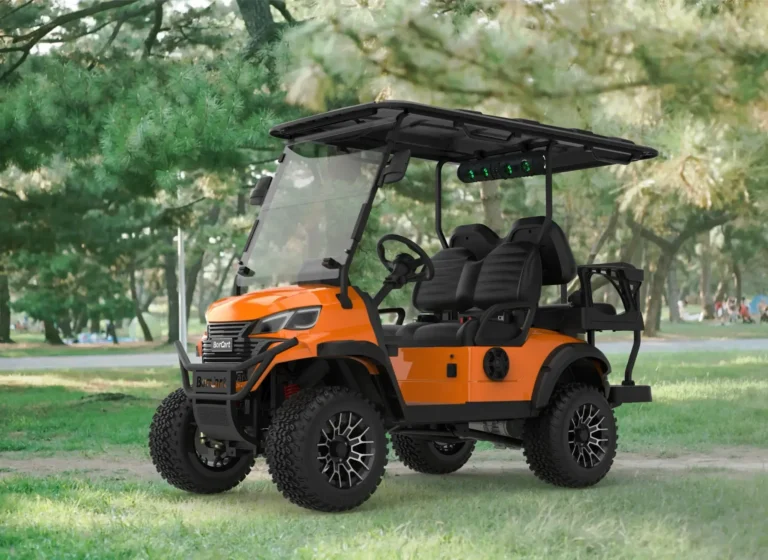
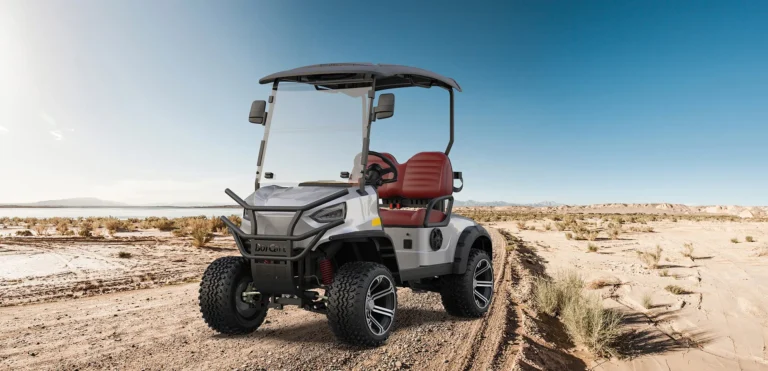
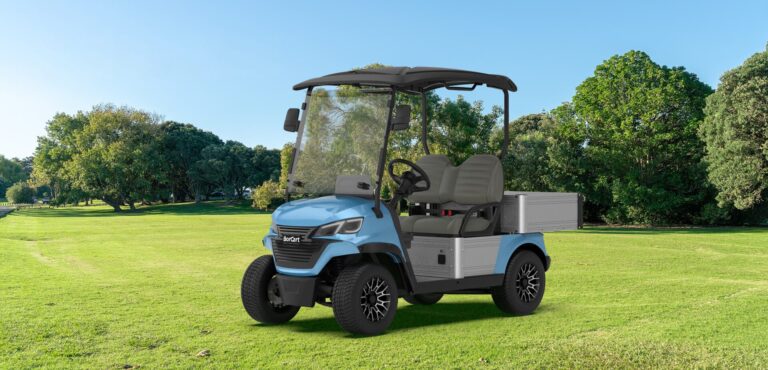
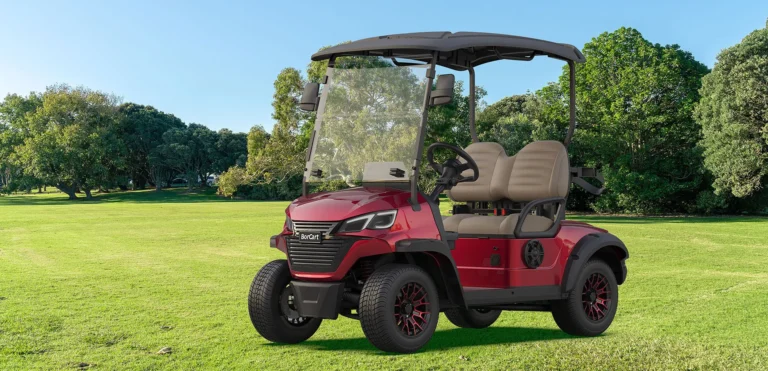
Golf cart color should support both your preferences and the vehicle’s working environment.
For private owners, the priority may be a coordinated body, roof, and upholstery combination. Commercial buyers should also consider brand consistency, cleaning routines, replacement panels, and repeat orders.
| Color direction | Potential application | What to check |
|---|---|---|
| White or light neutral | Resorts, courses, sunny locations | Surface staining and cleaning requirements |
| Silver or medium gray | Mixed-use fleets and communities | Appearance under actual lighting |
| Black or dark navy | Premium hospitality and personal use | Surface heat, visible dust, and finish care |
| Green or earth tones | Golf, parks, and agricultural settings | Visibility against surrounding vegetation |
| Custom brand color | Hotels, distributors, and branded fleets | Approved sample and repeat-order consistency |
These are selection guidelines, not fixed rules. Review a physical sample before committing to a complete fleet.
Consider Heat Without Overstating Color Benefits
Research on enclosed passenger cars shows that solar-reflective finishes can reduce heat buildup compared with conventional dark finishes. However, those temperature results should not be transferred directly to open golf carts.
For a golf cart, assess the whole passenger environment: canopy coverage, upholstery, direct sunlight, ventilation, and parking shade.
My recommendation is to inspect seat and hand-contact surfaces after realistic sun exposure. A pale body with dark upholstery may still leave uncomfortable seating surfaces.
Specify Custom Colors Precisely
For OEM/ODM orders, a description such as “ocean blue” leaves too much room for interpretation.
BorCart offers color matching and branding customization. Buyers should establish:
- A RAL or Pantone reference where appropriate.
- An approved physical sample.
- The required gloss, texture, and finish.
- Matching expectations for replacement panels and later orders.
Also ask how the finish should be cleaned and repaired. Attractive customization works best when it remains manageable throughout ownership.
Choose Golf Cart Seating Capacity by People and Payload
Compare Two-, Four-, and Six-Passenger Layouts
The right golf cart seating capacity depends on regular occupancy—not the largest group you might transport once a year.
| Seating configuration | Typical starting application | Main evaluation point |
|---|---|---|
| Two passengers | Golf, inspections, maintenance | Equipment and storage requirements |
| Four passengers | Families, communities, small-group transport | Seat direction and access |
| Six passengers | Hospitality, guided tours, group movement | Loaded maneuverability and luggage space |
| Larger passenger vehicle | Repeated shuttle duties | Whether a sightseeing vehicle better suits demand |
For occasional overflow, compare a larger cart against additional trips or a second vehicle. More seats are useful only when the complete vehicle remains suitable for its route and parking area.
Seat Count Is Not Load Capacity
A passenger rating identifies designated seating positions. It does not automatically establish sufficient capacity for every combination of occupants and cargo.
Published manufacturer specifications illustrate this distinction: one two-passenger model lists a 500-pound vehicle load capacity, while a six-passenger model lists 1,200 pounds. These are model-specific examples, not universal ratings.
Consider an illustrative four-person trip:
- Four occupants averaging 80 kg: 320 kg.
- Bags and equipment: 40 kg.
- Combined carried load: 360 kg.
That calculation is only the starting point. Confirm the exact vehicle rating, separate compartment limits, and how installed accessories affect remaining capacity.
Check Seat Direction and Boarding Access
“Four seats” can describe different arrangements, including four forward-facing seats or a two-forward, two-rear layout.
Evaluate:
- Step height and foot placement.
- Handholds and boarding space.
- Legroom for every position.
- Canopy coverage over rear passengers.
- Storage when all seats are occupied.
- Suitability for the intended passengers.
A convertible rear platform is not automatically approved for carrying people and cargo simultaneously. Follow the configuration’s documented limits.
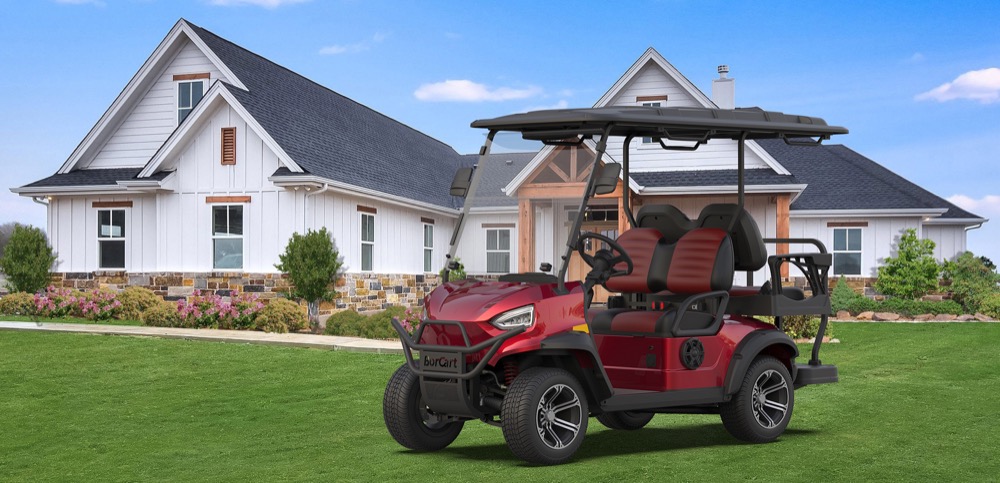
Prioritize Golf Cart Features That Solve Real Problems
Battery and Charging: Match the Duty Cycle
Battery selection should begin with daily distance, passenger load, terrain, operating hours, and available charging time.
Lithium batteries eliminate the watering required by flooded lead-acid batteries. However, they do not eliminate vehicle inspections or the need to follow battery and charger instructions.
Flooded lead-acid systems require an appropriate maintenance routine, including electrolyte checks and watering according to the manufacturer’s guidance.
Before choosing either system, ask for:
- Battery chemistry, voltage, and capacity.
- Charger compatibility and input requirements.
- Range-test conditions.
- Charging time under stated conditions.
- Temperature-related operating restrictions.
- Warranty coverage and replacement support.
A quoted range is meaningful only when you understand how it was measured. Request information relevant to your route rather than relying on the largest advertised figure.
Tires, Suspension, and Ground Clearance
Choose these features around the actual surface.
A cart used on maintained golf paths has different requirements from one crossing uneven agricultural access routes. Larger tires or a lifted appearance do not, by themselves, prove suitability for rough ground.
Request confirmation of the approved tire configuration, ground clearance, gradient capability, and operating limitations. Test the vehicle with a representative load wherever possible.
Comfort and Utility Equipment
Separate necessary equipment from optional conveniences.
For hospitality, priorities may include comfortable seating, weather protection, luggage arrangements, and easy cleaning. Maintenance teams may value cargo space, secure tool storage, and service access more highly.
USB outlets, displays, audio systems, and decorative lighting can improve the experience. They should follow—not displace—the essentials.
Understand Safety and Public-Road Requirements
A golf cart and a road-approved low-speed vehicle are not interchangeable descriptions.
In the United States, qualifying low-speed vehicles must meet applicable federal requirements. These include specified safety equipment such as lamps, mirrors, seat belts, and a windshield. State and local rules separately affect registration and permitted operation.
Adding lights and mirrors does not, by itself, establish road legality. Nor should a low-speed vehicle be assumed to provide passenger-car crash protection.
Before ordering, identify the destination market and intended operating area. Obtain documentation for the exact vehicle configuration, and verify local requirements with the relevant authority.
For private-property applications, still assess visibility, braking, passenger retention, route hazards, and operator training.
Use a Configuration Scorecard Before Buying
A simple scorecard helps prevent appearance or accessory lists from dominating the decision.
First, eliminate configurations that fail essential requirements: approved occupancy, adequate load capacity, route suitability, charging compatibility, or applicable regulations.
Then compare the remaining options:
| Decision category | Suggested weighting |
|---|---|
| Passenger and cargo suitability | 30% |
| Route capability and handling | 25% |
| Charging and maintenance fit | 20% |
| Service and parts support | 15% |
| Color and optional conveniences | 10% |
These percentages are a proposed purchasing framework, not an industry standard. Adjust them to your operation.
Score each qualifying configuration from one to five. Record why it earned that score. This makes comparisons more useful than judging vehicles by photographs or purchase price alone.
Run a Loaded Acceptance Test
A practical test reveals issues that specifications and showroom inspections may miss.
- Reproduce the load. Use representative passengers and securely positioned cargo within all limits.
- Follow the intended route. Include narrow sections, boarding points, parking areas, and permitted gradients.
- Check every seating position. Assess boarding, legroom, handholds, and weather coverage.
- Evaluate controlled operation. Have a qualified operator assess turning, braking, and parking under safe conditions.
- Verify charging. Confirm the charger matches the available supply and the planned charging window.
For overseas orders, agree on a documented factory inspection or demonstration where an on-site trial is impractical. Record the tested configuration so the results remain relevant to production vehicles.
Evaluate Sales Support as Part of the Purchase
Good sales support should help buyers understand trade-offs, not simply encourage more upgrades.
The customer-review screenshots supplied for this article describe responsive communication, patient explanations, a smooth purchasing process, and continued assistance after delivery. One reviewer described choosing the color as the hardest part.
However, those reviews concern Guild Golf Carts and a salesperson named Jeremy. They should not be presented as BorCart testimonials.
Their useful lesson is broader: buyers value clear explanations and reliable follow-through.
Ask any supplier to provide:
- A written specification and customization approval.
- Clear inclusions, exclusions, and delivery terms.
- Warranty terms and a claim procedure.
- Parts availability and technical documentation.
- A named contact for post-delivery questions.
At BorCart, the configuration discussion can cover golf carts, sightseeing buses, electric cargo vehicles, patrol vehicles, and other utility applications. Selecting the right vehicle category comes before finalizing its appearance.
Build Your BorCart Configuration Brief
For a focused proposal, send BorCart your operating location, route conditions, passenger count, cargo requirements, daily distance, charging arrangements, and preferred color.
Include your intended order quantity and any OEM/ODM requirements, such as branding, upholstery, or market-specific equipment.
Request a written comparison of suitable configurations covering seating, load limits, battery and charger, customization, documentation, warranty, and parts support. The goal is fit: a vehicle that looks right, carries the required load, and supports everyday work.
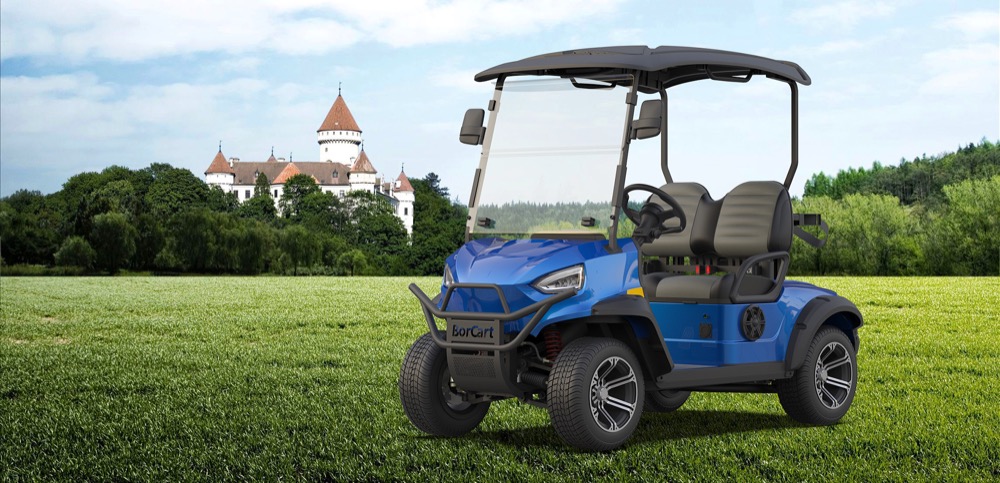
Frequently Asked Questions
What is the best golf cart color for hot climates?
Light or solar-reflective finishes are worth considering, but body color alone does not determine comfort. Evaluate canopy coverage, upholstery, ventilation, and shaded parking. Do not apply enclosed-car temperature figures directly to an open golf cart.
Should I choose a four-seat or six-seat golf cart?
Choose around regular occupancy and cargo needs. Then confirm load capacity, boarding access, storage, turning space, and parking dimensions. A six-seat vehicle is not automatically the better solution.
Does adding rear seats increase a golf cart’s load capacity?
No. Additional seats do not automatically increase the vehicle’s approved load rating. Confirm that the complete conversion is manufacturer-approved and check all resulting occupancy and load restrictions.
Which golf cart features should I prioritize first?
Start with route suitability, passenger capacity, load limits, braking, tires, and charging compatibility. Next consider weather protection, storage, and boarding comfort. Entertainment and decorative upgrades come afterward.
Can BorCart customize golf cart colors and features?
BorCart offers OEM/ODM customization, including color matching, branding, and configuration options. Confirm availability, compatibility, minimum quantities, samples, and lead times for your selected model before ordering.
How do I know whether a golf cart is street legal?
Check the exact vehicle classification, required certification, equipment, and local operating rules. A light kit or a seller’s general description is not sufficient evidence that a particular configuration may legally use public roads.
References
1. Guangzhou BorCart Electric Vehicle Co., Ltd. — Golf Carts and OEM/ODM Customization. Manufacturer information supporting color matching, branding, and configuration capabilities. The 26-year experience statement and broader application background were supplied by the commissioning company.
2. Lawrence Berkeley National Laboratory — Cool Colors for Cars Could Improve Fuel Economy, Reduce Emissions. Research supporting the discussion of solar reflectance and heat buildup; the study concerns enclosed passenger cars, not open golf carts.
3. Club Car — Onward Two-Passenger Specifications. Source for the model-specific two-passenger, 500-pound load-capacity example.
4. Club Car — Onward Six-Passenger Specifications. Source for the model-specific six-passenger, 1,200-pound load-capacity example and seating-layout context.
5. Trojan Battery — Battery Maintenance. Guidance supporting flooded lead-acid battery maintenance and charger-instruction considerations.
6. Trojan Battery — Lithium Batteries. Manufacturer information supporting the distinction that lithium batteries do not require watering. Product-specific performance and warranty claims should not be generalized to other batteries.
7. National Highway Traffic Safety Administration — Interpretation 07-005545as. Federal low-speed-vehicle classification, required equipment, and crashworthiness limitations.
8. National Highway Traffic Safety Administration — Interpretation Zozloski_1635. Golf-cart versus motor-vehicle distinctions and the separate role of state operating requirements.
9. Customer-review screenshots supplied with the brief. Sources for the discussion of Guild Golf Carts’ sales communication and after-sales assistance; no public review URLs were supplied. These are not BorCart customer testimonials. https://ppl-ai-file-upload.s3.amazonaws.com/web/direct-files/attachments/images/41925145/f5c4d412-63d3-45ff-ad2d-d25ed799d3be/Tu-Pian.jpg | https://ppl-ai-file-upload.s3.amazonaws.com/web/direct-files/attachments/images/41925145/3ceeaa10-6d4b-438d-98d2-3ee166adde58/Tu-Pian-2.jpg
Hot Tags: Golf Cart Manufacturer, Electric Golf Cart Supplier, Wholesale Golf Carts, Custom Golf Carts, OEM Golf Carts, ODM Golf Carts, 4-Seater Electric Golf Carts, 6-Seater Electric Golf Carts, Commercial Golf Carts, Golf Cart Customization