Content Menu
● EA Carts vs Club Car: Quick Comparison
● Price Comparison: Compare Equivalent Golf Carts
>> Build a Matching Equipment List
● Frame and Durability: Aluminum vs Powder-Coated Steel
>> What to Check on a Steel Frame
● Battery and Performance: Why Voltage Alone Is Not Enough
>> Compare Energy Capacity and Loaded Performance
● Technology and Passenger Comfort: Check the Exact Model
● Warranty Comparison: Read the Financial Limits
>> Questions to Ask Before Signing
● Street-Legal Golf Carts: Equipment Is Not the Whole Answer
● Five-Year Ownership Cost: Include Downtime and Resale
>> A Commercial Downtime Example
● A Practical Acceptance Test Before Purchase
>> Test the Vehicle on Your Real Route
● When a Customized Vehicle Is the Better Comparison
● Turn Your Comparison into a Project Specification
>> Is EA Carts better than Club Car?
>> Is EA Carts cheaper than Club Car?
>> Does a 60V golf cart outperform a 48V model?
>> Does EA offer unlimited lifetime battery replacement?
>> Can both brands be driven on public roads?
>> Which brand is better for commercial fleets?
EA Carts vs Club Car is a choice between different equipment packages, vehicle platforms, and ownership priorities—not simply a contest between a newer brand and an established name. EA Carts emphasizes bundled features and published battery replacement benefits. Club Car offers aluminum-frame vehicles, multiple powertrains, and separate golf-cart and street-legal product lines.
My purchasing recommendation is to compare configuration before brand. A feature-rich recreational cart, a golf-course vehicle, and a certified low-speed vehicle may carry similar price tags while serving very different purposes.
This comparison takes a manufacturing and procurement perspective informed by Guangzhou BorCart Electric Vehicle Co., Ltd.’s stated 26 years of industry experience. It evaluates published specifications rather than claiming hands-on testing. BorCart is also a competing manufacturer, so its commercial perspective should be considered alongside the evidence.
EA Carts vs Club Car: Quick Comparison
| Buying factor | EA Carts | Club Car |
|---|---|---|
| Representative four-seat model | EA4R+ 60V | Onward 4 Passenger |
| Published price context | EA4R+ listed at $14,498 | Onward family starts at $11,299; configuration changes price |
| Frame | Powder-coated steel, according to EA’s comparison | AlumiCore aluminum on Onward |
| Battery choices | Lithium across the compared EA models | Lithium, lead-acid, or gas powertrain options on standard Onward |
| Included technology | EA advertises touchscreen connectivity and audio | Equipment varies; Onward 4 Forward LSV offers smartphone connectivity |
| Battery coverage | Original-owner replacement program with a $2,500 total cap | Model- and battery-specific terms |
| Road-use eligibility | Confirm vehicle documentation and local registration requirements | Standard Onward and dedicated Onward LSV are different products |
| Main purchasing question | Does the bundled package match your needs? | Which configuration delivers the right operating capability? |
Published prices exclude configuration differences and may exclude delivery, preparation, taxes, and other charges. Obtain dated quotations before making a purchase.
Price Comparison: Compare Equivalent Golf Carts
EA’s comparison lists the EA4R+ 60V at $14,498 against a Club Car Onward HP Lithium at $17,220. Those particular figures suggest a $2,722 purchase-price difference.
However, Club Car’s current website also advertises the broader Onward 4 Passenger range from $11,299. That starting price does not establish the cost of a matching lithium configuration.
Neither comparison supports saying that one brand is always cheaper.
Build a Matching Equipment List
Request quotations with the same:
- Seating capacity and seating direction.
- Battery capacity and charger.
- Lifted or non-lifted suspension.
- Wheels, tires, lighting, and mirrors.
- Seat belts and applicable vehicle classification.
- Entertainment equipment.
- Freight, preparation, and warranty options.
Avoid adding equipment to the competing quotation when it is already standard. For example, EA’s own comparison identifies LED lighting on the Onward, so charging for another lighting upgrade would require a clearly different specification.
For commercial buyers, an attractive retail package is useful only when its features support the actual job.
Frame and Durability: Aluminum vs Powder-Coated Steel
The Club Car Onward uses an AlumiCore ladder-style aluminum frame. EA describes its compared vehicles as using powder-coated steel.
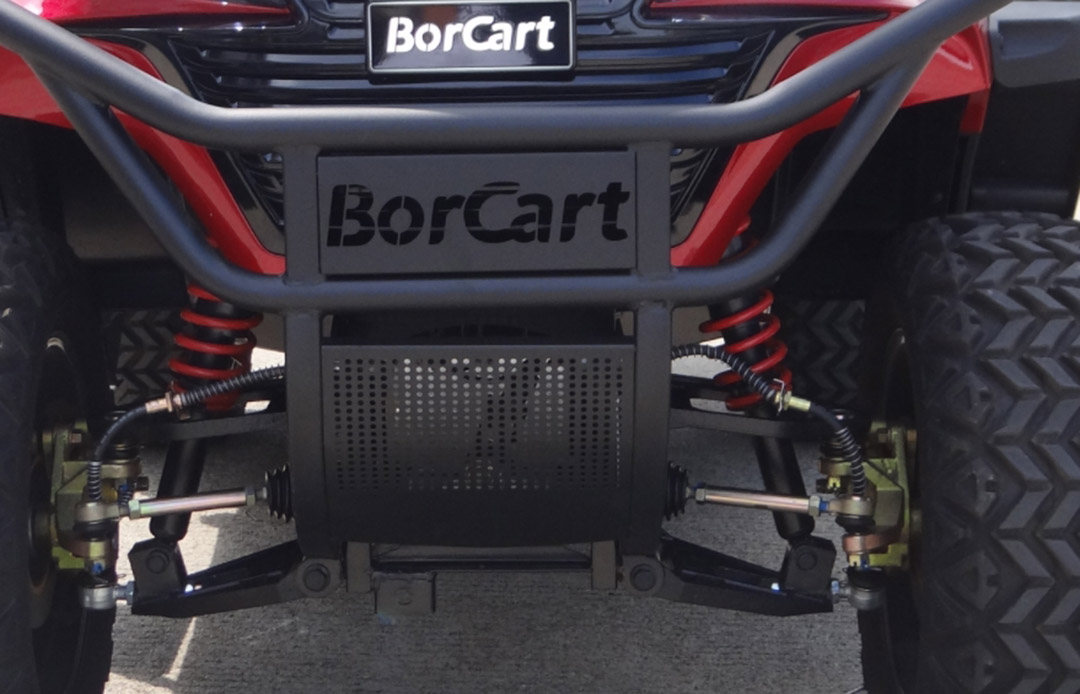
From a procurement perspective, I would inspect corrosion protection, joints, drainage, and repair access before treating frame material as a complete durability score.
Where Aluminum Makes Sense
Aluminum does not develop iron rust, making it attractive for coastal properties, humid resorts, and vehicles exposed to frequent washing.
That does not make an entire vehicle immune to deterioration. Fasteners, electrical connections, bearings, and other components still need inspection. Aluminum can also experience corrosion under certain conditions.
What to Check on a Steel Frame
For a powder-coated steel chassis, ask about:
- Surface preparation before coating.
- Coverage around welds and enclosed sections.
- Drainage and moisture traps.
- Inspection procedures for coating damage.
- Written corrosion exclusions.
A steel-frame vehicle should not be dismissed automatically. Equally, an aluminum frame should not replace a proper maintenance assessment.
Battery and Performance: Why Voltage Alone Is Not Enough
EA promotes a 60V system on the EA4R+. Older comparisons commonly match it against a 48V Club Car configuration.
Higher voltage alone does not prove better range, stronger hill climbing, or greater efficiency. Those outcomes depend on the complete drivetrain, battery energy, vehicle weight, tires, payload, and operating conditions.
Compare Energy Capacity and Loaded Performance
Battery energy is approximately:
kWh=(nominal voltage×amp-hours)/1,000
Two batteries with different voltages can store similar amounts of energy.
Club Car’s current Onward 4 Passenger LSV specifications illustrate why capacity matters: the manufacturer lists approximately 30 miles with a 4.0 kWh battery and up to 55 miles with a 7.0 kWh battery. These are manufacturer estimates, not guaranteed results on every route.
Ask both suppliers for:
- Nominal and usable battery capacity.
- Continuous motor output.
- Grade capability at the intended payload.
- Range-test conditions.
- Charging time and electrical requirements.
- Battery protection and temperature limits.
For a hilly hotel or agricultural property, a loaded route demonstration is more useful than a voltage headline.
Technology and Passenger Comfort: Check the Exact Model
EA advertises a seven-inch touchscreen, Apple CarPlay, Android Auto, and a Bluetooth sound bar on its compared package. Buyers seeking a ready-equipped recreational cart may find that combination appealing.
However, saying Club Car offers no factory smartphone integration is no longer accurate across its range. The current Onward 4 Forward LSV advertises Apple CarPlay and Android Auto through an overhead entertainment system.
The practical comparison is therefore package against package—not technology against no technology.
Evaluate comfort separately:
- Can passengers enter without awkward steps?
- Does the seating arrangement suit your users?
- Is the suspension comfortable when fully occupied?
- Can the driver see controls clearly in sunlight?
- Are replacement displays available?
- Can essential vehicle functions operate if entertainment equipment fails?
For resorts, quiet operation and easy boarding may matter more than audio equipment.
Warranty Comparison: Read the Financial Limits
EA publishes a one-year factory warranty on eligible parts, including the charger and controller. Standard coverage excludes repair labor.
Its separate Lifetime Key & Battery Replacement Program is administered by Axiom Product Administration. Published terms describe battery replacement benefits for the original purchaser, subject to a $2,500 total replacement-cost cap and pre-authorization.
“Lifetime” therefore does not mean unlimited replacement spending, unrestricted eligibility, or automatic transfer to another owner.
Questions to Ask Before Signing
For either brand, request written answers covering:
- Parts and labor eligibility.
- Battery capacity-loss thresholds.
- Commercial-use restrictions.
- Diagnostic and transport charges.
- Claim authorization.
- Transferability.
- Maintenance obligations and exclusions.
Club Car coverage varies by vehicle and battery. Do not assume every battery becomes uncovered after two years: Club Car publishes a five-year Inventus lithium battery warranty for the referenced CRU configuration.
The correct warranty comparison uses the documents supplied with the exact vehicle being purchased.
Street-Legal Golf Carts: Equipment Is Not the Whole Answer
Mirrors, lights, and seat belts do not independently establish that a cart can be registered for public-road use.
Buyers must distinguish a conventional golf cart from a low-speed vehicle, or LSV. Applicable vehicle standards, certification, registration, insurance, licensing, and local road rules all matter.
Club Car lists the standard Onward 4 Passenger separately from dedicated Onward LSV products. Its published LSV specifications identify a 25 mph maximum speed and specific safety equipment.
EA describes its vehicles as built to the federal LSV equipment standard, but purchasers should still obtain the documentation required by their registration authority.
Before paying a deposit:
- Identify the exact vehicle classification.
- Obtain the VIN and relevant certification documents.
- Verify registration eligibility locally.
- Confirm insurance availability.
- Check the roads where operation is permitted.
For an overseas project, U.S. documentation should not be assumed to establish compliance in the destination market.
Five-Year Ownership Cost: Include Downtime and Resale
Purchase price is only one part of the EA Carts vs Club Car value equation.
A useful ownership model is:
Purchase and delivery + financing + charging + servicing + repairs + downtime costs − resale proceeds.
Do not automatically insert a battery replacement in year five. Equally, do not treat a capped replacement program as eliminating every possible battery expense.
A Commercial Downtime Example
Consider a hypothetical resort with ten vehicles. If one cart becomes unavailable during peak check-in hours, the consequences may include delayed transfers, staff reassignment, and a temporary replacement rental.
These costs can outweigh the value of an entertainment upgrade.
Request service information from both suppliers:
| Service question | Why it matters |
|---|---|
| Who performs warranty work locally? | Establishes the actual repair route |
| Which parts are stocked nearby? | Helps assess likely downtime |
| What requires factory authorization? | Reveals administrative delays |
| Who pays transport and diagnostics? | Exposes costs outside parts coverage |
| Are substitute vehicles available? | Supports operational continuity |
Resale should also remain evidence-based. Club Car has an established used-vehicle market, but a precise retention percentage requires comparable transaction data. EA’s future resale value should not be presented as either proven or worthless without evidence.
A Practical Acceptance Test Before Purchase
For fleet procurement, I recommend a documented acceptance test rather than relying entirely on brochures.
Test the Vehicle on Your Real Route
- Load it with representative passengers or cargo.
- Complete the steepest routine climb.
- Assess controlled stopping on an appropriate test area.
- Check turning space and boarding access.
- Record battery use over the operating cycle.
- Confirm the available charging window.
- Inspect service access and review maintenance documentation.
Agree on pass criteria before the demonstration.
This approach is particularly valuable for hotels, parks, campuses, patrol operations, and agricultural sites, where operating conditions differ substantially from neighborhood cruising.
When a Customized Vehicle Is the Better Comparison
Neither a premium recreational cart nor a familiar brand name automatically solves a specialized transport requirement.
BorCart’s stated product scope includes electric golf carts, sightseeing buses, cargo vehicles, patrol vehicles, and multipurpose work vehicles, with OEM/ODM customization.
A manufacturer-direct project may suit buyers who need different seating layouts, cargo bodies, branding, or coordinated vehicle configurations.
However, customization should come with documented engineering specifications, destination-market compliance responsibilities, spare-parts commitments, and written warranty terms. It is not inherently cheaper or better.
The right comparison is between complete operating solutions.
Turn Your Comparison into a Project Specification
Before selecting EA Carts, Club Car, or a customized alternative, define your passenger capacity, terrain, daily mileage, cargo requirements, charging facilities, and destination market.
Contact Guangzhou BorCart Electric Vehicle Co., Ltd. with those requirements to request a project-specific OEM/ODM proposal. Ask for a configuration sheet, compliance responsibilities, spare-parts plan, and delivered-cost breakdown so you can compare every option on the same basis.
Frequently Asked Questions
Is EA Carts better than Club Car?
EA may suit buyers prioritizing bundled recreational features. Club Car may suit buyers seeking particular aluminum-frame platforms or dedicated LSV configurations. Compare the exact models, local service arrangements, and delivered prices.
Is EA Carts cheaper than Club Car?
Not universally. EA lists the EA4R+ at $14,498, while Club Car advertises different starting prices across its range. A fair comparison requires matching batteries, seating, equipment, and delivery charges.
Does a 60V golf cart outperform a 48V model?
Not necessarily. Voltage alone cannot establish range or climbing ability. Battery energy, motor output, controller settings, payload, tires, and test conditions must also be considered.
Does EA offer unlimited lifetime battery replacement?
No. Its published program has a $2,500 total replacement-cost cap, applies to the original purchaser, and requires pre-authorization. Buyers should review the complete agreement and exclusions.
Can both brands be driven on public roads?
Only eligible vehicles operated under applicable rules. Standard golf carts and certified LSVs are different categories. Confirm the exact vehicle’s documentation, registration eligibility, insurance, and permitted roads before purchase.
Which brand is better for commercial fleets?
The stronger choice is the one that meets route, payload, charging, maintenance, and service requirements at an acceptable ownership cost. A loaded demonstration and written support agreement are more useful than a general brand ranking.
References
1. EA Carts, “EA Carts vs Club Car: Price, Features, and Warranty Compared.” Source for the advertised EA4R+ package and the original model-price comparison. https://www.eacarts.com/blogs/blog/ea-carts-vs-club-car
2. Club Car, “Onward 4 Passenger.” Official overview of powertrains, aluminum construction, and model positioning. https://www.clubcar.com/en-us/personal/golf-carts/onward-4-passenger
3. Club Car, official product homepage. Source for the advertised Onward starting price and distinction between standard golf carts and street-legal vehicles. https://www.clubcar.com/
4. Club Car, “Onward LSV 4 Passenger Specifications and Dimensions.” Source for battery capacities, estimated ranges, speed, chassis, and safety specifications. https://www.clubcar.com/en-us/personal/street-legal-vehicles/onward-4-passenger/specifications
5. Club Car, “Onward 4 Forward LSV.” Source for factory smartphone connectivity and current LSV features. https://www.clubcar.com/en/personal/street-legal-vehicles/onward-4-forward
6. EA Carts, “Golf Cart Warranty | Lifetime Battery Program.” Source for parts coverage, labor exclusions, program administration, and the $2,500 battery benefit cap. https://www.eacarts.com/warranty
7. EA Carts, “Owning an EA Cart.” Source for ownership conditions, service arrangements, transfer restrictions, and vehicle-classification descriptions. https://www.eacarts.com/ownership
8. Club Car, “CRU Passenger Specifications and Dimensions.” Source for the referenced Inventus lithium battery warranty. https://www.clubcar.com/en/personal/street-legal-vehicles/cru-neighborhood-electric-vehicle/specifications
Hot Tags: Electric Golf Cart Manufacturers, Wholesale Electric Golf Carts, OEM Golf Cart Manufacturer, ODM Golf Cart Supplier, Custom Electric Golf Carts, Commercial Electric Vehicles, Golf Cart Fleet Solutions, Lithium Battery Golf Carts, Low-Speed Electric Vehicles, Electric Utility Vehicles