Content Menu
● What Are Custom Golf Cart Bodies?
● Start With Compatibility, Not Color
>> Coordinate the Whole Vehicle
● Custom Golf Cart Body Materials: What Should You Choose?
>> Vinyl Wraps
● Custom Golf Cart Design Ideas for Different Applications
>> Resort and Hotel Golf Carts
>> Agricultural and Utility Carts
● How Much Do Custom Golf Cart Bodies Cost?
>> Compare Complete Project Costs
● Safety and Road Use: Separate Styling From Compliance
>> Protect Visibility and Vehicle Systems
>> Check the Complete Configuration
● A Seven-Step Process for Better Custom Golf Cart Builds
>> 1. Write the Operating Brief
>> 2. Define the Visual Specification
>> 3. Confirm Technical Compatibility
>> 4. Approve a Representative Sample
>> 5. Inspect Under Intended Conditions
>> 6. Record Acceptance Criteria
>> 7. Plan Parts and Change Control
● OEM and ODM Customization for Commercial Buyers
● Turn Your Design Ideas Into a Clear Project Brief
● FAQs
>> Will a custom body kit fit any golf cart?
>> Is a wrap better than replacement body panels?
>> Can I install a golf cart body kit myself?
>> Will a new body increase driving range?
>> Does adding lights make my golf cart road legal?
>> What should a fleet buyer ask about replacement panels?
Custom golf cart bodies can transform an aging vehicle, strengthen a resort’s identity, or help a dealer develop a distinctive product range. However, the best custom golf cart design ideas do more than change appearances. They also account for fitment, maintenance, passenger access, and operating conditions.
At Guangzhou BorCart Electric Vehicle Co., Ltd., our approach starts with one question: what must this vehicle accomplish every day?
With 26 years of industry experience, we focus on electric golf carts and multifunctional electric vehicles for golf courses, hotels, scenic destinations, campuses, and agricultural applications. This guide explains how to turn a visual concept into a practical customization brief.
What Are Custom Golf Cart Bodies?
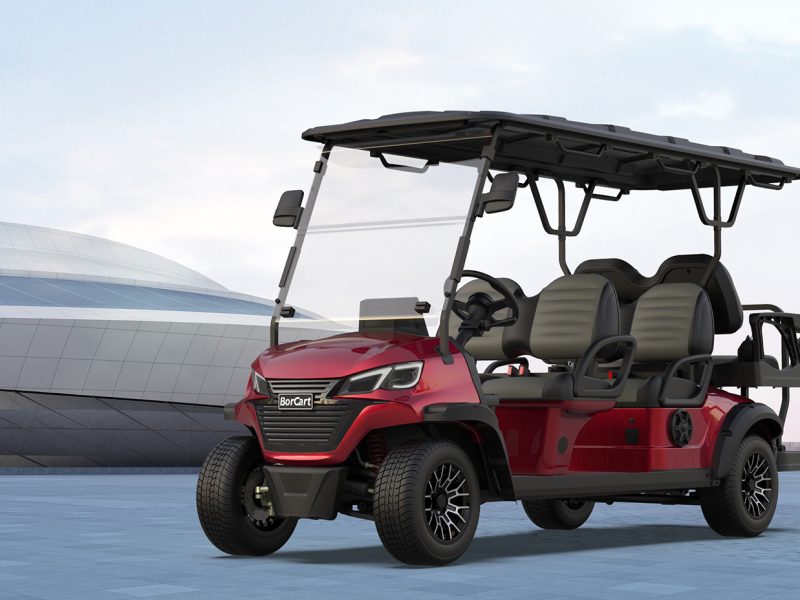
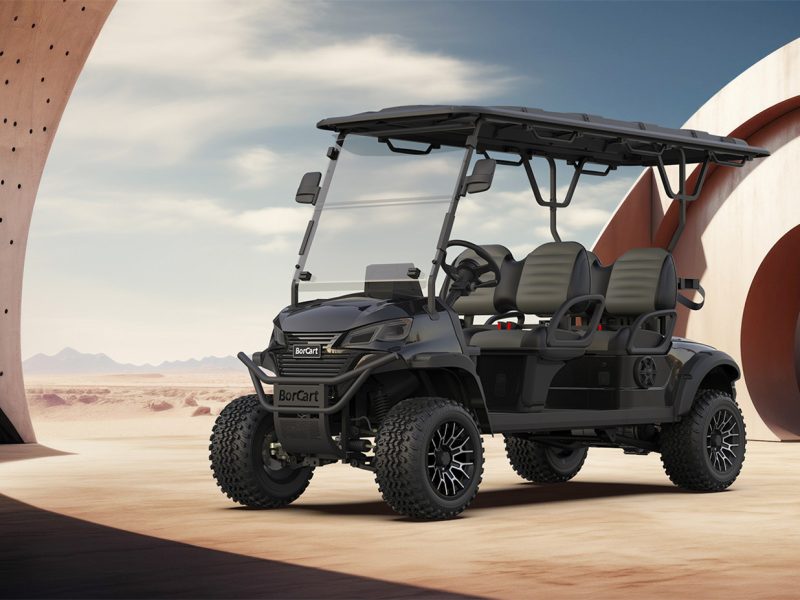
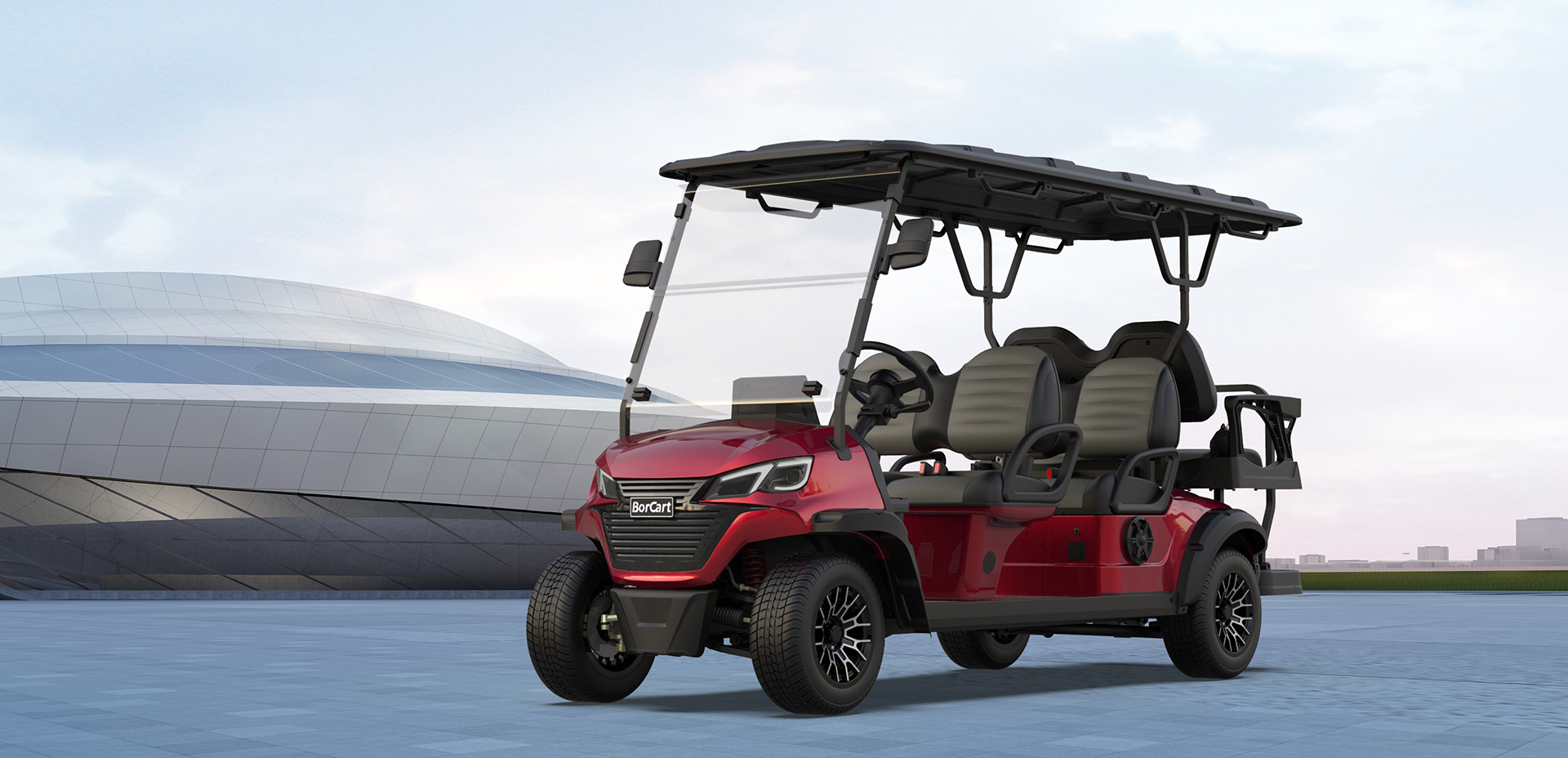
Custom golf cart bodies are replacement or specially designed exterior panels that change a cart’s shape, finish, or visual identity.
An aftermarket golf cart body kit may include a front cowl, rear body section, side panels, and related trim. Lights, windshields, mounting hardware, and other accessories may require separate purchases.
Before comparing designs, distinguish three approaches:
- Replacement panels refresh damaged or faded factory bodywork.
- Model-specific body kits introduce a different shape using compatible mounting arrangements.
- Factory customization coordinates the body with the complete vehicle specification.
A vinyl wrap offers another route. It changes surface appearance rather than body shape and requires a suitable underlying finish.
Start With Compatibility, Not Color
My first recommendation is simple: choose the platform before choosing the styling.
Two carts that look similar may have different mounting points, light openings, seat supports, or windshield requirements. Even a kit advertised for the correct model may require additional compatible components.
Build a Fitment Checklist
Provide the supplier with:
- Manufacturer, model, serial number, and production year.
- Clear photographs of the existing body and mounting areas.
- Current seating configuration and rear accessories.
- Wheel and tire dimensions.
- Details of suspension modifications.
- Existing lighting and windshield specifications.
Request written confirmation of compatibility and a complete parts list before ordering.
Avoid treating a generic model-year chart as a substitute for the selected kit’s installation instructions.
Coordinate the Whole Vehicle
A new front body may require matching lights or a different windshield. Rear panels may interfere with cargo conversions or seat assemblies.
For fleet buyers, these dependencies affect more than installation. They also influence spare-parts inventory, technician training, and repair time.
Custom Golf Cart Body Materials: What Should You Choose?
Material names alone do not establish quality. Resin formulation, reinforcement, thickness, surface finish, and manufacturing consistency all matter.
| Option | Suitable applications | What to verify |
|---|---|---|
| ABS or ABS/acrylic panels | Model-specific replacements and coordinated fleet styling | Exact construction, finish, mounting system, and warranty |
| Fiberglass bodies | Sculpted designs and specialized custom projects | Finished weight, mounting requirements, repair process, and coating |
| Painted replacement panels | Permanent colors and detailed finishes | Surface preparation, coating compatibility, and repair instructions |
| Vinyl wraps | Branding and appearance changes on suitable panels | Substrate compatibility, exposure limits, and installation warranty |
ABS and ABS/Acrylic Panels
Some commercial kits use high-impact ABS/acrylic construction with molded-in color. This can eliminate dependence on an applied paint layer for the specified finish.
However, do not assume every plastic panel has the same construction or weathering performance.
Ask for the actual material specification and written coverage for cracking, discoloration, and manufacturing defects.
Fiberglass Bodies
Fiberglass can suit distinctive shapes and specialist builds. Repairs may be possible, but the procedure depends on the damage, laminate, and coating system.
Compare the finished body’s measured weight rather than assuming that one material category is always heavier.
A custom shell also deserves careful evaluation of mounting alignment and service access.
Vinyl Wraps
Wraps work best as a planned graphics system, not a way to conceal failing panels.
Inspect the substrate first. Cracks, unstable paint, and unsuitable surfaces can undermine the result.
Also separate warranty duration from expected service life. Film coverage can vary substantially by climate and whether the surface is vertical or horizontal.
Custom Golf Cart Design Ideas for Different Applications
A useful design starts with its operating environment. These concepts are planning examples, not completed customer case studies.
Resort and Hotel Golf Carts
Consider restrained colors, coordinated upholstery, discreet logos, and clearly identified passenger areas.
Keep the design visually consistent across guest transportation and service vehicles while preserving easy fleet identification.
For the purchasing brief, prioritize:
- Comfortable entry and exit.
- Readable vehicle numbers.
- Accessible cleaning surfaces.
- Replaceable exterior components.
- Practical luggage arrangements.
A premium appearance should not make routine maintenance unnecessarily complicated.
Golf Course Fleets
Golf course carts benefit from a coherent appearance and accessories appropriate to daily play.
Coordinate body colors with seat finishes, roofs, and bag-storage arrangements. Before approving decorative panels, confirm access to chargers, batteries, and routine service points.
For larger fleets, discuss whether damaged panels can be replaced individually.
Campus and Patrol Vehicles
Patrol and campus carts need a recognizable identity.
Use clearly placed identification, appropriate lighting, and an uncluttered layout. Confirm that decorative features do not obstruct the driver’s view or access to controls.
Any special markings or lighting should be checked against the destination’s requirements.
Agricultural and Utility Carts
For utility applications, begin with the work requirement rather than a passenger-cart appearance.
Define the cargo dimensions, loading method, terrain, and cleaning routine. Then coordinate the body with the suitable vehicle platform.
A cargo box or additional seating does not independently establish a safe payload rating.
How Much Do Custom Golf Cart Bodies Cost?
There is no universal price because project scope varies considerably.
A replacement-panel purchase is different from a complete body conversion. A factory-developed fleet design is different again.
Published retail examples can help establish context, but they should not be treated as current quotations for another market or specification.
Compare Complete Project Costs
Request itemized pricing for:
- Body panels and trim.
- Compatible lights and windshield.
- Brackets, clips, and fasteners.
- Paint or graphics.
- Installation and wiring work.
- Packaging, freight, duties, and local delivery.
- Recommended replacement parts.
- Inspection and any required compliance work.
The key comparison is the installed cost, not simply the advertised kit price.
For a working fleet, also consider the financial effect of vehicles being unavailable during installation or repair.
Ask What Is Missing
A useful purchasing question is: “What must we buy or modify before this vehicle can return to service?”
This exposes overlooked dependencies early.
For international orders, confirm packaging responsibilities, shipping terms, damage-reporting procedures, and who supplies missing or damaged components.
Safety and Road Use: Separate Styling From Compliance
A body kit does not automatically make a golf cart suitable for public roads.
Likewise, a product described as a street-legal lighting kit does not establish compliance for the complete vehicle.
In the United States, the federal low-speed vehicle definition includes four-wheeled vehicles with an attainable speed above 20 mph and no more than 25 mph, subject to the specified test conditions, and a gross vehicle weight rating below 3,000 pounds.
Applicable federal requirements and state or local operating rules must be evaluated separately. Other countries use different classifications.
Protect Visibility and Vehicle Systems
Before installation, confirm that the proposed design preserves:
- Driver sightlines.
- Required lighting and reflector visibility.
- Steering and suspension clearance.
- Access to service components.
- Secure panel attachment.
- Protected wiring routes.
Do not cut structural members or relocate safety-related components without qualified technical review.
Check the Complete Configuration
A lift, larger tires, additional seating, or a cargo conversion changes more than appearance.
Ask the vehicle supplier to assess the complete configuration, including loading, braking, clearance, and operating conditions.
Use the manufacturer’s installation procedures and inspection intervals rather than a generic online checklist.
A Seven-Step Process for Better Custom Golf Cart Builds
A structured process reduces avoidable uncertainty for individual owners, distributors, and commercial operators.
1. Write the Operating Brief
Document passenger numbers, cargo needs, terrain, daily use, storage conditions, and destination market.
Include practical details such as narrow entrances and workshop access.
2. Define the Visual Specification
Specify colors, logo positions, upholstery, trim, and graphics.
Use approved physical samples where color matching matters. Screen images alone are a weak acceptance standard.
3. Confirm Technical Compatibility
Request drawings, component lists, installation requirements, and written confirmation of relevant interfaces.
Identify any changes to the original vehicle configuration.
4. Approve a Representative Sample
For a fleet order, request a sample that represents the intended production specification.
Photographs are useful, but they cannot fully demonstrate passenger access, panel movement, service access, or finish quality.
5. Inspect Under Intended Conditions
Evaluate the vehicle with the intended loading and on a representative route.
Check steering clearance, unusual noises, body movement, lighting operation, and access to maintenance points.
Any safety or performance evaluation should use appropriate personnel and procedures.
6. Record Acceptance Criteria
Define acceptable panel alignment, finish, logo placement, component specifications, and packaging.
The approved sample should anchor these discussions, supported by written specifications rather than memory.
7. Plan Parts and Change Control
Agree on replacement-panel identification and the process for approving component changes.
Ask how future batches will be matched and how discontinued parts will be handled.
OEM and ODM Customization for Commercial Buyers
Retrofitting existing carts can be sensible when the vehicles remain suitable for their tasks.
Factory customization deserves consideration when a project needs coordinated specifications across a new fleet.
At BorCart, our product scope includes electric golf carts, sightseeing buses, electric cargo vehicles, patrol vehicles, and multipurpose utility vehicles. We offer OEM and ODM customization for different commercial applications.
For a productive discussion, separate appearance requirements from engineering requirements.
| Appearance requirements | Engineering requirements |
|---|---|
| Body colors and branding | Suitable platform and seating configuration |
| Upholstery and trim | Intended passenger and cargo loading |
| Graphic placement | Battery and charging requirements |
| Coordinated fleet identity | Terrain, service access, and destination requirements |
Custom tooling, exclusive styling, minimum quantities, testing, and delivery schedules should be confirmed for the specific project.
Do not assume a completely new body design is included in a standard customization quotation.
Turn Your Design Ideas Into a Clear Project Brief
The strongest custom golf cart bodies balance appearance with fitment, serviceability, and the vehicle’s intended work.
For owners, that means checking the complete installation before purchasing. For commercial buyers, it means specifying a repeatable product rather than approving appearance alone.
Send BorCart your destination market, application, seating or cargo requirements, target quantity, preferred styling, and budget range. Request a project-specific OEM/ODM proposal covering the configuration, customization scope, sample approval, quotation, and after-sales arrangements.
FAQs
Will a custom body kit fit any golf cart?
No. Kits are generally designed around particular platforms and may have additional year or component restrictions. Confirm compatibility using the cart’s identification details and the selected supplier’s documentation.
Is a wrap better than replacement body panels?
A wrap suits an appearance or branding change when the existing surface is suitable. Replacement panels make more sense when the body is damaged or a different shape is required.
Can I install a golf cart body kit myself?
Some model-specific kits are suitable for experienced owners following the supplied instructions. Wiring changes, custom fabrication, uncertain fitment, or safety-related modifications warrant professional assistance.
Will a new body increase driving range?
Do not assume so. Range depends on the complete vehicle, loading, route, tires, battery condition, and operating conditions. Evaluate any range claim using a defined, relevant test procedure.
Does adding lights make my golf cart road legal?
No. Lighting is only one consideration. Vehicle classification, required equipment, certification obligations, registration, insurance, and permitted routes depend on the jurisdiction and vehicle configuration.
What should a fleet buyer ask about replacement panels?
Ask for part numbers, ordering procedures, expected availability, finish-matching arrangements, and warranty terms. Also confirm whether individual panels can be purchased rather than complete kits.
References
1. CartFinder. “Custom Golf Cart Bodies and Design Ideas: Planning a Safe Build.” Written by Austin Wesley; edited by Tom Grupa; published August 24, 2026. Used as the original article for restructuring and as background on body-kit scope, compatibility, customization options, and budget categories. Its retail prices are not presented here as verified current quotations. https://thecartfinder.com/blog/custom-golf-cart-bodies-and-design-ideas
2. Extreme Kartz. “DoubleTake Body Kits | Club Car DS/Precedent, EZGO TXT, Yamaha Drive2.” Product information describing ABS/acrylic construction, molded-in colors, model-specific fitment, and lighting compatibility limitations. These specifications concern the listed products, not all plastic golf cart bodies. https://extremekartz.com/collections/doubletake-body-kits
3. Golf Cart Garage. “Club Car Precedent DoubleTake Phantom Golf Cart Body Kit.” Product listing identifying separately required matching lighting and windshield components. Used to support the discussion of installation dependencies and complete-project costing. https://www.golfcartgarage.com/club-car-precedent-doubletake-phantom-golf-cart-body-kit/
4. 3M. “Warranty Card for 3M Wrap Film.” Manufacturer warranty information for Wrap Film Series 2080 in the United States and Canada. Explains differences in coverage by exposure orientation and geographic zone, along with exclusions. Warranty periods are not treated as guaranteed service life. https://multimedia.3m.com/mws/media/2154349O/warranty-card-for-3m-wrap-film.pdf
5. National Highway Traffic Safety Administration. “Laboratory Test Procedure for FMVSS No. 500: Low-Speed Vehicles,” TP-500-02. Official technical reference for the federal low-speed vehicle definition, speed-test conditions, vehicle-weight threshold, and equipment framework. https://www.nhtsa.gov/sites/nhtsa.gov/files/tp-500-02.pdf
6. National Highway Traffic Safety Administration. “Interpretation ID: Zozloski_1635.” Agency interpretation explaining issues raised by golf cart modifications, manufacturer responsibilities, and the distinction between federal standards and state or local operating requirements. Used for general context rather than as a substitute for current project-specific legal review. https://www.nhtsa.gov/interpretations/zozloski1635
Hot Tags: Custom Golf Cart Bodies, Golf Cart Body Kits, Custom Golf Cart Manufacturer, OEM Golf Cart Manufacturer, ODM Golf Cart Manufacturer, Wholesale Electric Golf Carts, Commercial Golf Carts, Electric Utility Vehicles, Golf Cart Fleet Solutions, Custom Golf Cart Parts