Content Menu
● Gas vs Electric Golf Carts: Quick Comparison
● Purchase Price and Total Ownership Cost
>> Compare Complete Specifications, Not Starting Prices
>> An Illustrative Five-Year Energy Comparison
● Range and Charging: Plan Around the Working Day
>> Gas Golf Cart Range Offers Refueling Flexibility
>> Electric Golf Cart Range Depends on the Configuration
● Lead-Acid vs Lithium Golf Cart Batteries
>> Flooded Lead-Acid: Lower Initial Cost, More Attention
>> Lithium: Less Routine Battery Maintenance, Not Zero Responsibility
● Performance on Hills, Under Load, and at Speed
>> Electric Torque Does Not Replace Proper Engineering
>> Neither Power Source Is Automatically Faster
● Maintenance, Storage, and Seasonal Reliability
● Noise, Emissions, and Public-Road Requirements
● Three Practical Checks Most Buyers Overlook
>> 1. Test the Worst Working Day
>> 2. Check Charging Capacity Before Ordering a Fleet
>> 3. Buy Supportability Alongside the Vehicle
● Which Golf Cart Fits Your Application?
● Configure an Electric Vehicle Around Your Operation
>> Are gas or electric golf carts cheaper to own?
>> Are gas golf carts better for hills?
>> How far can an electric golf cart travel?
>> How long do golf cart batteries last?
>> Can I replace lead-acid batteries with lithium?
>> Are electric golf carts street-legal?
Choosing between gas vs electric golf carts is not simply a question of fuel versus batteries. It is a decision about daily routes, charging access, passenger comfort, maintenance capacity, and long-term operating costs.
For golf courses, resorts, and managed properties with reliable charging, electric golf carts are often the stronger starting point. Gas models remain practical for remote locations and extended shifts where charging is difficult.
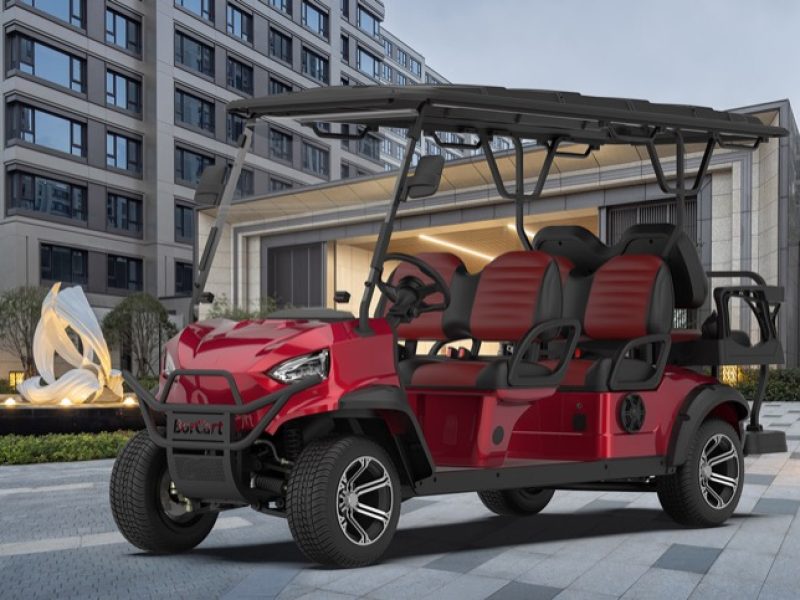
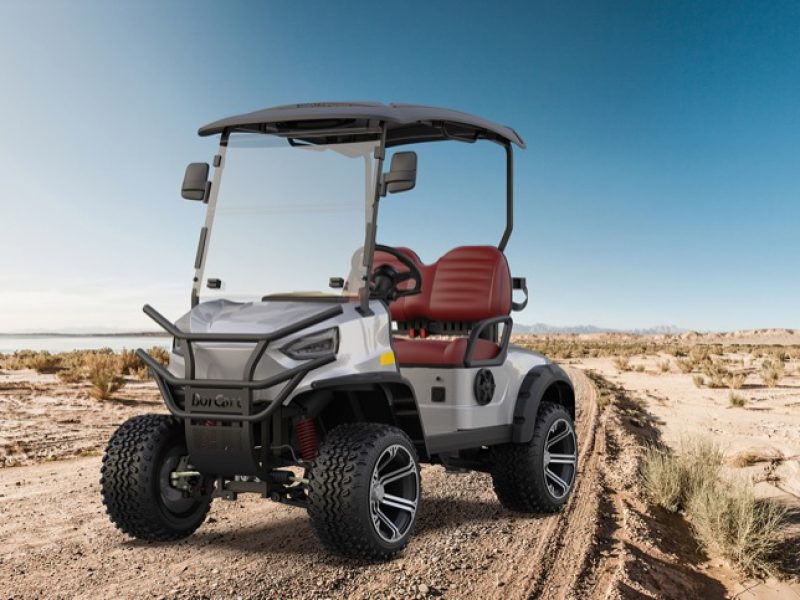
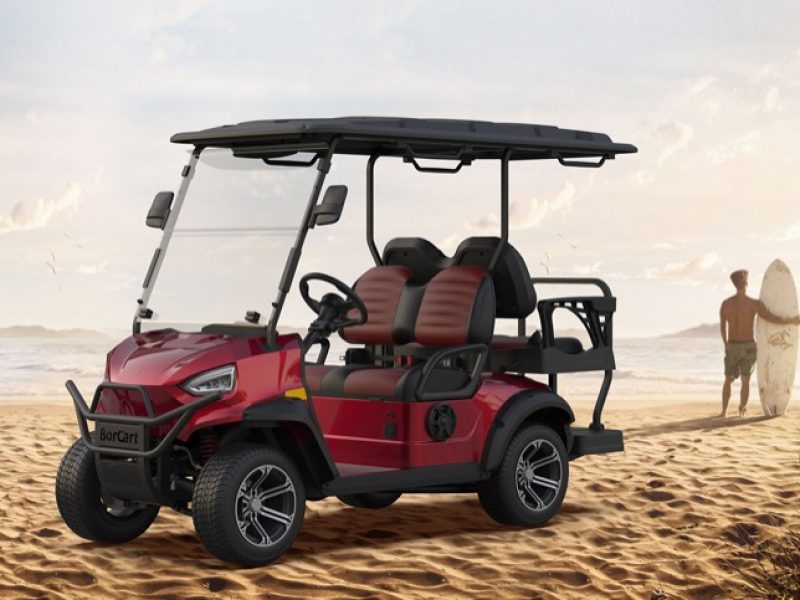
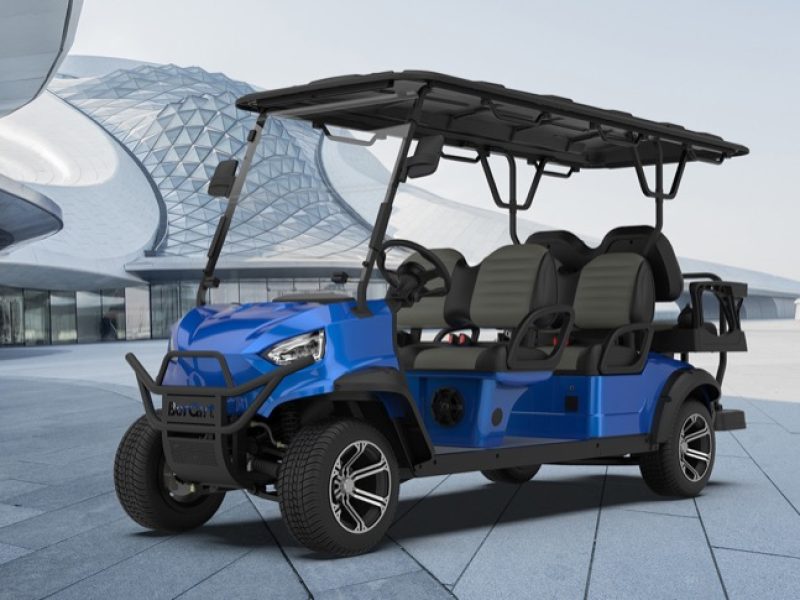
At Guangzhou BorCart Electric Vehicle Co., Ltd., our perspective comes from 26 years in four-wheel low-speed electric vehicle manufacturing. We specialize in electric golf carts and multipurpose vehicles, so our viewpoint naturally favors electrification—but only where the application supports it.
Our guiding principle is fit: select the vehicle around the job, rather than forcing the job to match the vehicle.
Gas vs Electric Golf Carts: Quick Comparison
| Buying factor | Gas golf carts | Electric golf carts |
|---|---|---|
| Best operating environment | Remote routes with accessible fuel | Managed sites with dependable charging |
| Energy replenishment | Quick refueling | Charging requires planned downtime |
| Noise and exhaust | Engine noise and exhaust during operation | Generally quieter; no tailpipe emissions |
| Routine powertrain care | Engine oil, filters, ignition, and fuel system | Battery, charger, connections, and drivetrain |
| Range planning | Fuel capacity and consumption | Usable battery energy and route conditions |
| Hill performance | Depends on engine and drivetrain | Depends on motor, controller, battery, and gearing |
| Main ownership risk | Fuel costs and engine-related repairs | Battery condition and replacement cost |
Neither power source automatically guarantees higher speed, greater payload, or better hill climbing. Compare specific vehicles with equivalent seating and equipment.
Purchase Price and Total Ownership Cost
Compare Complete Specifications, Not Starting Prices
A basic two-seat cart and a customized passenger vehicle are not meaningful price comparisons—even when both are advertised as golf carts.
Request quotations with matching:
- Seating and rated payload.
- Brakes, suspension, tires, and ground clearance.
- Roof, windshield, lighting, and accessories.
- Battery capacity, charger, or fuel-system specification.
- Warranty, delivery terms, and spare-parts support.
For international buyers, add freight, duties, destination compliance, and local commissioning.
An inexpensive vehicle can become expensive if replacement components are difficult to obtain.
An Illustrative Five-Year Energy Comparison
Rather than presenting one operating-cost figure as universally applicable, use transparent assumptions.
Consider a cart traveling 4,000 miles annually:
| Assumption or calculation | Gas | Electric |
|---|---|---|
| Assumed energy consumption | 30 miles per US gallon | 0.15 kWh per mile, measured at the wall |
| Assumed energy price | $3.50 per gallon | $0.15 per kWh |
| Annual energy expense | Approximately $467 | $90 |
| Five-year energy expense | Approximately $2,333 | $450 |
Under these assumptions, electric operation saves approximately $1,883 in energy over five years.
This is a planning example, not measured BorCart performance or a market-average claim. Actual consumption changes with payload, terrain, tires, driving behavior, and weather.
A complete ownership model must also include purchase price, charging installation, maintenance, battery replacement where applicable, financing, downtime, and resale value. Energy savings alone do not prove that electric will be cheaper overall.
Range and Charging: Plan Around the Working Day
Gas Golf Cart Range Offers Refueling Flexibility
Gas carts can resume work quickly when suitable fuel is available. That flexibility matters for dispersed properties, unpredictable routes, or operations without dependable electricity.
However, fuel storage, transport, and handling still require management. Refueling convenience should be assessed alongside safe storage and staff procedures.
Avoid assuming that every gas cart delivers the same distance per tank. Tank size, engine efficiency, gradients, and load all matter.
Electric Golf Cart Range Depends on the Configuration
Battery chemistry alone does not determine range.
Club Car’s published Onward two-passenger specifications illustrate this clearly. First-year estimated ranges include approximately 30–50 miles for flooded lead-acid, 25–40 miles for its standard lithium configuration, and 45–60 miles for extended-range lithium.
These are manufacturer estimates for particular configurations—not guarantees for other brands or evidence that lead-acid inherently outperforms lithium.
Battery size, vehicle weight, operating conditions, and battery age must be considered together.
Charging time also requires context. Ask for the time needed to restore the energy consumed during your actual shift, not just an empty-to-full estimate.
Lead-Acid vs Lithium Golf Cart Batteries
Flooded Lead-Acid: Lower Initial Cost, More Attention
Flooded lead-acid batteries can suit budget-conscious operations with established maintenance routines.
They require electrolyte checks, appropriate watering, terminal care, and correct charging. Trojan recommends watering after a full charge; if plates are exposed beforehand, add only enough water to cover them before charging.
They also require suitable charging-area ventilation.
AGM batteries are another lead-acid option. They do not require routine watering, but still need compatible charging and appropriate care.
Lithium: Less Routine Battery Maintenance, Not Zero Responsibility
Lithium systems eliminate watering and can reduce battery-maintenance labor. However, pack quality, usable capacity, protection systems, charger compatibility, and warranty terms remain essential.
For a lithium electric golf cart, request:
- Nominal and usable battery energy.
- Battery chemistry and manufacturer.
- Continuous and peak discharge limits.
- Battery management system protections.
- Charging-temperature limits.
- Written warranty coverage and exclusions.
Do not treat advertised cycle life as a guaranteed service life. Temperature, discharge depth, usage intensity, and storage practices affect outcomes.
Performance on Hills, Under Load, and at Speed
Electric Torque Does Not Replace Proper Engineering
Electric motors can provide strong low-speed torque, making stop-start passenger transport responsive.
But hill-climbing ability depends on the complete drivetrain: motor output, controller limits, battery discharge capability, gearing, traction, and cooling.
Gas vehicles also need suitable gearing and thermal capacity for sustained climbing.
From a manufacturing perspective, we would rather evaluate a loaded cart on the customer’s route than select one from horsepower alone. Engine ratings, continuous motor ratings, and peak motor figures are not interchangeable.
Neither Power Source Is Automatically Faster
Club Car lists the same 19 mph level-ground speed for gas, conventional electric, and lithium versions of its Onward two-passenger cart.
That provides a useful corrective to claims that electric carts are always faster.
For commercial sites, controlled acceleration, predictable braking, and appropriate speed limits are usually more valuable than maximum speed.
Never exceed rated payload or towing capacity simply because a vehicle feels powerful.
Maintenance, Storage, and Seasonal Reliability
Gas carts typically require engine oil, filters, spark plugs, and fuel-system attention according to the manufacturer’s schedule.
Electric carts remove those engine-related tasks, but tires, brakes, steering, suspension, bearings, wiring, and corrosion protection still require inspection.
Lithium reduces routine battery servicing; it does not make the entire vehicle maintenance-free.
Storage procedures also differ. Follow the specific battery or engine manual rather than applying a universal storage rule.
In cold climates, verify battery charging limits. Trojan notes that appropriately protected lithium batteries prevent charging below specified cell-temperature thresholds. Some systems use heaters, but this feature must be confirmed.
For flooded lead-acid systems, maintaining appropriate charge is important because discharged batteries become more vulnerable to freezing.
Noise, Emissions, and Public-Road Requirements
Electric carts are generally attractive around hotel entrances, guest accommodation, golf greens, and pedestrian areas because they avoid engine exhaust and reduce powertrain noise.
Nevertheless, quiet vehicles still require careful driving around pedestrians. Road-certified electric vehicles may also need audible warning systems under applicable rules.
Electric does not mean impact-free. Electricity generation, battery production, and end-of-life treatment contribute to lifecycle emissions. A site-specific comparison requires local energy information and the actual vehicles being evaluated.
Road legality is a separate question.
In the United States, the low-speed vehicle category includes qualifying four-wheel vehicles capable of more than 20 mph but no more than 25 mph, with additional classification and equipment requirements.
A cart does not become road-legal merely by reaching a particular speed or adding lights. Verify certification, registration, insurance, and local road-access rules in the destination market.
Three Practical Checks Most Buyers Overlook
1. Test the Worst Working Day
Build an acceptance test around your demanding conditions:
- Use the expected passenger and cargo load.
- Include the steepest regularly traveled section.
- Repeat realistic stops and starts.
- Operate required accessories.
- Record distance, energy use, temperatures, and remaining charge or fuel.
For electric vehicles, agree on an operational reserve instead of planning to finish every shift nearly empty. Its size should reflect route variability and battery aging.
2. Check Charging Capacity Before Ordering a Fleet
One available socket does not establish that a site can charge multiple vehicles safely.
As an illustrative example, ten chargers drawing 1 kW each create a simultaneous 10 kW load before other site demand is considered.
Have a qualified electrical professional assess circuits, protection, ventilation where required, weather exposure, cable routing, and local requirements.
Compare overnight charging with staggered charging and additional vehicles. The best arrangement depends on shift patterns, not just charger speed.
3. Buy Supportability Alongside the Vehicle
For fleet operators and importers, request:
- A parts catalog and service documentation.
- Charger and controller diagnostic procedures.
- Battery warranty claim requirements.
- Availability of common replacement components.
- Technician training and escalation contacts.
Downtime can outweigh modest differences in fuel or electricity expense. Evaluate how quickly a vehicle can return to service—not simply how little energy it consumes.
Which Golf Cart Fits Your Application?
| Application | Practical starting point | Main verification |
|---|---|---|
| Golf course | Electric where overnight charging is available | Daily rounds, terrain, charging rotation |
| Hotel or resort | Electric | Guest comfort, passenger load, accessibility |
| Scenic attraction | Electric for predictable routes | Daily distance and charging windows |
| Campus or patrol operation | Electric with suitable shift planning | Accessory demand and vehicle availability |
| Farm or remote property | Gas or suitably specified electric | Terrain, payload, infrastructure, duty cycle |
For freight and agricultural work, a purpose-built utility vehicle may be more appropriate than a passenger cart fitted with a cargo platform.
Vehicle architecture matters as much as power source.
Configure an Electric Vehicle Around Your Operation
At BorCart, our product scope includes electric golf carts, sightseeing buses, cargo vehicles, patrol vehicles, and multipurpose work vehicles.
Our OEM/ODM services provide a route to application-specific development rather than a one-size-fits-all purchase.
Send our team your daily distance, maximum load, steepest gradient, operating temperature, charging window, destination market, and customization requirements. Request a configuration proposal, charging assumptions, warranty details, and an agreed acceptance-test plan.
That gives you a clearer basis for comparing an electric solution with your current gas vehicles.
Frequently Asked Questions
Are gas or electric golf carts cheaper to own?
Electric carts can offer lower energy and routine powertrain-maintenance costs. Overall savings depend on purchase price, infrastructure, utilization, battery replacement, and resale value.
Are gas golf carts better for hills?
Not necessarily. Both types need suitable drivetrain specifications. Compare loaded gradeability, sustained climbing capability, traction, and braking on your actual route.
How far can an electric golf cart travel?
Range varies significantly with usable battery capacity, payload, terrain, speed, temperature, and battery condition. Request configuration-specific estimates and validate them through a representative test.
How long do golf cart batteries last?
There is no universal lifespan. Chemistry, operating conditions, charging, maintenance, and storage all matter. Compare written warranty terms and capacity-retention conditions rather than relying only on advertised years.
Can I replace lead-acid batteries with lithium?
Sometimes, but compatibility must be verified. Check voltage, charger, controller, discharge limits, mounting, wiring, protection devices, and warranty implications before approving a conversion.
Are electric golf carts street-legal?
Only when the vehicle and its use satisfy applicable requirements. Electric propulsion alone does not establish road legality, certification, or permission to operate on a particular road.
References
1. CartFinder — “Gas vs. Electric Golf Carts: Which Is Right for Your Use?”. Competitor comparison reviewed for topic coverage; its broad pricing, lifespan, and resale claims were not adopted as universal benchmarks.
2. Club Car — Onward 2 Passenger Specifications. Source for configuration-specific speed and first-year estimated range examples, including operating-condition qualifications.
3. Trojan Battery — Battery Maintenance. Source for flooded lead-acid watering, ventilation, charging, and freezing precautions.
4. Trojan Battery — How to Winterize Lithium Golf Cart Batteries. Source for cell-temperature considerations, charging protection, and heated-battery distinctions.
5. U.S. Department of Energy, Alternative Fuels Data Center — Emissions from Electric Vehicles. Source for distinguishing direct emissions from electricity-generation, manufacturing, and lifecycle emissions. Automobile comparisons are not presented here as measured golf-cart lifecycle results.
6. NHTSA — Interpretation ID: 07-005545as. Source for U.S. low-speed vehicle speed, weight, equipment, and classification distinctions.
7. NHTSA — Minimum Sound Requirements for Hybrid and Electric Vehicles: Test Procedure. Source for applicable electric low-speed vehicle audible-warning requirements.
Hot Tags: Golf Cart Manufacturer, Electric Golf Cart Supplier, Wholesale Golf Carts, OEM Golf Carts, ODM Golf Carts, Custom Electric Golf Carts, Commercial Electric Vehicles, Electric Utility Vehicles, Electric Sightseeing Bus, Electric Cargo Vehicles