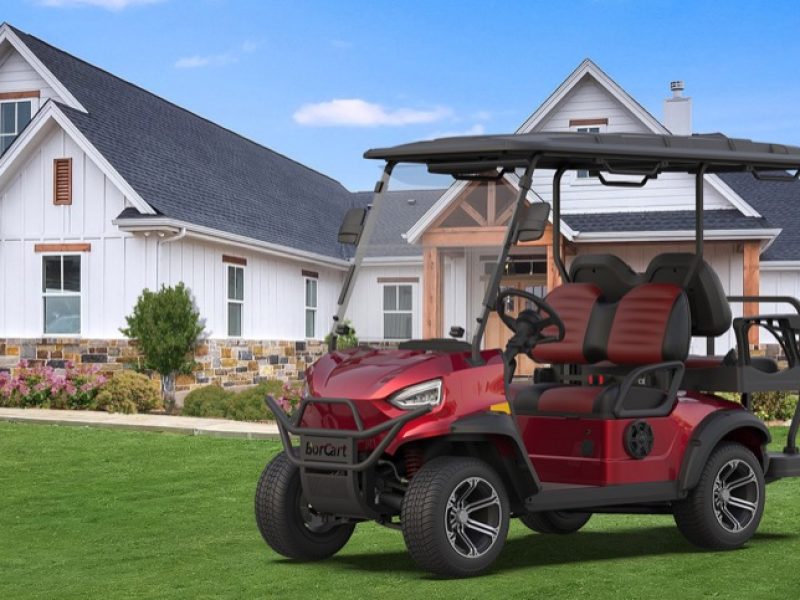
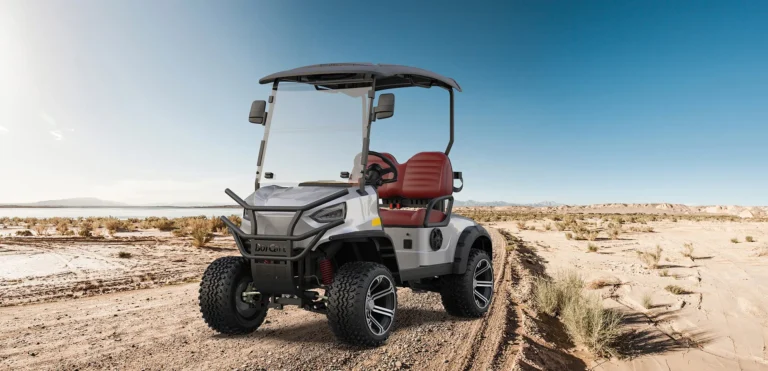
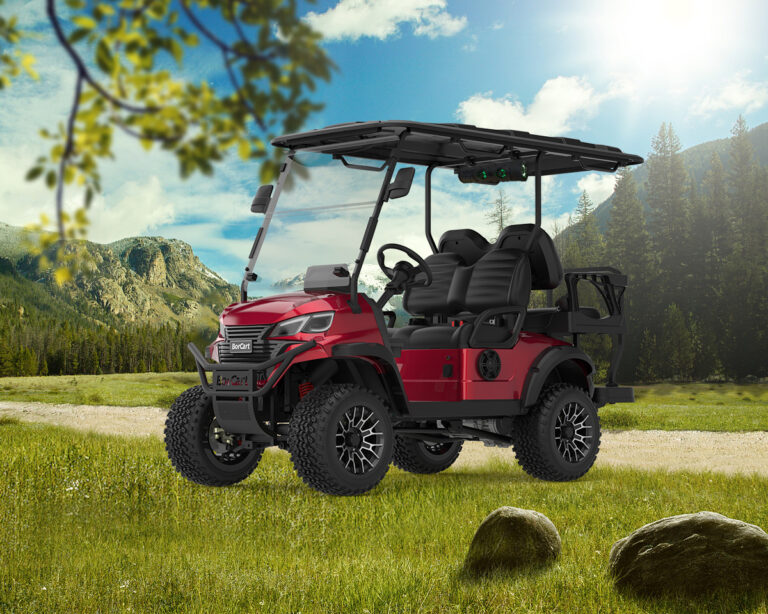
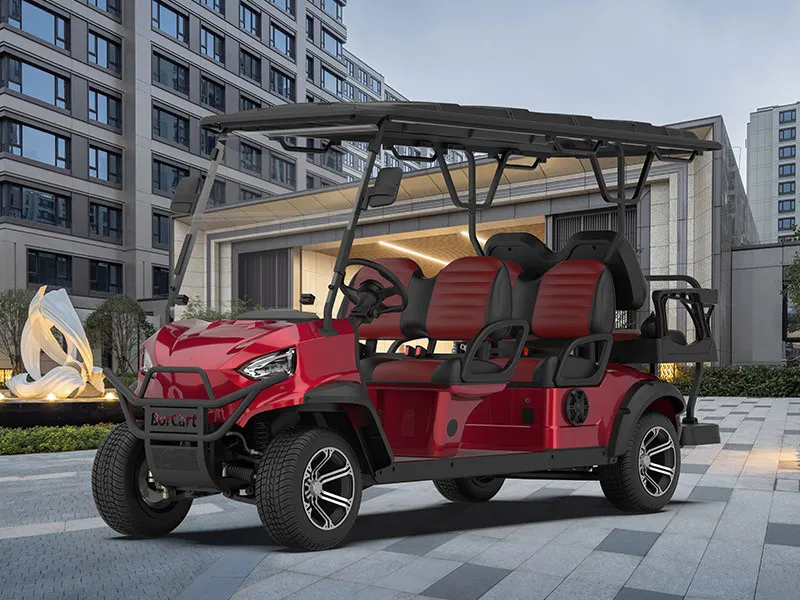
Choosing a custom golf cart manufacturer is not simply a matter of comparing body designs and factory prices. For distributors, private-label brands, and commercial fleet operators, the real challenge is finding a supplier that can reproduce an approved specification consistently, document compliance, and support vehicles after delivery.
China offers a substantial supplier base for electric golf carts, sightseeing vehicles, utility carts, and other low-speed electric vehicles. Established manufacturers operate in Guangdong, Jiangsu, Fujian, Shandong, and Sichuan, giving buyers several production regions and engineering approaches to compare.
For buyers searching for “Customize Golf Cart” manufacturers, this guide compares ten companies worth evaluating. It also explains how to assess production claims, control customization risks, and distinguish a capable long-term partner from a supplier offering an attractive sample.
How to Evaluate a Custom Golf Cart Supplier
A useful supplier assessment begins with evidence rather than brochure language. Before comparing quotations, examine six areas:
| Evaluation area | Evidence to request | Why it matters |
|---|---|---|
| Factory identity | Business license, manufacturing address, factory audit, contracting entity | Establishes who manufactures, invoices, and warrants the vehicles |
| Engineering capability | Drawings, prototype records, engineering-change procedures | Separates cosmetic customization from genuine product development |
| Quality management | Current certificates, incoming inspection records, production checks, final-test reports | Shows how the supplier controls repeatability |
| Production reliability | Recent output, current order loading, bottleneck processes, delivery history | Tests whether advertised capacity translates into available capacity |
| Market compliance | Model-specific documents and destination-specific requirements | Reduces clearance, registration, and product-liability risks |
| After-sales support | Parts lists, diagnostic procedures, warranty terms, service training | Determines whether vehicles remain supportable after sale |
This article prioritizes manufacturers with public company information, relevant vehicle portfolios, and evidence of customization capability. Where capacity, minimum order quantity, or certificate validity cannot be established from the reviewed sources, that limitation is stated rather than replaced with an estimate.
Why Source Custom Golf Carts from China?
Established regional manufacturing networks
Guangzhou, Dongguan, and Zhaoqing form a useful sourcing corridor for buyers investigating Guangdong-based manufacturers. BorCart, LVTONG, Langqing, and Marshell all identify manufacturing operations in this region. Buyers can therefore arrange several factory visits within one regional sourcing program.
Other options include Suzhou-based vehicle suppliers, Xiamen-based HDK, and Shandong-based KINGHIKE. These locations provide alternatives when comparing platform design, supplier organization, and export support.
The advantage is not that every Chinese factory offers equivalent quality. It is the breadth of available manufacturing and engineering options.
Demand extends beyond golf courses
Mordor Intelligence’s September 2026 update estimates China’s golf cart market at USD 160.01 million in 2026, compared with USD 150.49 million in 2025. It reports that electric vehicles represented 83.15% of the Chinese golf cart market in 2025. These are research estimates for the Chinese market—not audited export totals or a measure of individual manufacturers’ output.
For procurement teams, the relevant implication is that suppliers increasingly address multiple applications. A golf-cart-based platform may support resort transport, campus mobility, security patrols, cargo handling, or other specialized duties, depending on its engineering specification. BorCart, Eagle, and Langqing publicly describe portfolios covering several of these applications.
Manufacturer Comparison: Capacity, MOQ, and Certifications
The figures below describe different measurement bases. Containers per day, vehicles per month, and facility area are not directly comparable. None establishes the production slots available for a particular order.
“Not established” means the reviewed source does not provide sufficiently clear information for this guide; it does not mean the manufacturer lacks the capability or certification.
| Manufacturer | Established | Publicly reported production scale | MOQ position | Public certification information |
|---|---|---|---|---|
| BorCart | 2000 | Four lines; capability to deliver 10 containers daily across vehicle categories | Sample orders offered; production MOQ requires quotation | Model-specific certificates require verification |
| LVTONG | 2004 | Approximately 2,000 vehicles/month on its company-profile page | Not established | Current certificates require verification |
| Marshell | 2002 | Eight lines; daily production described as 15 container units | Not established | ISO 9001, CE, and EEC claims; scope requires checking |
| Suzhou Eagle | 1999 | Approximately 1,500 vehicles/month; three assembly lines | Not established | Reports ISO 9001 and ISO 14001 certification history |
| HDK | 2006/2007 discrepancy | Approximately 50,000 vehicles/year on a company article | Not established | ISO 9001 facility; ISO/CE certification history |
| Langqing | 2000 | Four production lines on its supplier profile | Not established | ISO 9001, ISO 14001, ISO 45001 listed on supplier profile |
| CENGO / Nuole | 2015 | Claims 1,000 units/day at a cooperative factory | Not established | ISO 9001 and CE claims |
| Lexsong | 2015 | Supplier storefront reports three lines and 15,000 vehicles/year | Not established | Cart-specific certificate scope requires verification |
| KINGHIKE | 2011 | Approximately 4,000 vehicles/month; 45,000 m² facilities | Not established | Current certificates require verification |
| Rariro | 2009 | Comparable vehicle-output figure not established | Not established | Current certificates require verification |
Sources: manufacturer company pages and supplier profiles. These are supplier-reported claims, not independently verified operating capacity.
The Top 10 Customize Golf Cart Manufacturers in China
1. Guangzhou BorCart Electric Vehicle Co., Ltd.
Established: 2000
Location: Guangzhou, Guangdong
Relevant fit: Private-label brands, mixed commercial fleets, and buyers seeking engineering-led customization.
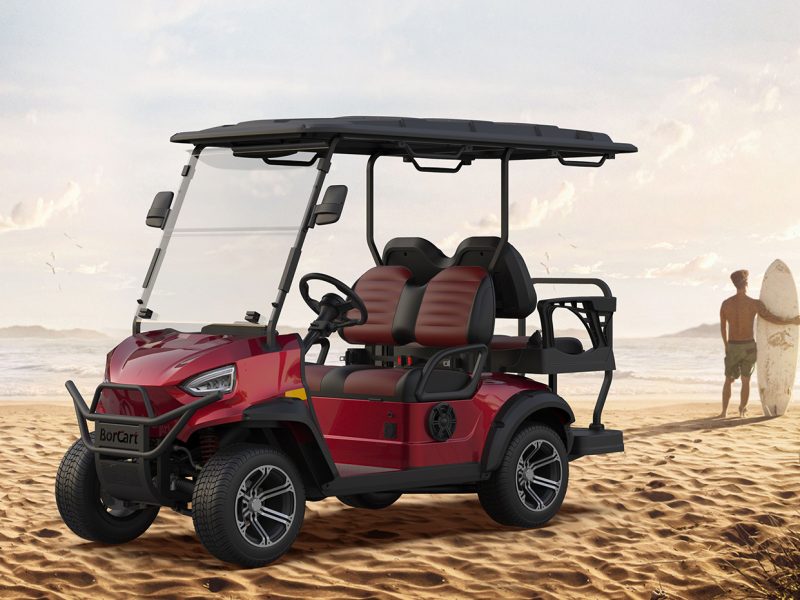
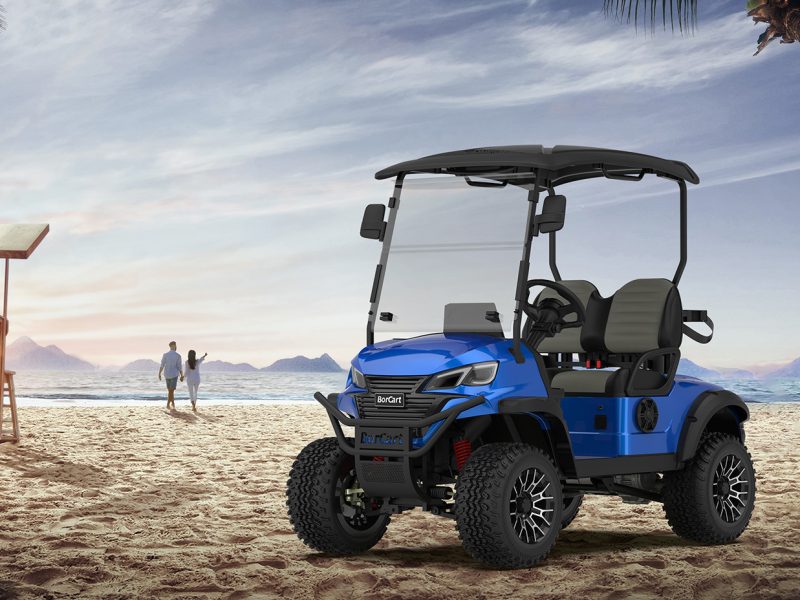
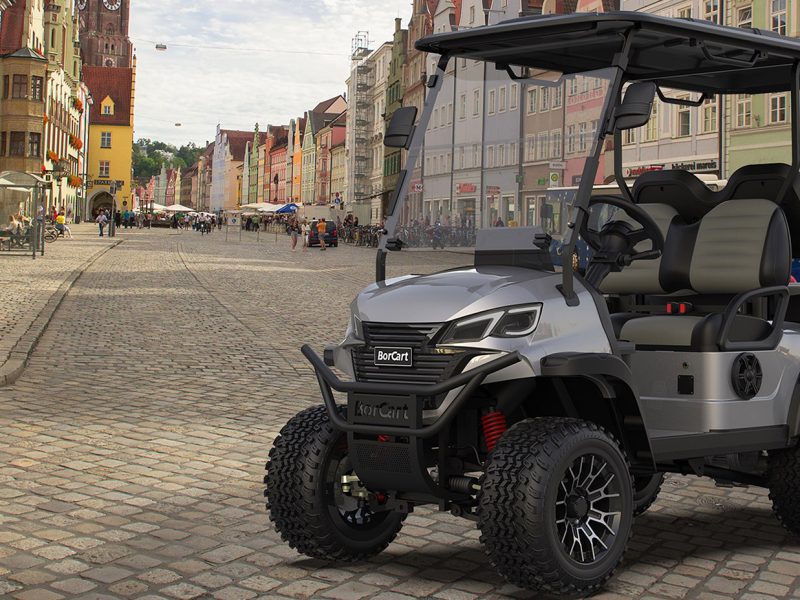
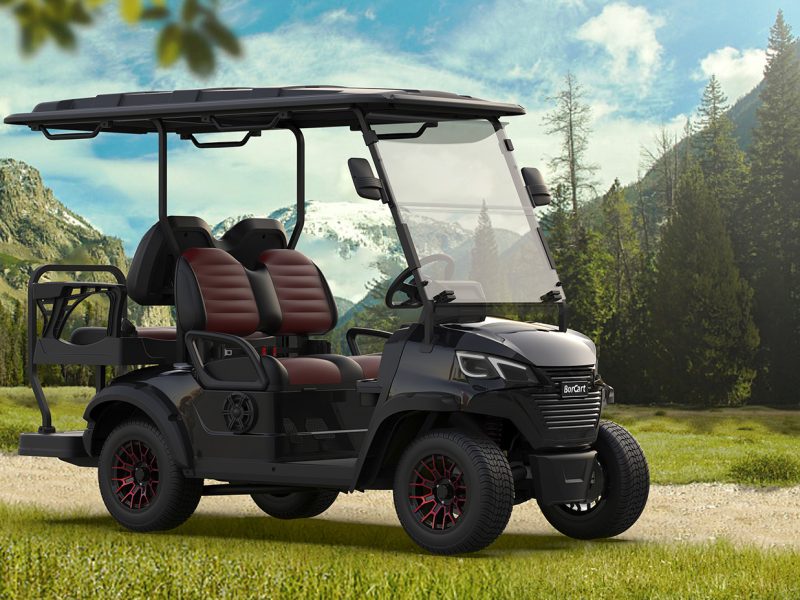
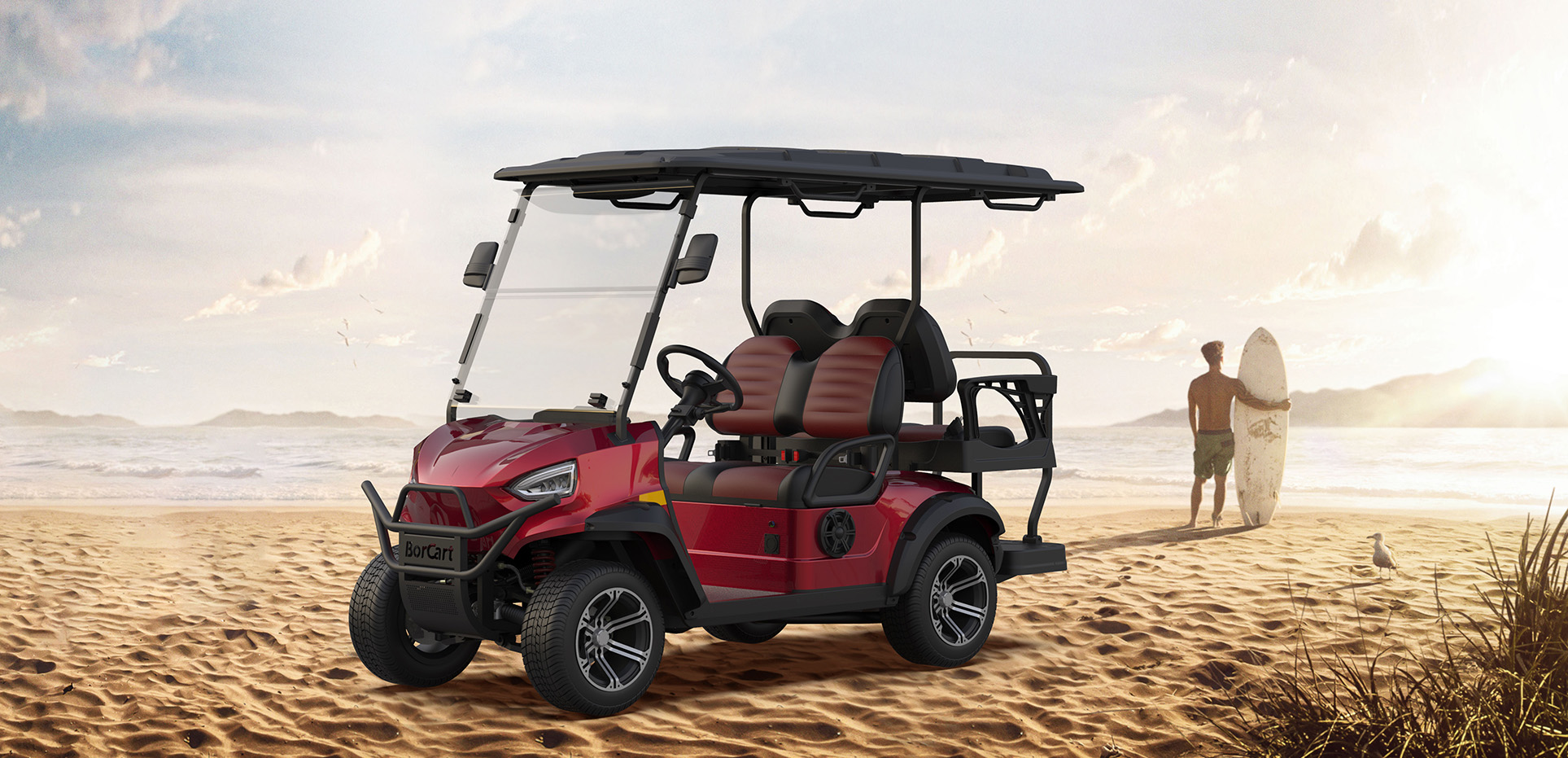
BorCart’s public company profile describes a 200,000 m² workshop, more than 100 engineers and technicians, over 1,000 skilled workers, and four production lines. Its portfolio includes golf carts, sightseeing buses, freight vehicles, patrol vehicles, and other specialized electric vehicles.
For an overseas brand, the most relevant capability is the company’s stated in-house production of chassis, bodies, molds, and paint-related processes. BorCart also describes a new-product introduction process incorporating incoming quality control, process quality control, quality assurance, and assembly-line testing of every vehicle.
Its OEM/ODM offering and sample-order service make it a relevant candidate for smaller and developing brands that need to validate a configuration before committing to volume. This does not establish a low production MOQ: buyers should request separate terms for samples, standard-platform private labeling, and tooling-intensive development.
BorCart reports customers in more than 30 countries, including the United States, Germany, France, the United Kingdom, Mexico, Australia, and several Southeast Asian markets. The reviewed page does not provide a revenue breakdown by region.
Procurement assessment: BorCart merits consideration as a value-oriented development partner, particularly where an existing platform can meet most requirements. Its flexibility, communication efficiency, and cost competitiveness should be tested through a timed quotation exercise, engineering review, and sample approval—not assumed from its company profile.
2. Guangdong LVTONG New Energy Electric Vehicle Technology Co., Ltd.
Established: 2004
Location: Dongguan, Guangdong
Relevant fit: Buyers evaluating established golf-cart platforms and repeat fleet supply.
LVTONG’s official company profile identifies a manufacturing area exceeding 50,000 m² and production capacity of approximately 2,000 vehicles per month. These figures provide a starting point for qualification, although buyers should request current facility and output information before using them for delivery planning.
Its product range includes multiple golf cart series, making it relevant for importers seeking an existing platform rather than an entirely new vehicle architecture.
OEM/ODM discussion should establish which changes are standard options and which require engineering approval. Ask specifically about body branding, seating arrangements, battery systems, and ownership of new tooling. The reviewed official profile does not establish current custom-order MOQs or a regional sales breakdown.
3. Marshell
Established: 2002
China production locations: Zhaoqing and Anhui
Relevant fit: Buyers sourcing multiple low-speed electric vehicle categories.
Marshell describes a broad portfolio spanning golf carts, personal transportation vehicles, sightseeing buses, utility vehicles, mobility equipment, and industrial equipment. Its current company profile reports eight production lines and dedicated teams for mold design, electronics, and electric-vehicle development.
Its stated customization services cover design, prototyping, implementation, themed aesthetics, and specialized functions. That scope makes it relevant to resort groups, fleet integrators, and distributors managing several product categories.
Marshell publicly cites ISO 9001, CE, and EEC-related credentials. Buyers must separate management-system certification from model-specific product conformity or road approval. Its public pages also contain differing facility-size figures, so the actual production site assigned to an order should be confirmed.
The company presents itself as a global supplier, but the reviewed company profile does not establish a ranked breakdown of its principal sales markets.
4. Suzhou Eagle Electric Vehicle Manufacturing Co., Ltd.
Established: 1999
Location: Suzhou, Jiangsu
Relevant fit: Utility conversions and application-specific vehicles.
Eagle manufactures four-wheel electric vehicles, including golf carts, personnel carriers, electric trucks, and customized vehicles based on standard platforms. Its company profile reports a 30,000 m² workshop, three assembly lines, and approximately 1,500 vehicles of monthly capacity.
Its platform-based customization approach is relevant when buyers need cargo bodies, personnel transport, or specialized functions without developing a vehicle from scratch. Eagle reports exports to more than 100 countries. A supplier profile identifies customers in the United States and Australia, alongside broader international market coverage.
Eagle reports ISO 9001 certification dating to 2003 and ISO 14001 certification dating to 2010. Those historical milestones do not establish current validity; request active certificates covering the contracted manufacturing site.
5. HDK Electric Vehicle
Established: Official pages differ between 2006 and 2007
Location: Xiamen, Fujian
Relevant fit: Golf, personal-transportation, and utility-cart programs.
HDK’s official materials describe an 88,000 m² main factory and a portfolio covering golf carts, hunting buggies, sightseeing carts, and utility vehicles. One company article states annual production capability of approximately 50,000 electric vehicles, with most sold in the United States.
HDK also describes offices in Florida and California and relationships across North America, Europe, and Asia. Its customization materials mention seating, colors, and accessories, although private-label availability and territory rights should be confirmed directly.
A useful due-diligence detail is the inconsistent founding year: its main company history begins in 2006, while its mobile homepage says 2007. Buyers should use the contracting entity’s business registration rather than repeat an unqualified date.
6. Guangzhou Langqing Electric Car Co., Ltd.
Established: 2000
Location: Guangzhou, Guangdong
Relevant fit: Hospitality, sightseeing, patrol, and cargo fleets.
Langqing’s portfolio includes golf cars, tourist coaches, patrol vehicles, freight vehicles, towing tractors, and other specialized electric vehicles. This breadth makes it relevant to operators sourcing several forms of site transportation.
Its supplier profile lists North America, South America, and Asia as main markets, alongside four production lines and ISO 9001, ISO 14001, and ISO 45001 management-system certifications. These listings should be checked against current certificate records.
For OEM/ODM evaluation, request examples of completed vehicles matching the intended application. A resort passenger cart, towing tractor, and cargo vehicle require different load definitions and acceptance tests, even when sourced from the same supplier.
7. CENGO / Sichuan Nuole Electric Technology Co., Ltd.
Established: 2015
Location: Chengdu, Sichuan
Relevant fit: Buyers assessing a Southwest China supplier with a domestic distribution network.
CENGO describes a Chengdu production base, a cooperative factory in Dongguan, and more than 300 distributors and dealers in China. Its product offering includes golf carts and utility vehicles, while Nuole’s supplier profile also describes sightseeing, patrol, and classic electric vehicles.
Its website claims daily output of 1,000 units at the cooperative factory. Because this is not clearly presented as wholly owned, dedicated golf-cart capacity, buyers should establish the ownership, production allocation, and quality responsibilities of the facility that will fulfill their order.
China is the clearest documented market emphasis in the reviewed materials. Overseas buyers should request destination-specific references and written confirmation of customization scope, export documentation, and warranty responsibility.
8. Suzhou Lexsong Electromechanical Equipment Co., Ltd.
Established: 2015
Location: Suzhou, Jiangsu
Relevant fit: Buyers evaluating lithium-powered and 72V AC configurations.
Lexsong emphasizes lithium-battery electric vehicles and a 72V AC platform. Its official company history identifies establishment in 2015 and subsequent development of its golf cart platform. Its wider portfolio includes passenger carts, utility vehicles, sightseeing vehicles, and specialized commercial configurations.
Its supplier storefront reports three production lines, 15,000 vehicles of annual capacity, and exports to more than 40 countries. However, public descriptions also emphasize “supplying” vehicles, making factory ownership and the division between in-house and partner production important audit questions.
OEM/ODM discussions should focus on the exact battery, controller, charger, and diagnostic package. A higher nominal voltage alone is not sufficient evidence of better loaded performance or longer range.
9. KINGHIKE Vehicle Co., Ltd.
Established: 2011
Location: Shandong
Relevant fit: Distributors seeking configurable golf carts and passenger vehicles.
KINGHIKE reports approximately 45,000 m² of development and manufacturing facilities and delivery capability of around 4,000 vehicles per month. Its website describes OEM/ODM development capability and a portfolio covering golf carts, utility vehicles, and sightseeing buses.
The company lists export destinations across North America, South America, the European Union, Southeast Asia, and the Middle East. These are reported served regions rather than independently verified market shares.
Its supplier profile identifies a Dezhou manufacturing address, while company materials describe a Jinan base. Confirm the respective roles of the sales office, development team, and assembly plant before approving the supplier.
10. Guangzhou Rariro Vehicle Co., Ltd.
Established: 2009
Location: Guangzhou, Guangdong
Relevant fit: Hospitality projects seeking golf carts and distinctive passenger vehicles.
Rariro’s official website describes golf carts, vintage-style electric vehicles, and customizable four-wheel vehicles. It traces the business to 2009 and describes research, production, and sales activities.
Its range makes it a candidate for resorts and attractions that want coordinated vehicle styling across passenger-transport applications. However, comparable annual capacity, production MOQ, and a reliable regional sales breakdown were not established from the reviewed official page.
For OEM/ODM qualification, ask whether customization uses an existing approved platform or changes structural and electrical systems. Those two routes require different budgets, documentation, and validation schedules.
Technical Specifications That Should Be Written into the Contract
Define materials beyond “steel” or “aluminum”
A procurement specification should identify measurable requirements rather than broad material descriptions. Suggested contractual items include:
- Chassis alloy or steel grade, section dimensions, and wall thickness.
- Weld locations, inspection criteria, and repair procedures.
- Surface preparation, coating system, and corrosion-test acceptance criteria.
- Body-panel material and agreed outdoor-weathering requirements.
- Fastener specifications and corrosion protection.
- Rated passenger and cargo loads for the finished configuration.
These are proposed purchasing controls, not claims that every manufacturer above uses the same materials or processes.
Treat the drivetrain as an integrated system
Ask each bidder to quote the same battery, motor, controller, charger, tire size, payload, and operating conditions.
For lithium configurations, request the cell manufacturer and model, pack configuration, battery-management-system limits, warranty conditions, and available diagnostic access. Require range and hill-climb acceptance tests under an agreed load rather than accepting an unexplained maximum-distance claim.
BorCart identifies component brands including KDS, Mahle, Curtis, and Delta-Q in its company profile. Buyers should still specify the exact part numbers in the purchase order, because a brand mentioned on a website does not establish the configuration of every vehicle.
Separate certificates from permission to operate
ISO 9001 concerns a quality management system; certificate scope and validity must be checked for the relevant organization and site. It is not a substitute for the destination market’s vehicle requirements.
Likewise, CE marking is not a universal road-use approval. The European Commission explicitly distinguishes motor vehicles from products using the general CE-marking route. Buyers should determine the classification and applicable approval requirements for the intended vehicle and country.
Request RoHS documentation only against the applicable product or component scope. Avoid the vague requirement “CE/RoHS certified golf cart” without identifying what has been assessed and under which legislation.
An Overlooked Procurement Trap: The Approved Sample Is Not the Production Specification
A particularly important risk to control is configuration drift between sample approval and repeat orders.
A sample can be accepted for its appearance and driving feel while the purchase agreement remains silent on controller programming, battery limits, charger settings, or component substitutions. The solution is to approve a reproducible configuration—not just a physical vehicle.
Create a controlled master specification containing:
- A signed bill of materials with critical component part numbers.
- Battery and controller configuration records.
- Approved wiring diagrams and software versions where applicable.
- Photographs of labels and serial-number locations.
- Loaded performance-test conditions and acceptance limits.
- A requirement for written buyer approval before substitutions.
- A serial-number-linked final inspection record.
This is a recommended risk-control procedure, not an allegation against any manufacturer in this guide. It makes disputes easier to resolve because both parties can compare delivered vehicles with the same documented baseline.
Buyer’s Guide: From Factory Verification to Shipment
1. Verify the operating and contracting entities
Confirm the relationship among the company receiving payment, the manufacturing site, the exporter, and the organization providing the warranty.
During a factory audit, follow one order through incoming inspection, assembly, testing, and packing. Request recent records rather than relying only on a showroom tour.
2. Use a structured sample program
A practical approval sequence is:
- Issue a common requirement sheet to shortlisted suppliers.
- Compare quotations against an identical configuration.
- Approve drawings and a controlled bill of materials.
- Order a representative sample.
- Test payload, braking, charging, range, and intended gradients.
- Close documented nonconformities.
- Approve a pilot batch before increasing order volume.
Ask the supplier to quote lead time separately for engineering, tooling, sample production, corrective work, and bulk production. A single “delivery time” can conceal several dependencies.
3. Calculate landed cost before committing
Include freight, insurance, destination handling, customs brokerage, applicable duties, inspection, local assembly, and initial spare parts—not merely the vehicle’s factory price.
U.S.-bound buyers need particular care. On July 17, 2025, the USITC issued an affirmative injury determination concerning low-speed personal transportation vehicles from China, stating that Commerce would issue antidumping and countervailing duty orders. Buyers should obtain current advice on product scope, exporter-specific treatment, and applicable deposits before placing an order.
Do not assume that changing an invoice description or shipping through another country changes the product’s origin or trade-remedy treatment.
4. Confirm transport and after-sales arrangements
Before shipment, obtain written forwarder confirmation of the classification, documentation, and carrier acceptance requirements for the finished vehicle and installed battery.
Also agree on:
- Container loading and securing plans.
- Assembly work required at destination.
- Arrival inspection procedures.
- Initial spare-parts quantities.
- Diagnostic tools and service documentation.
- Warranty claim evidence and reimbursement rules.
- Responsibility for replacement-part freight.
These requirements should form part of the commercial agreement rather than remain informal sales assurances.
Conclusion: Choose the Supplier That Can Reproduce Your Approved Vehicle
The right manufacturer is the one whose engineering scope, production controls, documentation, and service model match your commercial requirements.
BorCart is a relevant first candidate for buyers evaluating private-label golf carts alongside utility and passenger vehicles. Its publicly described in-house component production, customization services, sample-order support, and quality-control processes provide a practical basis for qualification—not a substitute for it.
To begin a sourcing discussion with BorCart, submit your destination market, intended operating environment, seating capacity, payload, preferred battery system, branding requirements, annual forecast, and sample timeline. Request an itemized OEM/ODM proposal covering the vehicle specification, development charges, MOQ, testing plan, delivery schedule, and spare-parts support.
Frequently Asked Questions
1. How can I verify that a manufacturer’s ISO certificate has not expired?
Obtain the full certificate number, legal company name, manufacturing address, standard, scope, issuer, and validity dates.
Check the certificate through IAF CertSearch or contact the issuing certification body or relevant accreditation body directly. Confirm that its status is active and that the scope covers the manufacturing activity and site involved in your order. A certificate that is suspended or withdrawn may still display a future expiry date on an old PDF.
2. Can I import a “DOT-approved” golf cart into the United States for road use?
Do not rely on that phrase. NHTSA explains that it does not approve or certify vehicles in advance; manufacturers must self-certify compliance with applicable standards. The importer also has statutory responsibilities relating to noncompliance and safety defects.
For a proposed low-speed vehicle, establish the applicable classification, certification labeling, documentation, and federal requirements. Registration and permitted road use must also be checked at state and local levels.
3. What MOQ should I expect for a fully customized golf cart?
The reviewed sources do not support one universal MOQ.
Request separate quotations for:
- Standard vehicles with branding.
- Existing platforms with configurable equipment.
- New body tooling or structural changes.
BorCart explicitly offers sample orders, but its public company page does not establish a universal bulk-order MOQ. Ask every supplier to distinguish sample quantity, production MOQ, color MOQ, and tooling commitments.
4. How can I prevent cheaper batteries or controllers from being substituted after sample approval?
Use a contractually approved bill of materials, exact component identifiers, configuration records, and a written engineering-change procedure.
Make pre-shipment inspection include component-label checks and agreed functional tests. Require approval before substitutions, including those described as “equivalent.” Define the rejection and corrective-action process before paying the production balance.
5. Who should own custom molds, drawings, and software settings?
The development agreement should address each category explicitly.
Specify tooling ownership, storage, maintenance, access, transfer rights, exclusivity, and treatment when the relationship ends. Separately define ownership or permitted use of drawings, wiring diagrams, diagnostic tools, and software configurations.
Paying a development charge should not be treated as proof that every related intellectual-property or access right transfers to the buyer.
Resources
9. KINGHIKE — Official Website
11. Mordor Intelligence — China Golf Cart Market
12. USITC — July 2025 Trade Investigation Determination
13. USITC — Final Investigation Report, August 2025
14. NHTSA — Low-Speed Vehicle Importation and Self-Certification
15. European Commission — Guide for Importing Goods
16. ISO — Certification and Verification Guidance
17. IAF CertSearch — Certificate Verification
18. CCCME — Guangzhou Langqing Member and Product Listing
Hot Tags: Customize Golf Cart, Custom Golf Cart Manufacturers, China Golf Cart Manufacturers, OEM Golf Cart Manufacturer, ODM Golf Cart Manufacturer, Electric Golf Cart Factory, Wholesale Golf Carts, Private Label Golf Carts, Lithium Battery Golf Carts, Electric Utility Vehicle Manufacturers