Content Menu
● Electric Golf Cart vs. Gas Golf Cart: Fleet Comparison at a Glance
● Electric vs. Gas Golf Cart Costs: Compare the Full Ownership Cycle
>> Purchase Price Is Only the Beginning
>> Energy Costs Need Course-Specific Measurements
● A Transparent Fleet Cost Example: Energy Savings Without Exaggeration
● Electric Golf Cart vs. Gas Golf Cart Range and Daily Availability
>> Plan Around Your Busiest Day
>> Charging and Refueling Create Different Bottlenecks
● Golf Cart Maintenance: Electric, Lead-Acid, Lithium, and Gas
>> Electric Does Not Mean Maintenance-Free
>> Gas Maintenance Requires Predictable Workshop Capacity
● Lithium vs. Lead-Acid: A Second Decision Within Electric Fleets
● Hill Performance, Noise, and Environmental Impact
>> Which Golf Cart Is Better for Hilly Courses?
>> Guest Comfort and Emissions Need Separate Evaluation
● The Hidden Constraint: Charging Infrastructure and Fleet Resilience
● A Practical Acceptance Test Before Replacing Your Fleet
>> Agree on Acceptance Criteria
● Which Golf Cart Should Fleet Operators Choose?
>> Are Electric Golf Carts Cheaper to Operate Than Gas Golf Carts?
>> Can an Electric Golf Cart Complete Multiple Rounds Daily?
>> Are Gas Golf Carts Better for Hills?
>> How Long Do Electric Golf Cart Batteries Last?
>> Do Lithium Golf Cart Batteries Need Maintenance?
>> Should a Golf Course Replace Its Entire Gas Fleet at Once?
For most golf courses with dependable electricity and overnight parking, an electric golf cart is the stronger starting point for fleet planning. A gas golf cart remains practical when rapid refueling and limited charging access outweigh the benefits of quieter operation and reduced engine maintenance. The electric golf cart vs. gas golf cart decision ultimately depends on daily rounds, terrain, infrastructure, and ownership costs—not simply purchase price.
At Guangzhou BorCart Electric Vehicle Co., Ltd., our perspective comes from 26 years in four-wheel low-speed electric vehicle manufacturing, development, and customization. We specialize in electric vehicles, so our commercial perspective is clear. Nevertheless, a useful fleet recommendation must acknowledge where gasoline still makes operational sense.
Our guiding question is simple: Which configuration can reliably serve your busiest day at an acceptable lifetime cost?
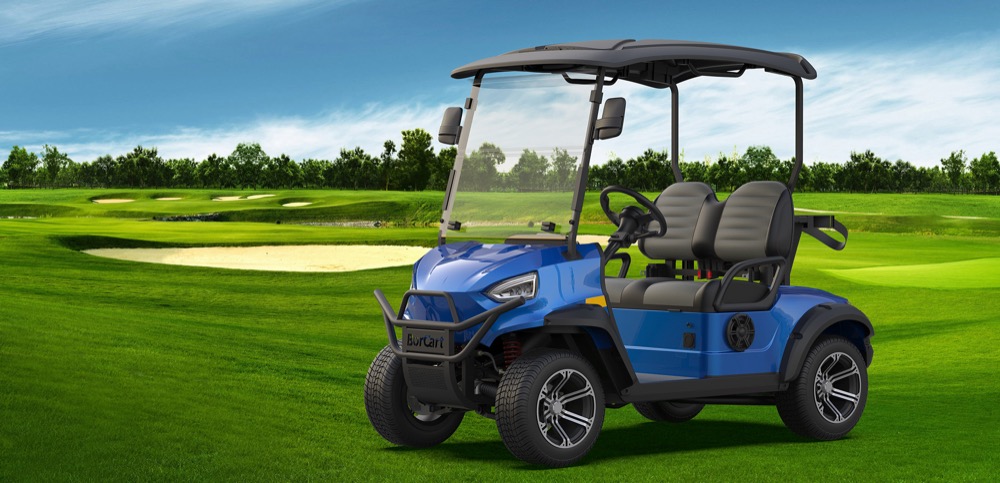
Electric Golf Cart vs. Gas Golf Cart: Fleet Comparison at a Glance
| Decision factor | Electric golf cart | Gas golf cart |
|---|---|---|
| Energy supply | Rechargeable battery and compatible charger | Gasoline engine and fuel system |
| Daily turnaround | Requires sufficient charging time or planned rotation | Rapid refueling supports quick redeployment |
| Routine maintenance | No engine oil changes; battery and chassis care remain essential | Engine servicing plus chassis maintenance |
| Guest experience | No combustion-engine noise or exhaust at the vehicle | Engine noise, vibration, and exhaust vary by model |
| Infrastructure | Electrical capacity, circuits, chargers, and parking layout | Fuel supply, storage arrangements, and safe dispensing |
| Environmental considerations | Zero tailpipe emissions; upstream impacts remain | Tailpipe emissions plus fuel-production impacts |
| Main financial risks | Battery replacement, infrastructure, and charging management | Fuel prices, engine repairs, and maintenance labor |
| Strongest operational fit | Predictable routes and dependable charging windows | Restricted charging access or intensive continuous deployment |
These are planning distinctions, not guarantees. Battery chemistry, vehicle specification, maintenance quality, and local energy prices can change the result.
Electric vs. Gas Golf Cart Costs: Compare the Full Ownership Cycle
Purchase Price Is Only the Beginning
Do not assume every electric golf cart costs more—or less—than a comparable gas model. Obtain quotations with equivalent seating, accessories, warranty coverage, delivery terms, and fleet equipment.
For electric vehicles, identify the battery chemistry, usable capacity, charger specification, and replacement price. For gasoline vehicles, establish the servicing requirements and fuel arrangements.
A meaningful comparison uses total cost of ownership:
Purchase and financing + infrastructure + energy + maintenance + replacement components + downtime costs − resale value.
Use the same ownership period and expected workload for both options. Include financing consistently, and avoid counting depreciation and the purchase price twice.
Energy Costs Need Course-Specific Measurements
Electric drivetrains generally offer energy-cost advantages, but passenger-car savings figures should not be presented as golf-cart results.
Measure electricity at the wall rather than relying only on battery capacity. This captures charging losses. For gas carts, record fuel added against completed rounds over several representative days.
Divide each result by completed 18-hole rounds. That gives operators a practical comparison aligned with revenue-generating work.
A Transparent Fleet Cost Example: Energy Savings Without Exaggeration
Consider this illustrative scenario. These are planning assumptions, not BorCart test results, market averages, or promised savings.
| Assumption | Electric fleet | Gas fleet |
|---|---|---|
| Fleet size | 60 carts | 60 carts |
| Operating days annually | 300 | 300 |
| Average daily energy per cart | 5 kWh, measured at the wall | 0.6 US gallon |
| Energy price | $0.15/kWh | $4.00/US gallon |
| Daily energy cost per cart | $0.75 | $2.40 |
| Annual fleet energy cost | $13,500 | $43,200 |
Under these assumptions, annual energy savings equal $29,700.
If the electric proposal adds $90,000 in combined vehicle and infrastructure costs, the energy-only simple payback is approximately three years. However, that calculation excludes financing, maintenance differences, battery replacements, downtime, and resale value.
The useful lesson is not that every course will save this amount. It is that suppliers should make their assumptions visible. Replace every input with your own quotations, utility tariff, and measured consumption before approving an investment.
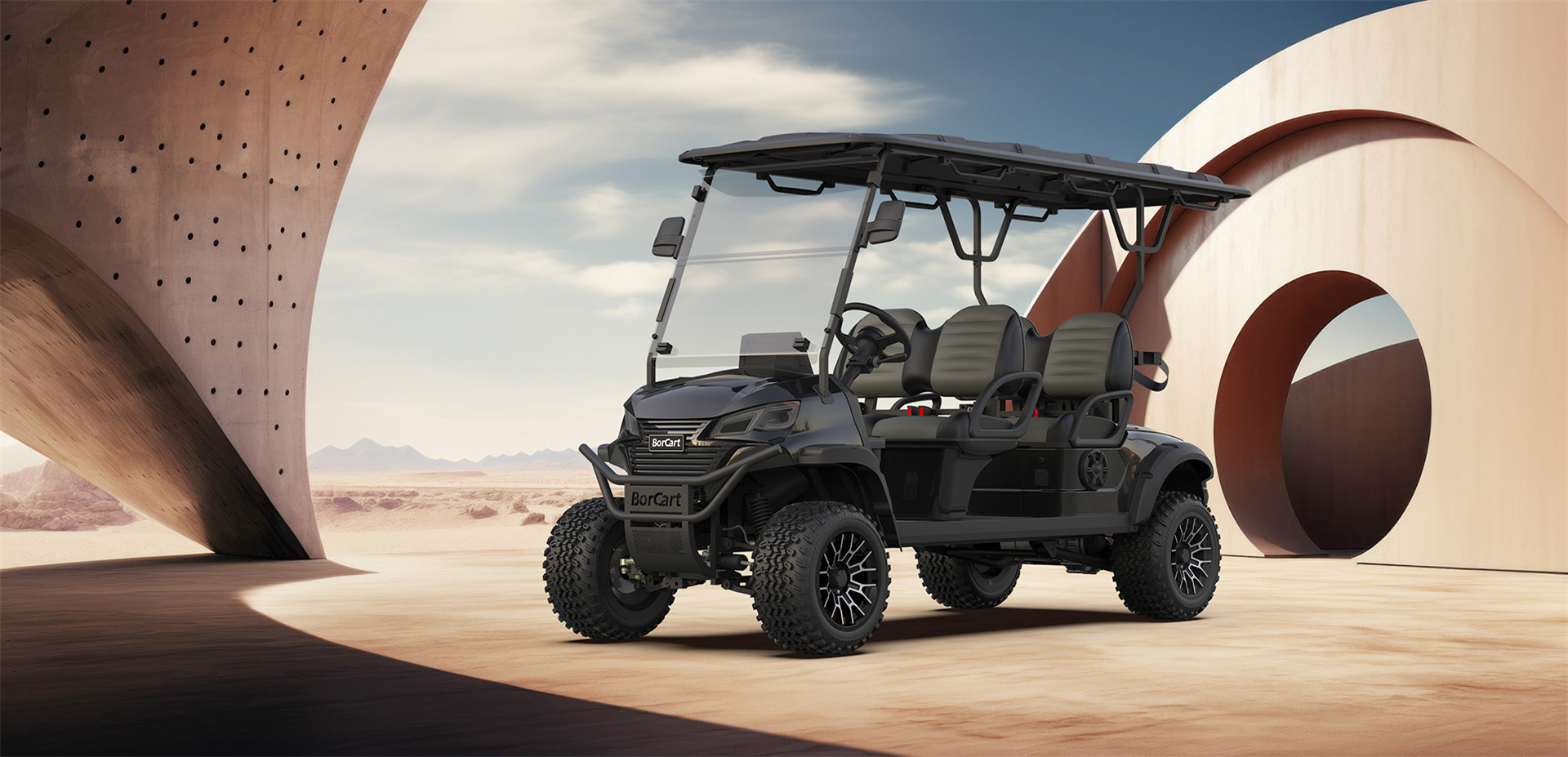
Electric Golf Cart vs. Gas Golf Cart Range and Daily Availability
Plan Around Your Busiest Day
A cart completing one morning round has a different duty cycle from one handling back-to-back rounds during a tournament.
Before selecting a fleet, document:
- Maximum daily rounds per vehicle.
- Actual route distance, including staging and cleaning.
- Passenger and equipment loads.
- Elevation changes and steepest operating sections.
- Available charging time between assignments.
- Required reserve capacity.
Published range figures are starting points, not route guarantees. Loads, gradients, temperature, tire pressure, and battery condition influence real-world performance.
For an electric golf cart fleet, request evidence that the proposed configuration can complete your peak workload with reserve remaining. For gas carts, validate fuel consumption and refueling logistics under the same conditions.
Charging and Refueling Create Different Bottlenecks
Gas carts can return to service quickly after refueling. That advantage matters when vehicles must operate continuously.
Electric carts fit naturally into schedules with overnight downtime. Some lithium systems also support useful charging between assignments, provided the battery and charger permit it.
Compare approved charging specifications rather than assuming all lithium batteries charge equally fast. Charging time depends on charger output, battery capacity, temperature, and the starting state of charge.
Golf Cart Maintenance: Electric, Lead-Acid, Lithium, and Gas
Electric Does Not Mean Maintenance-Free
Electric golf carts eliminate engine oil changes and several combustion-engine service tasks. Nevertheless, brakes, tires, steering, suspension, connections, and charging equipment still require attention.
Flooded lead-acid batteries add electrolyte checks and watering. Normal topping-up should follow a full charge; if plates are exposed beforehand, add only enough water to cover them before charging, then complete the adjustment afterward. Follow the battery manufacturer’s instructions.
Lithium batteries remove watering, but visual inspections, secure mounting, compatible charging, and fault monitoring remain important.
Gas Maintenance Requires Predictable Workshop Capacity
Gasoline carts require scheduled engine servicing according to the model’s manual. Depending on the design, tasks may include oil changes, filter servicing, spark-plug replacement, and fuel-system inspection.
That workload is not automatically a reason to reject gas. A course with experienced technicians and established parts inventory may manage it effectively.
Compare actual technician hours, consumables, outsourced repairs, and vehicles unavailable for service. Maintenance labor is a fleet cost even when your own employees perform it.
Lithium vs. Lead-Acid: A Second Decision Within Electric Fleets
An electric vs. gas comparison is incomplete without identifying the electric battery system.
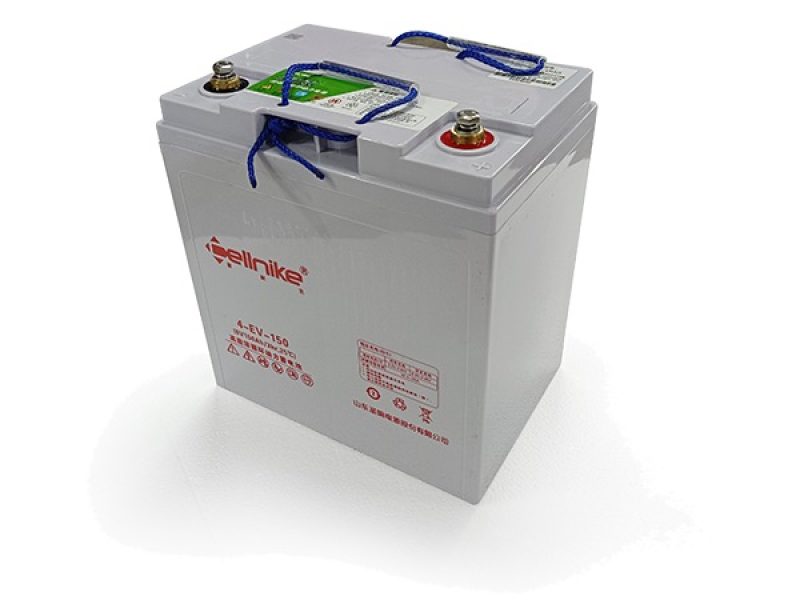
Flooded lead-acid may suit buyers who prioritize initial affordability and can maintain disciplined charging and watering routines. Lithium can suit operators seeking less battery servicing and greater scheduling flexibility.
However, “lithium” alone does not establish quality or suitability. Request:
- Usable battery energy, not voltage alone.
- Battery management system functions.
- Approved charging and operating temperatures.
- Written warranty terms and exclusions.
- Replacement availability and installation requirements.
- Diagnostic support and service procedures.
Battery warranties require particular attention. Confirm commercial-use eligibility, capacity-retention provisions, labor coverage, and whether replacement coverage becomes prorated.
Do not treat a warranty term as a guaranteed service life.
Hill Performance, Noise, and Environmental Impact
Which Golf Cart Is Better for Hilly Courses?
Neither power source automatically wins on hills. Motor or engine output, controller settings, gearing, vehicle weight, traction, and braking all matter.
Request a loaded demonstration on your actual gradients. Evaluate hill starts, sustained climbing, downhill speed control, and repeated-round performance.
Regenerative braking, where fitted, may assist deceleration and recover some energy. It does not replace service brakes or justify exceeding operating limits.
Guest Comfort and Emissions Need Separate Evaluation
Electric carts avoid combustion-engine noise and tailpipe exhaust. That can improve the experience around tee boxes, hotel rooms, and clubhouse staging areas.
Still, measure noise under comparable conditions rather than promising an unsupported decibel reduction.
Environmental comparisons need similar care. Electric carts have zero tailpipe emissions, but battery manufacturing and electricity generation create upstream impacts. Gas carts produce exhaust during operation and also carry fuel-production impacts.
Neither vehicle should be described as impact-free.
The Hidden Constraint: Charging Infrastructure and Fleet Resilience
An attractive vehicle quotation can become a poor investment if the facility cannot charge the fleet reliably.
As an illustrative calculation, 60 chargers drawing 1 kW each create a simultaneous charger load of 60 kW, before other building loads. Actual input demand depends on the selected equipment and charging schedule.
Have a qualified electrical professional assess:
- Available supply and panel capacity.
- Circuit protection, wiring, and local requirements.
- Parking layout, cable routing, and charger protection.
- Ventilation requirements for the battery system.
- Peak-demand charges and staggered charging opportunities.
Staggering charging may reduce simultaneous demand, but every vehicle must still receive enough energy before dispatch.
Also plan for outages, damaged chargers, and depleted vehicles. A documented rotation and reserve strategy matters more than an optimistic maximum-range claim.
A Practical Acceptance Test Before Replacing Your Fleet
Rather than relying entirely on demonstrations, specify a representative operational trial in the purchasing process.
Establish a Baseline
Record your existing fleet’s rounds completed, fuel or electricity consumption, maintenance hours, and missed dispatches.
Test Under Real Loads
Run candidate vehicles with normal passengers and equipment across the actual course. Include busy-day scheduling and the most demanding terrain.
Measure Fleet Outcomes
Track:
- Energy cost per completed round.
- End-of-shift fuel or battery reserve.
- Charging or refueling labor.
- Faults and unscheduled downtime.
- Guest and staff feedback.
Agree on Acceptance Criteria
Define the required workload, reserve margin, support arrangements, and training before the order is finalized.
A short trial cannot prove long-term battery life or seasonal reliability. Combine trial results with warranty review, service documentation, and suitable customer references.
Which Golf Cart Should Fleet Operators Choose?
Electric golf carts are usually the stronger candidate when routes are predictable, charging is dependable, and reducing engine servicing and exhaust exposure are important priorities.
Gas golf carts remain credible when charging access is restricted, rapid redeployment is essential, or electrical upgrades are difficult to justify.
A phased transition may be preferable to an immediate replacement. It lets operators verify charging arrangements and service support before expanding.
At BorCart, our electric product range covers golf carts, sightseeing buses, cargo vehicles, patrol vehicles, and multipurpose work vehicles, with flexible OEM/ODM customization.
Request a course-specific fleet proposal from Guangzhou BorCart Electric Vehicle Co., Ltd. Share your fleet size, peak daily rounds, gradients, climate, charging facilities, and customization requirements. Ask for the proposed battery and charger specifications, written warranty terms, and an itemized ownership-cost comparison.
Frequently Asked Questions
Are Electric Golf Carts Cheaper to Operate Than Gas Golf Carts?
They often have lower energy and engine-related maintenance costs. However, the final result depends on local tariffs, fuel prices, utilization, infrastructure, and battery replacement. Compare cost per completed round.
Can an Electric Golf Cart Complete Multiple Rounds Daily?
Potentially, yes. Battery capacity, terrain, load, temperature, and charging opportunities determine suitability. Validate the required number of rounds with the proposed configuration on your course.
Are Gas Golf Carts Better for Hills?
Not necessarily. Assess the complete vehicle, including power delivery, gearing, traction, and braking. A loaded hill test provides better evidence than the power-source label.
How Long Do Electric Golf Cart Batteries Last?
There is no universal lifespan. Chemistry, temperature, discharge patterns, charging practices, and maintenance all matter. Request application-specific expectations and distinguish warranty coverage from predicted life.
Do Lithium Golf Cart Batteries Need Maintenance?
They do not require watering, but inspections and correct charging remain necessary. Follow the battery manufacturer’s requirements for storage, temperature limits, connections, and fault response.
Should a Golf Course Replace Its Entire Gas Fleet at Once?
Only when operational and financial evidence supports doing so. A phased purchase can reduce implementation risk and reveal charging or service problems before full deployment.
References
1. U.S. Department of Energy, Alternative Fuels Data Center – “Electric Vehicles for Fleets” – Supports the discussion of fleet energy costs, charging during downtime, and maintenance considerations. Its road-vehicle statistics are not used as golf-cart performance data. https://afdc.energy.gov/vehicles/electric-fleets
2. U.S. Department of Energy, Alternative Fuels Data Center – “Maintenance and Safety of Electric Vehicles” – Supports the distinction between electric and combustion-engine maintenance and the need to evaluate battery replacement and warranties. https://afdc.energy.gov/vehicles/electric-maintenance
3. U.S. Department of Energy, Alternative Fuels Data Center – “Emissions from Electric Vehicles” – Explains tailpipe, upstream, and full-life-cycle emissions boundaries. https://afdc.energy.gov/vehicles/electric-emissions
4. U.S. Department of Energy, Federal Energy Management Program – “Electric Vehicle Financial Considerations—Federal Fleet Training,” June 28, 2022 – Supports ownership-cost methodology and consideration of charging-related utility costs; its passenger-car examples are not applied to golf carts. https://www.energy.gov/cmei/femp/articles/electric-vehicle-financial-considerations-federal-fleet-training
5. Trojan Battery Company – “Battery Maintenance” – Provides flooded lead-acid charging, watering, inspection, and ventilation guidance. https://www.trojanbattery.com/resources/battery-maintenance
6. Trojan Battery Company – “Lithium Battery Resources & FAQs” – Explains battery management functions, inspection requirements, and product-specific charging-temperature restrictions. https://www.trojanbattery.com/technology/trojan-lithium-batteries/lithium-ion-battery-resources
Hot Tags: Electric Golf Cart, Gas Golf Cart, Golf Cart Manufacturer, Electric Golf Cart Supplier, Golf Course Fleet, Wholesale Golf Carts, Lithium Battery Golf Cart, Commercial Golf Carts, OEM Golf Carts, Custom Golf Carts