
Content Menu
● Golf Cart Battery Types: Which Chemistry Fits Your Operation?
>> Flooded Lead-Acid Golf Cart Batteries
>> Lithium Golf Cart Batteries
● Understanding 36V, 48V, and 72V Golf Cart Batteries
>> Why Individual Battery Voltage Does Not Determine Range
● Lithium vs. Lead-Acid Golf Cart Batteries
● How to Size Golf Cart Batteries for Real Working Conditions
>> Step 1: Calculate Nominal Battery Energy
>> Step 2: Match Capacity to the Duty Cycle
>> Step 3: Validate Range With a Loaded Test
● A Commercial Fleet Insight: Check Power as Carefully as Capacity
● Golf Cart Battery Maintenance and Charging
>> Watering Flooded Lead-Acid Batteries
>> Caring for Lithium Batteries
● When Should You Replace Golf Cart Batteries?
● Converting a Golf Cart From Lead-Acid to Lithium
● Compare Total Ownership Cost, Not Battery Price Alone
● Specify a Battery-Ready Vehicle With BorCart
● FAQs About Golf Cart Batteries
>> How long do golf cart batteries last?
>> Are lithium golf cart batteries worth the extra cost?
>> Can I replace six lead-acid batteries with one lithium pack?
>> Can I use my existing charger with lithium batteries?
>> What is the best battery for a golf cart fleet?
>> Should I choose a larger amp-hour rating for more range?
Choosing the right golf cart batteries starts with understanding how your vehicle works—not simply comparing prices or amp-hour ratings. Battery chemistry, usable energy, charging compatibility, passenger load, and terrain all influence whether a cart completes its daily schedule reliably.
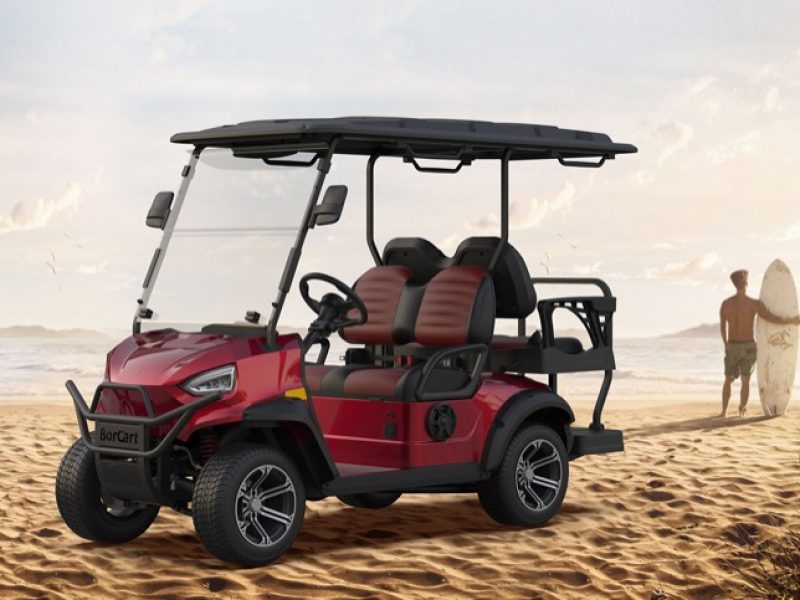
At Guangzhou BorCart Electric Vehicle Co., Ltd., our focus spans electric golf carts, sightseeing buses, cargo vehicles, patrol carts, and multipurpose utility vehicles. With 26 years of industry experience and flexible OEM/ODM services, we approach battery selection as part of the complete vehicle specification.
My starting question for any buyer is straightforward: what must this vehicle accomplish between charging opportunities? That answer provides a stronger foundation than choosing the largest battery available.
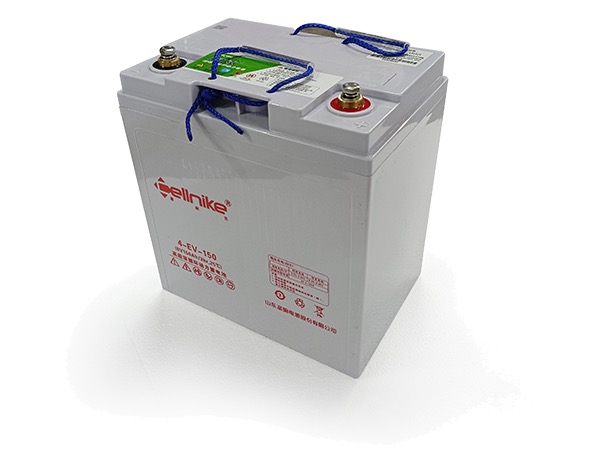
Golf Cart Battery Types: Which Chemistry Fits Your Operation?
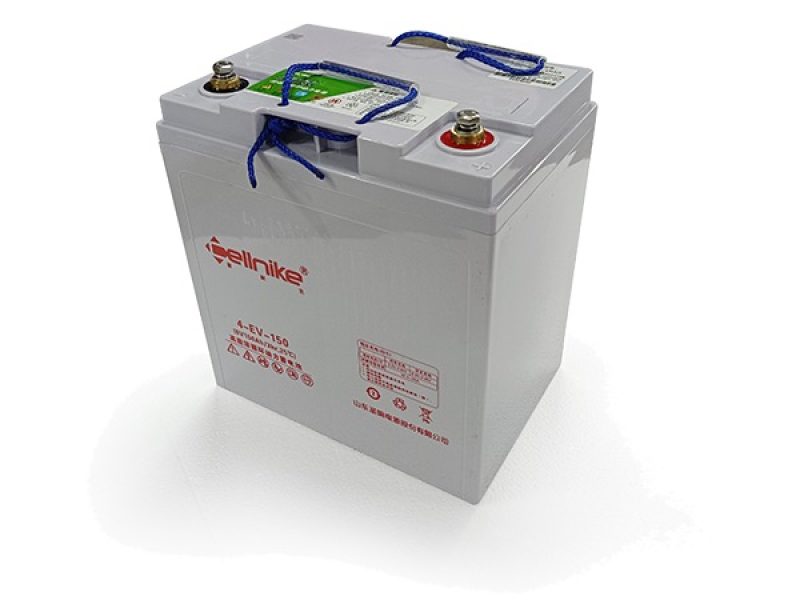
Most golf cart batteries fall into two categories: lead-acid and lithium. Within lead-acid technology, flooded, AGM, and gel batteries have different maintenance and charging requirements.
| Battery type | Main advantage | Main limitation | Suitable applications |
|---|---|---|---|
| Flooded lead-acid | Lower initial purchase cost | Requires watering and regular care | Budget-sensitive operations with maintenance staff |
| AGM | No electrolyte watering | Still relatively heavy | Users seeking reduced routine maintenance |
| Gel | Immobilized electrolyte | Requires a suitable charging profile | Applications specifically approved for gel technology |
| LiFePO4 lithium | Lower weight and no watering | Higher initial investment | Frequently operated carts and commercial fleets |
Flooded Lead-Acid Golf Cart Batteries
Flooded batteries remain a practical option when purchase cost matters and maintenance is consistent. However, watering, corrosion checks, and correct charging must become scheduled tasks.
For a fleet with established maintenance procedures, this workload may be manageable. For a hotel with limited technical staff, it can become an operational burden.
AGM and Gel Batteries
AGM batteries hold electrolyte in absorbent glass mats. Gel batteries use a gelled electrolyte. Neither requires routine water additions, but neither should be treated as interchangeable with every other lead-acid battery.
Confirm the approved charger settings before installation. “Sealed” does not mean that charging conditions or ventilation requirements can be ignored.
Lithium Golf Cart Batteries
Lithium iron phosphate, commonly called LiFePO4, eliminates watering and can reduce battery-pack weight substantially.
However, maintenance-free means less routine battery servicing—not zero inspection. Mountings, cables, terminals, charger connections, and protective enclosures still need attention.
Understanding 36V, 48V, and 72V Golf Cart Batteries
System voltage must match the vehicle’s approved electrical configuration.
Traditional lead-acid packs connect batteries in series. Their voltages add together, while the amp-hour capacity of a matched series string remains unchanged.
| Vehicle system | Example lead-acid configuration |
|---|---|
| 36V | Six 6V batteries |
| 48V | Six 8V batteries |
| 48V | Eight 6V batteries |
| 48V | Four 12V batteries |
| 72V | Six 12V batteries |
These are configuration examples, not universal replacement recommendations.
Check the vehicle manual, battery labels, controller specifications, and charger documentation. Battery quantity alone does not reliably identify voltage, particularly after a previous conversion.
Lithium naming also requires attention. A pack marketed for a “48V” cart may have a nominal voltage of 51.2V. Compatibility depends on the complete operating-voltage range and approved components, not the label alone.
Why Individual Battery Voltage Does Not Determine Range
A 6V battery does not automatically provide more range than an 8V or 12V battery.
The relevant comparison is the complete pack: nominal energy, usable capacity, discharge characteristics, condition, and vehicle consumption. Comparing battery voltage without these factors can produce misleading conclusions.
Lithium vs. Lead-Acid Golf Cart Batteries
The best chemistry depends on workload and ownership priorities.
| Decision factor | Flooded lead-acid | LiFePO4 lithium |
|---|---|---|
| Initial investment | Usually lower | Usually higher |
| Routine watering | Required | Not required |
| Pack weight | Generally heavier | Generally lighter |
| Charging requirements | Approved lead-acid profile | Approved lithium profile |
| Monitoring | Depends on installation | Often supported by a battery management system |
| Ownership assessment | Include maintenance labor | Include integration and support costs |
Lithium can be attractive for frequently used vehicles, especially where maintenance access or charging windows are limited.
Lead-acid can remain sensible for occasional use when buyers have suitable charging facilities and reliable maintenance support.
Neither chemistry guarantees a particular driving range. Passenger weight, hills, tire pressure, speed, temperature, and accessories all affect results.
How to Size Golf Cart Batteries for Real Working Conditions
Battery sizing should begin with energy demand, not an advertised mileage figure.
Step 1: Calculate Nominal Battery Energy
Use this relationship:
Nominal energy in watt-hours = nominal voltage × amp-hour capacity.
For example, a 51.2V, 100Ah battery stores approximately 5,120Wh, or 5.12kWh, of nominal energy.
That is not automatically the energy available for driving. Usable energy depends on the permitted discharge window, protective limits, operating conditions, and reserve policy.
Step 2: Match Capacity to the Duty Cycle
Consider:
- Daily operating distance and working hours.
- Passenger count or cargo weight.
- Hill gradients and repeated starts.
- Lighting, refrigeration, or other accessory loads.
- Charging opportunities between shifts.
- Seasonal temperature changes.
A patrol cart making frequent stops has a different duty cycle from a golf cart following a predictable course route.
Step 3: Validate Range With a Loaded Test
Here is an illustrative calculation, not a BorCart performance claim:
Assume a pack provides 4.1kWh of usable energy. If measured vehicle consumption is 100Wh per mile, calculated range is approximately 41 miles before an additional operational reserve.
If consumption rises to 140Wh per mile, that figure falls to approximately 29 miles.
This is why loaded route testing is more useful than comparing unrelated range claims.
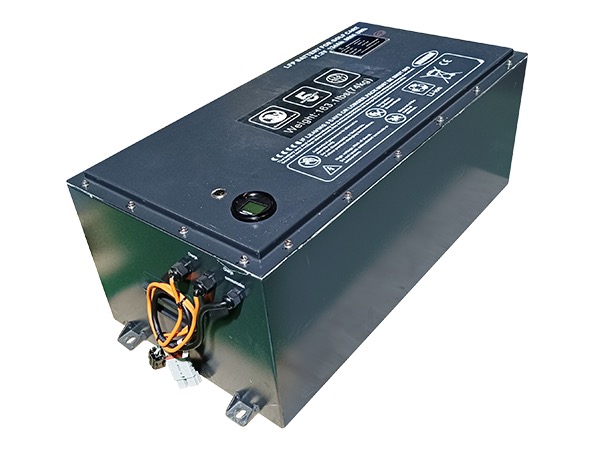
A Commercial Fleet Insight: Check Power as Carefully as Capacity
Amp-hours describe capacity, but they do not establish whether a battery can support acceleration or climbing.
A lithium battery’s battery management system, or BMS, monitors conditions such as cell voltage, current, and temperature. Its protection limits must suit the vehicle.
Before approving a battery, ask:
- What continuous discharge current can it deliver?
- What peak current is permitted, and for how long?
- Does that match controller demand under load?
- Can the pack accept regenerative charging, if applicable?
- Is communication required between the battery, charger, and controller?
A battery may contain sufficient energy yet disconnect when demand exceeds its current limit. BMS protection does not automatically establish vehicle compatibility or communication capability.
For cargo vehicles and passenger shuttles, this distinction deserves particular attention.
Golf Cart Battery Maintenance and Charging
Correct care depends on chemistry. Follow the instructions for the exact battery and charger rather than applying one universal routine.
Watering Flooded Lead-Acid Batteries
Use the following sequence:
- Wear appropriate eye and hand protection.
- Inspect the case and connections.
- Before charging, check that electrolyte covers the plates.
- If plates are exposed, add only enough distilled water to cover them.
- Fully charge the battery.
- Adjust electrolyte to the manufacturer’s specified level.
Do not add acid during routine watering. Do not overfill, and never add water to AGM, gel, or lithium batteries.
Inspect flooded batteries monthly initially, then adjust the schedule to actual water consumption and operating conditions.
Charging Safely
Charge in a suitable, well-ventilated area. Keep ignition sources away from charging lead-acid batteries.
Use a charger approved for the battery’s voltage, chemistry, and charging profile. A connector that physically fits does not prove compatibility.
Avoid deliberately running batteries flat before charging. Lead-acid batteries do not need full discharge to prevent a memory effect.
Caring for Lithium Batteries
Inspect cables, terminals, restraints, and the enclosure regularly.
Follow the specified charging-temperature range. Some lithium batteries prevent charging below freezing, while others use approved heating arrangements. Do not bypass low-temperature protection.
For storage, follow the battery manufacturer’s state-of-charge and inspection instructions. Lithium storage guidance should not simply copy flooded lead-acid procedures.
When Should You Replace Golf Cart Batteries?
Reduced range is a reason to investigate, but it does not prove the battery has failed.
Possible causes include:
- Incomplete charging or a charger fault.
- Loose or corroded connections.
- Low tire pressure or brake drag.
- Increased passenger or cargo loads.
- A deteriorating battery or weak cell.
A useful diagnosis combines charging checks, connection inspection, and testing under load. Resting voltage alone does not establish remaining capacity.
Stop using a battery showing swelling, leakage, abnormal heat, or physical damage. Arrange professional inspection rather than attempting another charge.
For aging lead-acid sets, matched replacement is generally preferable to mixing new and worn batteries. A technician should assess unusual early failures before recommending a full-set replacement.
Converting a Golf Cart From Lead-Acid to Lithium
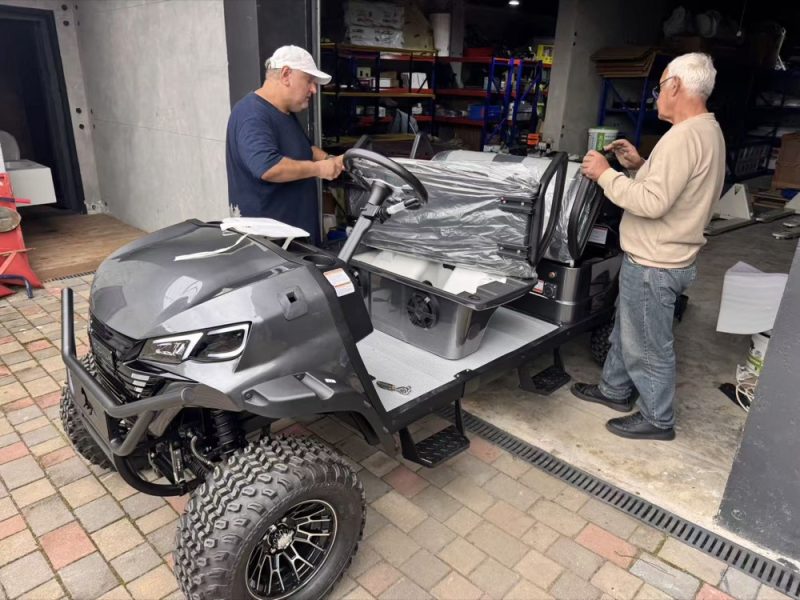
A lithium conversion is an electrical integration project, even when marketed as a drop-in upgrade.
Before installation, verify:
- Operating-voltage compatibility.
- Continuous and peak current requirements.
- Charger compatibility.
- Cable sizing, fusing, and connectors.
- Battery restraints and compartment dimensions.
- Accessory power supply and voltage converters.
- Controller settings and regenerative charging limits.
Use a qualified installer and the vehicle-specific conversion instructions. Do not deliberately discharge the old pack completely before removal.
The final check should include charging verification and a controlled loaded test, not just confirming that the cart moves.
Compare Total Ownership Cost, Not Battery Price Alone
For commercial buyers, total ownership cost provides a more useful comparison than purchase price.
Include:
- Battery and charger purchase costs.
- Installation and conversion components.
- Routine inspection and watering labor.
- Electricity consumption.
- Downtime and replacement transport.
- Warranty exclusions and replacement logistics.
Request like-for-like quotations. A bare battery and a complete installed system are different purchases.
Also distinguish cycle-life claims from warranty coverage. A cycle rating is meaningful only alongside test conditions, depth of discharge, temperature, and the remaining-capacity threshold.
Specify a Battery-Ready Vehicle With BorCart
For a new vehicle project, evaluate the battery alongside the complete cart rather than treating it as a separate accessory.
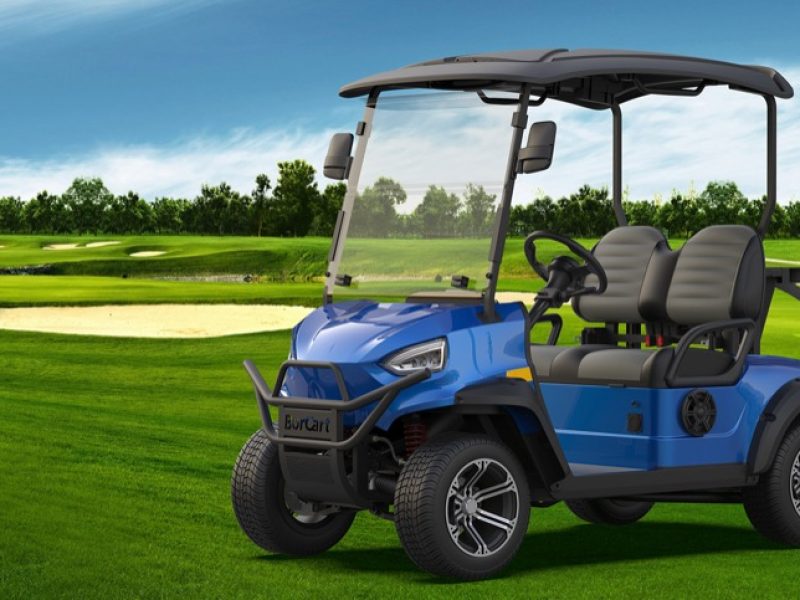
Guangzhou BorCart Electric Vehicle Co., Ltd. develops and manufactures four-wheel low-speed electric vehicles for golf courses, hotels, scenic destinations, industrial parks, and agricultural applications.
Our OEM/ODM approach allows buyers to discuss passenger layouts, cargo requirements, accessories, and operating priorities together.
Send BorCart your daily distance, terrain, payload, climate, charging schedule, and destination market. Request a vehicle-and-battery proposal that documents compatibility, expected operating conditions, charging requirements, and after-sales responsibilities.
FAQs About Golf Cart Batteries
How long do golf cart batteries last?
There is no universal lifespan. Chemistry, cycling, temperature, charging, and maintenance all matter. Compare manufacturer ratings under stated test conditions rather than assuming every battery will achieve the same number of years.
Are lithium golf cart batteries worth the extra cost?
They can be, especially for frequent use or where reducing maintenance matters. Compare installed cost, charging requirements, service support, and expected workload before deciding.
Can I replace six lead-acid batteries with one lithium pack?
Sometimes. The lithium pack must match the vehicle’s voltage range, current demand, charger, physical mounting, and accessory requirements. Battery count alone does not establish compatibility.
Can I use my existing charger with lithium batteries?
Only if both the battery and charger manufacturers approve its charging profile. Otherwise, install a compatible charger. Matching nominal voltage is not sufficient.
What is the best battery for a golf cart fleet?
The best option matches the fleet’s routes, loads, climate, maintenance resources, and charging windows. Validate the proposed configuration through loaded testing before a large purchase.
Should I choose a larger amp-hour rating for more range?
Potentially, but compare batteries at the same voltage and examine usable energy, weight, current capability, and installation limits. A larger amp-hour number alone does not guarantee a better result.
References
1. CartFinder – “Golf Cart Batteries: Types, Care, Replacement, and Brand Comparison” – Reference article for topic scope and common buyer questions; its broad performance comparisons are not treated as universal specifications. https://thecartfinder.com/blog/golf-cart-batteries
2. Trojan Battery – “Battery Maintenance” – Technical basis for flooded battery watering, charging precautions, inspection frequency, and temperature-related charging considerations. https://www.trojanbattery.com/resources/battery-maintenance
3. Trojan Battery – “How to Easily Maintain Your Flooded Lead Acid Battery” – Guidance on exposed plates, post-charge watering, ventilation, cleaning, and flooded battery storage. https://www.trojanbattery.com/resources/white-papers-and-articles/how-to-maintain-your-flooded-lead-acid-battery
4. Trojan Battery – “Lithium Battery Resources & FAQs” – Basis for distinguishing reduced maintenance from zero inspection, and for model-specific lithium temperature limits and qualified life-expectancy claims. https://www.trojanbattery.com/technology/trojan-lithium-batteries/lithium-ion-battery-resources
5. Trojan Battery – “AES AGM and Standard AGM Battery Maintenance” – Guidance on sealed battery care, inspection, ventilation, approved charging programs, and the prohibition on watering AGM batteries. https://www.trojanbattery.com/trojan-aes-batteries/aes-agm-standard-agm-battery-maintenance
Hot Tags: Golf Cart Batteries, Lithium Golf Cart Batteries, Golf Cart Battery Manufacturer, Wholesale Golf Cart Batteries, LiFePO4 Golf Cart Batteries, 48V Golf Cart Batteries, Golf Cart Battery Supplier, Deep Cycle Golf Cart Batteries, Golf Cart Battery Replacement, OEM Golf Cart Batteries