Content Menu
● How These Electric Golf Cart Manufacturers Were Selected
● Why Source Electric Golf Carts from China?
>> Established Manufacturing Clusters
>> Demand Extends Beyond Golf Courses
● Comparison Table: Capacity, MOQ, and Certification Evidence
● The Top 10 Electric Golf Cart Manufacturers in China
>> 1. Guangzhou BorCart Electric Vehicle Co., Ltd.
>> 2. Guangdong Lvtong New Energy Electric Vehicle Technology Co., Ltd.
>> 3. Marshell Electric Vehicle
>> 4. Suzhou Eagle Electric Vehicle Manufacturing Co., Ltd.
>> 6. Dongguan EXCAR Electric Vehicle Co., Ltd.
>> 7. Guangdong Yatian Industrial Co., Ltd.
>> 8. CENGO
>> 9. Suzhou Lexsong Electromechanical Equipment Co., Ltd.
>> 10. Shenzhen Aoxiang Industrial Development Co., Ltd.
● Technical Buying Guide: What to Specify Before Requesting a Quote
>> Define the Operating Duty First
>> Specify Materials and Workmanship in Measurable Terms
>> Evaluate the Battery as Part of a System
>> Separate Factory Certification from Vehicle Compliance
● An Overlooked Procurement Trap: The Same Model Name Can Hide a Different Build
● Factory Verification, Sampling, and Shipping
>> Verify the Actual Manufacturing Operation
>> Approve a Production-Representative Sample
>> Calculate Landed Cost Before Finalizing the Supplier
>> Agree on Packing and Handover Responsibilities
● Conclusion: Choose a Manufacturing Partner, Not Just a Cart
● FAQs
>> 2. Is a CE certificate sufficient to import an electric golf cart into Europe?
>> 3. How can I compare battery warranties when two suppliers both offer five years?
>> 4. Can shipping carts as SKD or CKD kits reduce U.S. trade-remedy duties?
>> 5. How should I protect my investment in a customized golf-cart design?
Choosing an electric golf cart manufacturer in China is not simply a matter of comparing vehicle prices. For professional importers, distributors, golf courses, and hospitality operators, the more important question is whether a supplier can deliver the same specification consistently, support market-specific compliance, and provide replacement parts throughout the fleet’s operating life.
China offers a broad manufacturing base covering electric golf carts, resort shuttles, utility vehicles, cargo carts, and customized low-speed transportation. Grand View Research identifies the country as a significant electric golf cart manufacturing hub, supported by demand from commercial developments, tourist attractions, and other non-golf applications.
However, manufacturers differ considerably in engineering depth, production transparency, customization flexibility, and export support. A supplier suitable for a large standardized fleet may not be the right partner for a smaller brand developing its first private-label product range.
This guide compares 10 manufacturers and explains how to evaluate them beyond their catalogs. The selection focuses on factory capabilities, product specialization, quality-control processes, customization support, and the evidence buyers should request before committing to an order.
How These Electric Golf Cart Manufacturers Were Selected
A credible supplier assessment should begin with evidence rather than appearance. Similar body styling does not establish equivalent chassis construction, braking performance, battery quality, or after-sales support.
The following framework provides a practical basis for comparing manufacturers.
| Evaluation area | What procurement teams should examine | Why it matters |
|---|---|---|
| Manufacturing identity | Business license, factory address, contracting entity, production ownership | Establishes who manufactures the vehicle and who carries contractual responsibility |
| Engineering capability | Drawings, configuration control, prototype process, change-management records | Separates genuine development support from accessory-level customization |
| Quality control | Incoming inspection, welding checks, electrical inspection, final vehicle testing | Shows whether quality requirements are built into production |
| Production reliability | Current line loading, historical shipment records, material availability | Provides a more useful delivery picture than nominal capacity alone |
| Product documentation | Model-specific specifications, applicable declarations, test reports | Connects compliance claims to the actual vehicle being purchased |
| Commercial flexibility | Sample arrangements, model-mixing policy, customization minimums | Determines suitability for pilot orders and growing brands |
| Lifecycle support | Parts catalogs, diagnostic access, warranty procedures, component continuity | Influences downtime and total ownership cost |
This is a due-diligence framework, not a claim that every company below has passed an on-site audit. Where comparable public information is unavailable, the guide states that limitation instead of assigning an unsupported score.
Why Source Electric Golf Carts from China?
Established Manufacturing Clusters
The manufacturers in this shortlist demonstrate the concentration of relevant suppliers in Guangdong, including Guangzhou, Dongguan, Shenzhen, and Zhaoqing. Other established production locations include Suzhou in Jiangsu and Xiamen in Fujian. BorCart, Lvtong, Marshell, EXCAR, and Aoxiang provide examples of the Guangdong cluster, while Eagle and HDK represent additional regional manufacturing bases.
For buyers, geographic concentration creates opportunities to compare several factories during one sourcing trip. It also allows procurement teams to examine whether a manufacturer actually performs chassis fabrication, assembly, and inspection internally or coordinates these processes through outside suppliers.
Demand Extends Beyond Golf Courses
The product category increasingly includes vehicles for hotels, resorts, residential communities, campuses, industrial facilities, and tourism operations. Grand View Research specifically identifies commercial zones, airports, tourist attractions, and real-estate developments among the factors supporting demand in China.
A 2026 Mordor Intelligence report estimates China’s golf cart market at USD 150.49 million in 2025 and USD 160.01 million in 2026. It estimates that electric vehicles represented 83.15% of the country’s golf cart market in 2025. These are commercial research estimates for the Chinese market—not official export totals or a measure of Chinese factory output.
This distinction matters. Domestic market value, export value, annual production, and installed fleet size describe different things and should not be used interchangeably when judging supplier scale.
Comparison Table: Capacity, MOQ, and Certification Evidence
The table below summarizes publicly available information. Production figures are supplier claims, not independently verified output. Workshop area is included only as a manufacturing-footprint indicator and should not be interpreted as production capacity.
“Confirm” means the relevant information was not established from the public materials reviewed. It does not mean the supplier lacks the capability or documentation.
| Manufacturer | Established | Publicly reported capacity or footprint | MOQ and sample position | Certification or compliance evidence to verify |
|---|---|---|---|---|
| Guangzhou BorCart | 2000 | Four production lines; claims delivery capability of 10 containers daily across vehicle categories | Sample-order service advertised; production and customization MOQ require quotation | Request current factory certificates and exact-model documentation; company profile describes IQC, PQC, QA, and full assembly-line testing |
| Lvtong | 2004 | Official English profile reports approximately 2,000 vehicles monthly | Confirm by model, specification, and order mix | Request current certificates and destination-specific vehicle documents |
| Marshell | 2002 | Eight lines; claims 15 containers daily across a broad vehicle portfolio | Confirm project and customization minimums | Company profile states ISO 9001 and CE/EEC-related compliance; verify scope and model coverage |
| Suzhou Eagle | 1999 | Three assembly lines; approximately 1,500 vehicles monthly | Confirm standard-model and engineering-order minimums | Request current quality-system and vehicle-specific documents |
| HDK | 2006–2007* | Xiamen factory reported at 88,000 m²; comparable output not established | Confirm dealer, sample, and private-label policies | Verify exact vehicle, charger, battery, and destination documentation |
| EXCAR | 2006 | Factory page reports 800–1,200 carts monthly and six lines | Confirm standard and custom-model minimums | Request current certificates and supporting test reports |
| Guangdong Yatian | 2001 | Supplier profile reports 50,000 vehicles annually across different vehicle categories | Confirm by platform and tooling requirements | Verify documents for the selected golf cart, not unrelated vehicle categories |
| CENGO | 2015 | Reports Chengdu base and Dongguan cooperative factory; allocation requires clarification | Confirm pilot-order and customization minimums | Website states ISO 9001 and CE; verify validity, entity, and product scope |
| Suzhou Lexsong | 2015 | Comparable current output not established from reviewed official pages | Confirm standard-platform and custom-development minimums | Request documents matched to the selected 72V configuration |
| Shenzhen Aoxiang | 2003 | Factory area reported at 30,000 m²; comparable output not established | Confirm complete-vehicle and accessory minimums | Official profile states conformity with ISO 9001:2015; verify current certification status |
Sources: manufacturer profiles and published supplier information.
*HDK’s reviewed pages give different starting dates: its mobile English profile states 2007, while its Spanish history references a factory established in 2006. Buyers should distinguish brand history from the incorporation date of the contracting entity.
No standardized, binding MOQ was established across these manufacturers. A sample allowance, a standard-color production minimum, and a new-body tooling minimum are different commercial commitments and should be requested separately.
The Top 10 Electric Golf Cart Manufacturers in China
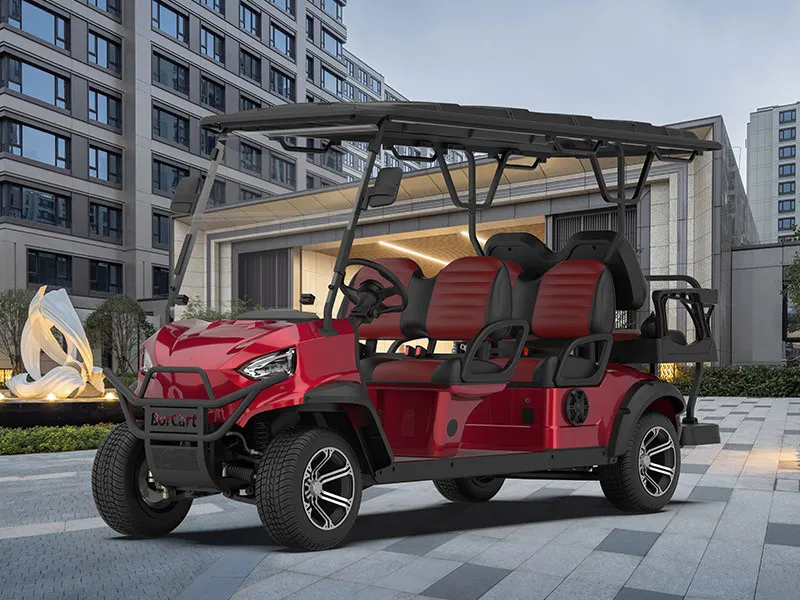
1. Guangzhou BorCart Electric Vehicle Co., Ltd.
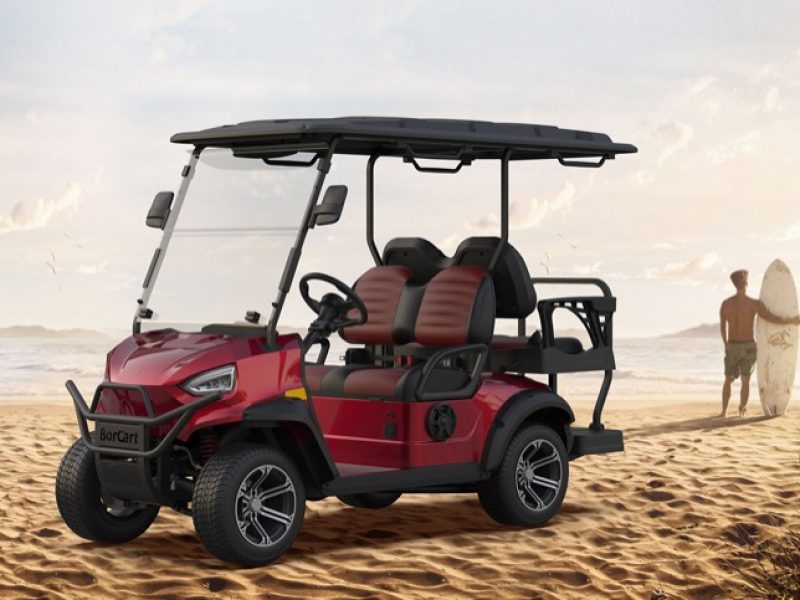
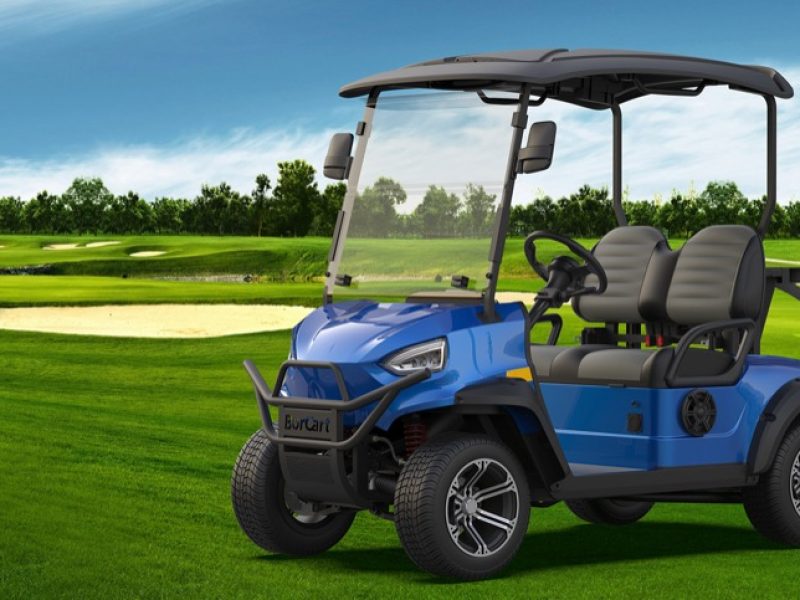
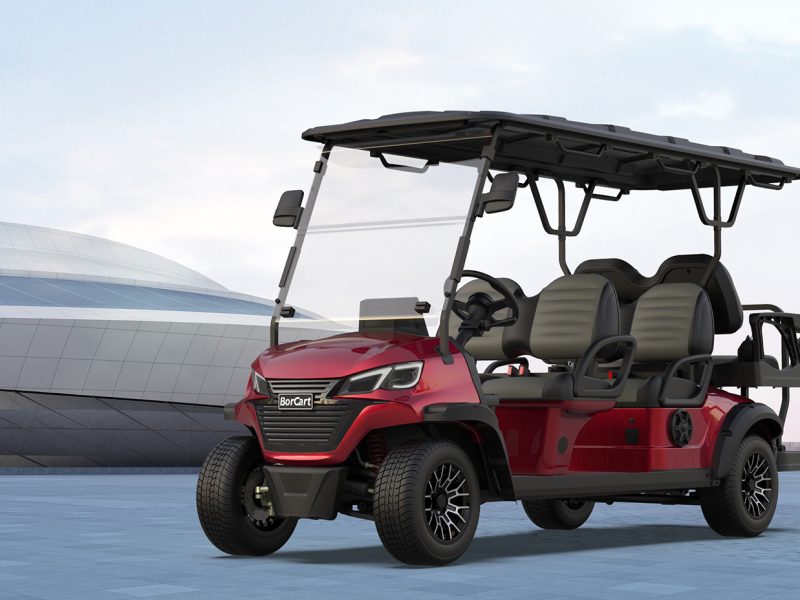
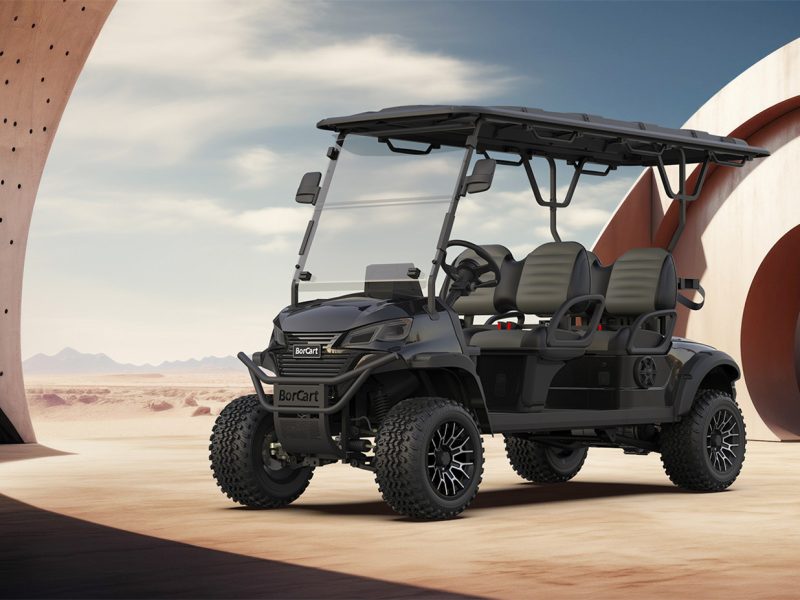
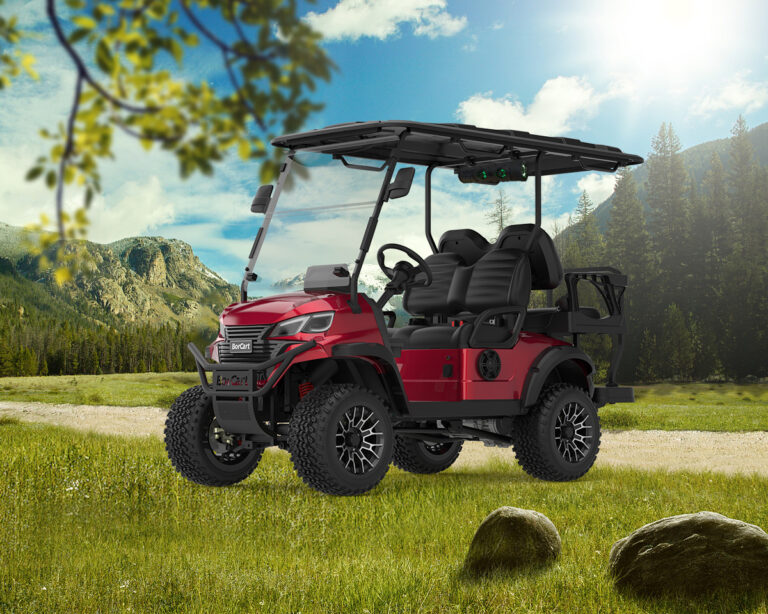
Founded in 2000, Guangzhou BorCart has approximately 26 years of industry history in 2026. Its product range includes electric golf carts, sightseeing vehicles, cargo vehicles, patrol vehicles, and other multipurpose electric transportation platforms. Its official profile reports a 200,000 m² workshop, more than 100 engineers and technicians, and four production lines. These remain company-reported figures.
BorCart is a relevant candidate for buyers seeking a value-oriented OEM/ODM partner rather than only an off-the-shelf vehicle. The company describes in-house production of chassis, bodies, and molds, alongside customization capabilities and a sample-order service. This combination provides a practical starting point for smaller brands that need to validate a configuration before discussing repeat production.
Its quality-control description includes New Product Introduction, Incoming Quality Control, Process Quality Control, and Quality Assurance, with all products reportedly tested on the assembly line. Its profile also names KDS and Mahle motors, Curtis controllers, and Delta-Q chargers among the components it uses. Buyers should confirm which brands and part numbers apply to their specific quotation rather than assuming every model uses the same configuration.
- Main markets: The company lists customers in more than 30 countries, including the United States, Germany, France, the United Kingdom, Mexico, Saudi Arabia, South Africa, and Australia.
- OEM/ODM focus: Custom vehicle appearance, application-specific functions, and configurations developed around customer requirements.
- Suitable buyer profile: Emerging distributors, small and medium-sized private-label brands, and hospitality or utility-fleet operators.
- Verification priority: Request a named project coordinator, drawing-approval schedule, written change-control process, and sample acceptance plan. These provide measurable evidence of communication efficiency and customization support.
BorCart’s potential value lies in aligning configuration, customization cost, and lifecycle support. Whether it offers the strongest commercial value should be determined through a like-for-like quotation and sample evaluation—not a headline unit price.
2. Guangdong Lvtong New Energy Electric Vehicle Technology Co., Ltd.
Lvtong was founded in 2004 and operates in Dongguan, Guangdong. Its official English website reports approximately 2,000 vehicles of monthly capacity and presents golf carts alongside customized and utility-oriented vehicle configurations.
Its established golf-cart platform range makes it a relevant candidate for distributors and fleet buyers seeking multiple seating layouts or related commercial configurations.
- Main markets: The reviewed official English profile does not quantify regional sales shares. U.S. government trade proceedings identify Lvtong in the Chinese low-speed vehicle export sector.
- OEM/ODM focus to discuss: Branding, seating layouts, utility conversions, and configuration changes within existing platforms.
- Verification priority: Confirm the producing factory, current available capacity, exact model documentation, and landed-cost implications for the destination market.
For U.S.-bound purchasing, trade-remedy exposure requires particular attention before negotiating a final purchase price.
3. Marshell Electric Vehicle
Marshell traces its manufacturing experience to 2002. Its current company profile describes production facilities in Zhaoqing and Anhui, more than 500,000 m² of workshop space, and a product range extending from golf carts and sightseeing buses to utility vehicles and industrial equipment.
The company’s broad portfolio is relevant to buyers sourcing several vehicle categories for one hotel group, campus, tourism development, or industrial site.
- Main markets: Marshell positions itself as a global supplier, but the reviewed profile does not disclose an audited geographic sales breakdown.
- OEM/ODM focus: Design, prototyping, themed appearance, and application-specific functionality, supported by internal mold, electronics, and vehicle-development teams.
- Verification priority: Separate golf-cart production availability from group-wide capacity, and verify compliance documents for the exact model and manufacturing location.
Its reported output in containers per day covers diverse products. Buyers should not convert that figure into golf carts per month without an agreed loading configuration.
4. Suzhou Eagle Electric Vehicle Manufacturing Co., Ltd.
Suzhou Eagle was established in 1999 and specializes in four-wheel electric vehicles. Its official website lists electric golf carts, passenger shuttles, electric trucks, and customized vehicles based on standard platforms. It reports three assembly lines and approximately 1,500 units of monthly production capacity.
Eagle is particularly relevant when a project extends beyond passenger transport into cargo movement or site-service applications.
- Main markets: An international-facing supplier; the reviewed official page does not establish its largest geographic markets.
- OEM/ODM focus: Adaptations of standard four-wheel platforms into customized passenger and utility vehicles.
- Verification priority: Obtain loaded braking, gradeability, payload, and stability evidence for the proposed configuration, especially when adding cargo equipment or changing seating arrangements.
A standard golf cart and a modified utility vehicle may share a platform, but procurement acceptance criteria should reflect their different operating duties.
5. HDK Electric Vehicle
HDK’s English mobile profile states that the company was founded in 2007, with a main factory in Xiamen covering 88,000 m². Its product categories include golf carts, hunting buggies, sightseeing vehicles, and utility carts. Other company materials reference factory history beginning in 2006.
HDK also publishes downloadable owner manuals and service-tool documentation for several product series, making technical-document availability a useful part of its supplier evaluation.
- Main markets: Its published U.S. headquarters and references to Florida and California indicate a clear North American commercial presence, alongside international activity.
- OEM/ODM focus to discuss: Dealer branding, selected platform configurations, and the boundaries between branded products and private-label programs.
- Verification priority: Confirm the contracting entity, brand rights, diagnostic support, parts availability, and authorization to sell the proposed configuration in the target territory.
Do not assume that the availability of a branded vehicle automatically means unrestricted private-label customization is available.
6. Dongguan EXCAR Electric Vehicle Co., Ltd.
EXCAR was founded in 2006 and is based in Dongguan. Its official profile highlights electric golf carts, sightseeing buses, utility carts, and patrol vehicles, together with in-house metal fabrication using laser-cutting equipment, bending machines, and welding robots.
Its factory page reports a 25,000 m² site, six production lines, and output of approximately 800–1,200 carts monthly.
- Main markets: International buyers; the reviewed factory page describes global sales but does not provide regional revenue shares.
- OEM/ODM focus to discuss: Metal-component changes, utility adaptations, vehicle accessories, and branding.
- Verification priority: Determine which operations are completed internally, how welding and dimensional checks are recorded, and what approvals are required for structural modifications.
EXCAR’s disclosed fabrication equipment offers a concrete basis for a factory-audit discussion, but equipment ownership alone does not prove process capability.
7. Guangdong Yatian Industrial Co., Ltd.
Yatian was established in 2001 and offers golf carts, utility vehicles, sightseeing vehicles, and distinctive retro-style transportation products. Its official website presents both conventional golf-cart applications and specialized tourism or hospitality-oriented designs.
A published supplier profile reports two assembly lines and annual capability of 50,000 vehicles across different categories. That figure should not be presented as golf-cart-only output.
- Main markets: International tourism, hospitality, and vehicle-distribution customers; the reviewed official homepage does not quantify its largest destination markets.
- OEM/ODM focus to discuss: Retro styling, resort transport, utility configurations, and platform-specific appearance changes.
- Verification priority: Confirm that changes to bodywork, passenger capacity, or vehicle mass remain covered by the agreed testing and documentation package.
Yatian merits consideration when visual differentiation forms part of a resort or destination’s purchasing brief.
8. CENGO
CENGO states that it was established in 2015 and operates a production base in Chengdu together with a cooperative factory in Dongguan. Its website reports a domestic network of more than 300 distributors and dealers and states that it holds ISO 9001 and CE-related credentials.
Its manufacturing arrangement creates an important due-diligence question: which entity and facility will produce the buyer’s order?
- Main markets: China’s dealer network is specifically described; export-market proportions are not established in the reviewed page.
- OEM/ODM focus to discuss: Dealer configurations, branding, seating options, accessories, and engineering changes available at the actual producing facility.
- Verification priority: Match the production site, quality certificates, inspection records, warranty responsibility, and contract entity before paying a deposit.
A cooperative manufacturing model is not automatically a disadvantage, but responsibility must remain clear when production, sales, and warranty support involve different entities.
9. Suzhou Lexsong Electromechanical Equipment Co., Ltd.
Lexsong was established in 2015 and specializes in low-speed four-wheel electric vehicles. Its official materials emphasize golf carts using 72V AC systems and lithium batteries, alongside sightseeing and industrial utility vehicles.
The company states that it can customize special electric vehicles according to customer requirements, making it relevant to buyers whose projects require more than cosmetic changes.
- Main markets: Its published distributor-facing materials identify North America, Europe, the Middle East, and Asia-Pacific among the regions served.
- OEM/ODM focus: Private-label branding, colors, vehicle customization, and fleet solutions.
- Verification priority: Evaluate the complete battery–controller–motor–charger combination under the intended duty cycle rather than treating 72V as an automatic performance advantage.
Voltage is one specification. Buyers still need evidence covering continuous performance, thermal behavior, service access, and component compatibility.
10. Shenzhen Aoxiang Industrial Development Co., Ltd.
Aoxiang’s official profile states that it was established in 2003 and operates a 30,000 m² factory in Shenzhen. Its products include golf carts, sightseeing vehicles, patrol vehicles, and golf-cart accessories.
The company also states that its quality-management system conforms to ISO 9001:2015 and that its products are exported to more than 50 countries and regions. Current certificate validity should still be checked directly.
- Main markets: Broad international distribution; the reviewed official profile does not identify its largest geographic markets.
- OEM/ODM focus to discuss: Vehicle configurations, accessory integration, replacement components, and branding.
- Verification priority: Review model-specific parts interchangeability, engineering-change records, and the availability of replacement parts for the agreed production version.
A supplier with both vehicle and accessory activities can be worth assessing for distributors that intend to build a local service and parts business.
Technical Buying Guide: What to Specify Before Requesting a Quote
Define the Operating Duty First
A useful request for quotation should describe the work the vehicle must perform—not simply request a “four-seat lithium golf cart.”
Include:
- Passenger and cargo loads.
- Daily travel distance and charging opportunities.
- Maximum operating gradient and approximate slope length.
- Surface conditions, including wet grass, gravel, paved paths, or uneven ground.
- Ambient temperature and outdoor storage conditions.
- Required operating speed and intended public-road or private-site use.
- Expected service life and local maintenance capability.
Treat these as contractual inputs to the supplier’s proposed configuration. Ask the manufacturer to explain any limitations rather than accepting an unqualified range or climbing claim.
Specify Materials and Workmanship in Measurable Terms
Descriptions such as “heavy-duty chassis” or “automotive-grade finish” are not acceptance criteria.
For chassis and structural components, request the proposed material grade, section dimensions, wall thickness, corrosion-protection process, and inspection method. If aluminum is proposed, specify the alloy and temper rather than accepting “aluminum frame” as sufficient detail.
For body panels, define material, appearance limits, color consistency, mounting quality, and the evidence required for outdoor durability.
For welding and coating, agree on:
- Drawing-controlled dimensions and tolerances.
- Weld inspection and repair criteria.
- Surface-preparation requirements.
- Coating-thickness measurement locations.
- Corrosion-test method and acceptance criteria where required.
These are recommended purchasing controls, not claims that every shortlisted supplier uses the same materials or processes.
Evaluate the Battery as Part of a System
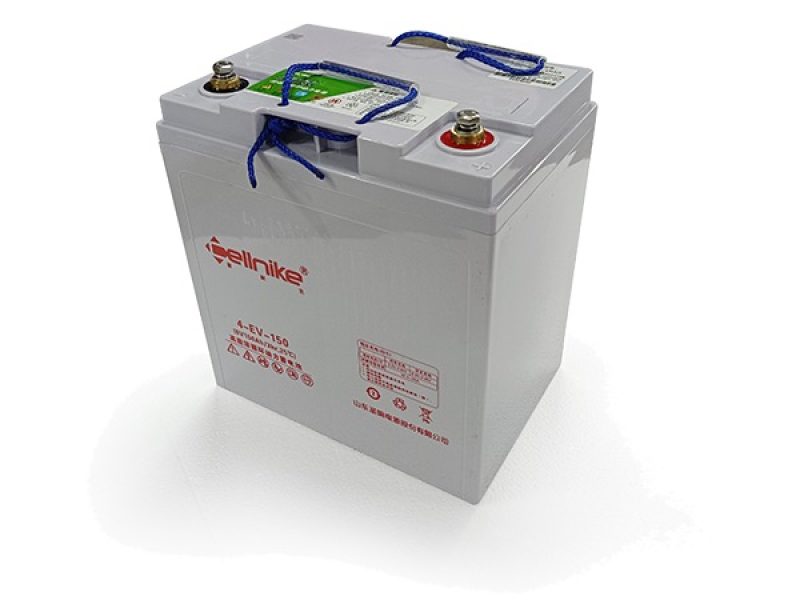
A battery quotation should identify chemistry, nominal voltage, rated capacity, usable-energy limits, BMS functions, and compatible charging equipment.
Ask for model-specific evidence covering:
- Continuous and peak discharge limits.
- Temperature protections and charging restrictions.
- Battery and cell traceability.
- Charger communication or matching requirements.
- Diagnostic access and fault-code documentation.
- Warranty capacity-retention conditions.
For transport documentation, obtain the relevant UN 38.3 test summary and ensure it corresponds to the supplied battery type. Intertek explains that test summaries must be available from the shipper upon request; UN 38.3 testing addresses transport-related battery safety, not the vehicle’s complete operating suitability.
Separate Factory Certification from Vehicle Compliance
ISO 9001 concerns the organization’s quality-management system. It should not be treated as proof that a particular golf cart can be registered for road use.
Likewise, CE marking is not a universal vehicle approval. European guidance makes clear that CE obligations depend on applicable legislation, and not all products require CE marking. Buyers need the relevant conformity assessment, declaration, and technical evidence—not merely a certificate image.
RoHS also requires a scope assessment. European Commission guidance discusses exclusions for means of transport, so a blanket “RoHS-certified golf cart” statement can obscure whether the claim concerns the complete vehicle or particular electrical equipment.
For U.S. road-use projects, review the applicable federal low-speed vehicle requirements under FMVSS No. 500 separately from local registration and operating rules. A vehicle advertised as “street legal” should not be accepted without examining the specific configuration and supporting documentation.
An Overlooked Procurement Trap: The Same Model Name Can Hide a Different Build
A particularly important purchasing control is to prevent the approved sample from becoming only a visual reference.
The risk scenario is straightforward: the production cart retains the same model name and appearance, but uses a different battery, controller, charger, brake assembly, or electrical harness. Even where headline specifications appear unchanged, the buyer may receive a different service and performance configuration.
This guide does not attribute that practice to any manufacturer listed. It is a risk that buyers should address contractually.
Create a controlled bill of materials covering:
- Battery and BMS models.
- Motor and controller part numbers.
- Charger model and firmware where relevant.
- Brake and steering components.
- Tire specifications and load ratings.
- Wiring-harness revision.
- Structural materials and drawing revisions.
Attach a written substitution rule: no changes without prior buyer approval.
Then inspect production vehicles against both the approved sample and the controlled documentation. A photograph of a familiar body shape is not proof of configuration consistency.
Factory Verification, Sampling, and Shipping
Verify the Actual Manufacturing Operation
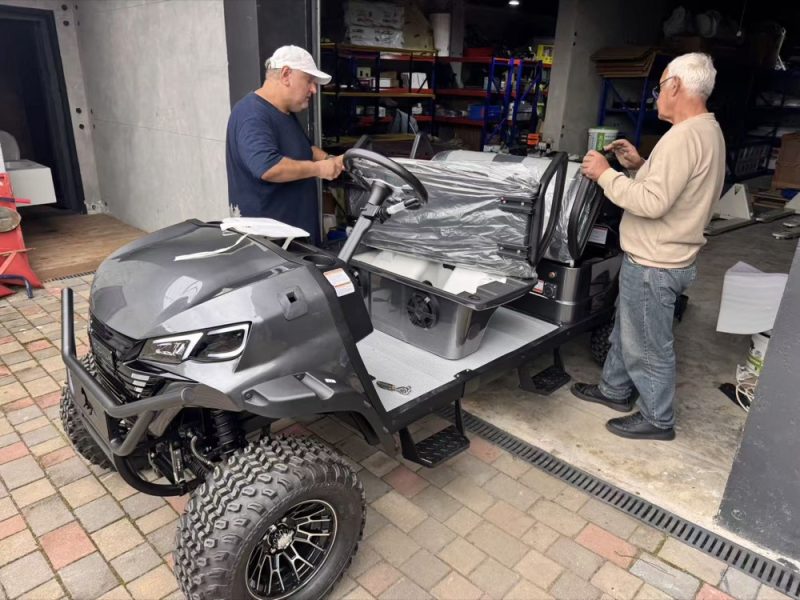
Request a live factory walkthrough or commission an independent audit. Trace a vehicle through material receiving, fabrication where applicable, assembly, testing, and packing.
The audit should identify:
- Which processes are internal and which are outsourced.
- Who releases incoming components.
- How vehicle serial numbers connect to build records.
- How defects are recorded and closed.
- Whether test equipment is maintained and controlled.
- Who approves engineering changes.
Production capacity should be discussed alongside current order loading, material commitments, and model mix. A factory’s theoretical maximum does not establish the delivery slot available to a new customer.
Approve a Production-Representative Sample
The sample should use the intended production components and configuration. Ask the supplier to document any prototype-only parts.
An acceptance plan should include loaded operation, braking, parking-brake holding, charging behavior, warning functions, assembly quality, and the agreed range or duty-cycle test.
Record the conditions. A range result without payload, speed, route, temperature, and stopping pattern is difficult to compare meaningfully.
After approval, retain the sample specification, photographs, component identifiers, and signed deviation list.
Calculate Landed Cost Before Finalizing the Supplier
For U.S. buyers, this is a major commercial issue. The United States issued antidumping and countervailing duty orders on certain low-speed personal transportation vehicles from China in August 2025. The published scope includes covered vehicles in assembled or unassembled form and certain subassemblies; shipping in kits does not automatically remove exposure.
Have a customs specialist review the written scope, manufacturer/exporter combination, current cash-deposit requirements, and entry-date treatment before placing an order. Do not rely on a supplier’s broad assurance that a product is “off-road,” “unfinished,” or “shipped without batteries.”
For other destinations, obtain the same discipline around classification, duties, product approval, and importer responsibilities.
Agree on Packing and Handover Responsibilities
Before production release, approve the loading plan, vehicle dimensions, packing method, restraint points, accessory inventory, and damage-reporting procedure.
For lithium-powered vehicles, provide the freight forwarder with the battery documentation and shipment configuration early enough to confirm carrier acceptance and required transport arrangements. Battery transport testing and documentation are distinct from the vehicle’s sales specification.
Compare fully assembled and partially disassembled delivery using total cost, including unloading, assembly labor, inspection, missing-part risk, and local commissioning.
Conclusion: Choose a Manufacturing Partner, Not Just a Cart
China offers a varied electric golf cart supplier base, from broad vehicle manufacturers to companies emphasizing particular platforms, styling approaches, or customization programs. The manufacturers reviewed here illustrate those different sourcing options.
The strongest purchasing decision is the one supported by an approved specification, traceable components, credible test evidence, realistic delivery commitments, and workable after-sales arrangements.
Guangzhou BorCart is a relevant starting point for brands seeking an OEM/ODM discussion supported by sample ordering, in-house component production, and application-specific customization. Its public profile provides a basis for evaluation, while final suitability should be established through document review, a production-representative sample, and a clearly defined commercial agreement.
Send BorCart your target market, seating and payload requirements, operating conditions, preferred battery configuration, customization brief, and expected order volume. Request a configuration-specific quotation, applicable documentation, sample plan, and spare-parts proposal before committing to production.
FAQs
1. How can I verify whether a factory’s ISO certificate is expired, suspended, or unrelated to its production site?
Request a legible certificate showing the legal entity, site address, certificate number, standard, scope, issue date, and expiry date.
Verify it with the issuing certification body using independently obtained contact information. Ask specifically whether the certificate remains active and whether its scope covers the relevant manufacturing activity and location.
Do not rely on the expiry date alone. Scope, entity, site coverage, and ongoing surveillance matter as well; official European procurement guidance similarly distinguishes valid certification, relevant scope, and evidence of ongoing compliance.
2. Is a CE certificate sufficient to import an electric golf cart into Europe?
No single generic “CE certificate” answers that question.
First establish the vehicle’s intended use and legal classification. Then identify the applicable legislation and obtain the correct documentation for the vehicle and relevant equipment.
European Commission guidance warns that voluntary or additional certificates are not a recognized substitute for the prescribed conformity-assessment process. CE marking also should not be confused with public-road registration approval.
3. How can I compare battery warranties when two suppliers both offer five years?
Convert the headline duration into a written comparison.
Ask each supplier to define:
- Time, cycle, or energy-throughput limits.
- Minimum retained capacity.
- Required operating and charging conditions.
- Required maintenance or diagnostic records.
- Whether labor and international freight are covered.
- Whether remedies involve repair, replacement, or prorated credit.
Also establish who decides the cause of failure and what evidence the buyer must provide. Two warranties with the same duration may allocate costs and responsibilities very differently.
4. Can shipping carts as SKD or CKD kits reduce U.S. trade-remedy duties?
Do not assume that it can.
The relevant U.S. scope covers certain vehicles whether assembled or unassembled and includes certain subassemblies. It also addresses specified components and certification requirements. Packaging format alone is therefore not a safe basis for a duty-avoidance assumption.
Obtain a qualified scope assessment before restructuring a shipment. Evaluate origin and classification based on the actual goods and applicable rules, not the wording of a sales invoice.
5. How should I protect my investment in a customized golf-cart design?
Use a development agreement that separates ownership, approval, and production rights.
Define:
- Ownership of drawings, tooling, molds, and software deliverables.
- Design-approval milestones.
- Prototype and production acceptance requirements.
- Tooling storage and maintenance responsibilities.
- Permitted use of the design.
- Treatment of engineering changes and component obsolescence.
- Access to spare parts and technical documentation after the commercial relationship ends.
For deeper customization, obtain legal review appropriate to the contracting entities and enforcement jurisdiction. Avoid assuming that paying a development charge automatically transfers every intellectual-property right.
References
1. Mordor Intelligence – “China Golf Cart Market Size & Share Analysis, 2026–2031” – https://www.mordorintelligence.com/industry-reports/china-golf-cart-market
2. Grand View Research – “Golf Cart Market Size, Share & Growth Report, 2025–2033” – https://www.grandviewresearch.com/industry-analysis/golf-cart-market-report
3. U.S. International Trade Commission – “2025 final injury determination concerning low-speed personal transportation vehicles from China” – https://www.usitc.gov/press_room/news_release/2025/er0717_67310.htm
4. U.S. Federal Register – “August 2025 antidumping and countervailing duty orders” – https://www.federalregister.gov/documents/2025/08/12/2025-15244/certain-low-speed-personal-transportation-vehicles-from-the-peoples-republic-of-china-amended-final
5. U.S. Federal Register – “Product-scope language covering vehicles, unassembled goods, and specified subassemblies” – https://www.federalregister.gov/documents/2025/06/23/2025-11428/certain-low-speed-personal-transportation-vehicles-from-the-peoples-republic-of-china-final
6. Electronic Code of Federal Regulations – “FMVSS No. 500, Low-Speed Vehicles” – https://www.ecfr.gov/current/title-49/subtitle-B/chapter-V/part-571/subpart-B/section-571.500
7. European Commission – “Conformity-assessment and voluntary-certificate guidance” – https://single-market-economy.ec.europa.eu/sectors/electrical-and-electronic-engineering-industries-eei/low-voltage-directive-lvd_en
8. European Commission – “RoHS guidance and transport-related exclusions” – https://environment.ec.europa.eu/system/files/2021-01/FAQ%20key%20guidance%20document%20-%20RoHS.pdf | https://environment.ec.europa.eu/topics/waste-and-recycling/rohs-directive_en
9. Intertek – “UN 38.3 lithium-battery testing and test-summary requirements” – https://www.intertek.com/batteries/un-38-3-testing/
10. Guangzhou BorCart – “Company profile and OEM/ODM capabilities” – https://www.borcart.com/aboutus.html
11. Lvtong – “Official English company website” – https://en.lvtong.com.cn/
12. Marshell – “Company profile” – https://www.marshell.net/CompanyProfile/
13. Suzhou Eagle – “Official manufacturer website” – https://www.eagle-ev.com/
14. HDK – “Company profile and technical-document library” – https://m.hdkexpress.com/ | https://www.hdkexpress.com/support/brochuretechnical-document-download/
15. EXCAR – “Company profile and factory information” – https://www.excar.com.cn/aboutus.html | https://www.excar.com.cn/factory.html
16. Yatian – “Official website and published manufacturing profile” – https://gdyatianindustrial.en.made-in-china.com/ | https://www.gdyatian.com/
17. CENGO – “Official company website” – https://www.cengocar.com/
18. Lexsong – “Company history and product capabilities” – https://www.lexsong-ev.com/ | https://www.lexsong-ev.com/about-us
19. Aoxiang – “Official company profile” – http://www.chinagolfcarts.com/2024/09/23/about-aoxiang/
Hot Tags: Electric Golf Cart, Electric Golf Cart Manufacturers, Golf Cart Manufacturers In China, Electric Golf Cart Suppliers, Wholesale Electric Golf Carts, OEM Golf Cart Manufacturer, Custom Electric Golf Carts, Lithium Battery Golf Carts, Commercial Electric Golf Carts, Electric Utility Vehicles