
Content Menu
● What Does Golf Cart Rear Seat Compatibility Actually Mean?
● 1. Identify the Exact Vehicle Before Choosing a Seat Kit
>> Record the Model, Serial Number, and Production Details
>> Request Written Fitment Confirmation
● 2. Measure the Golf Cart Rear Seat Mounting Points
>> Use This Pre-Installation Measurement Checklist
● 3. Separate Rear Seat Capacity From Vehicle Payload
>> Check Passenger and Cargo Ratings Separately
● 4. Check Suspension, Brakes, Tires, and Weight Distribution
● 5. Evaluate Rear Seat Kit Quality Beyond the Upholstery
>> Inspect the Frame, Coating, and Fasteners
>> Assess Cushions, Hinges, and Passenger Supports
● 6. Dry-Fit the Kit Before Final Assembly
>> Follow a Controlled Verification Sequence
● 7. Create a Compatibility Record for Fleet and OEM Orders
>> Approve a Representative Sample First
>> Investigate Repeated Quality Problems
● 8. Confirm Warranty and Intended Use Before Installation
● Plan Your Rear Seat Configuration With BorCart
>> 1. Are golf cart rear seat kits universal?
>> 2. Can I convert any two-seater golf cart into a four-seater?
>> 3. Do rear seat kits always require heavy-duty springs?
>> 4. What should I do if the mounting holes do not line up?
>> 5. Is a rear seat’s weight rating the same as the cart’s payload?
>> 6. Can a flip-seat cargo deck carry passengers?
>> 7. What documents should a commercial buyer request?
To verify golf cart seat kit compatibility before installing a rear seat, confirm the vehicle’s exact identity, match the kit’s mounting system, and check the approved passenger configuration and load limits. A rear seat that looks right—or even bolts into place—is not automatically suitable for carrying passengers.
For owners, an incompatible kit can mean wasted money, rattles, corrosion, or expensive rework. For dealers and fleet buyers, the same mistake can affect multiple vehicles.
At Guangzhou BorCart Electric Vehicle Co., Ltd., our manufacturing perspective is straightforward: evaluate a rear seat as part of the vehicle, not as an isolated accessory. Drawing on our company’s 26-year industry background, this guide explains a practical verification process without assuming that one kit fits every cart.

What Does Golf Cart Rear Seat Compatibility Actually Mean?
Compatibility has three separate layers:
- Physical fit: brackets, mounting holes, supports, and clearances match.
- Vehicle suitability: the chassis and approved configuration support the intended passenger use.
- Operational suitability: entry, braking, handling, maintenance access, and the working environment remain acceptable.
A listing that says “fits most golf carts” does not answer all three questions.
Likewise, fitting replacement cushions to an existing rear seat is different from converting a two-passenger cart into a four-passenger vehicle. The conversion requires assessment of the complete structure and vehicle configuration.
My recommended starting question is not “Will this seat fit?” It is “What evidence confirms this kit is appropriate for this exact vehicle?”
1. Identify the Exact Vehicle Before Choosing a Seat Kit
Record the Model, Serial Number, and Production Details
Start with the identification label and the vehicle’s documentation. Do not rely only on body styling, color, or the seller’s description.
Record:
- Manufacturer and exact model.
- Serial number and production date, where available.
- Electric or gasoline powertrain.
- Original passenger configuration.
- Existing suspension, tire, and battery modifications.
- Previous body or chassis repairs.
Model names matter. Accessory manufacturers publish separate rear-seat instructions and part numbers for platforms such as Club Car DS and Precedent, E-Z-GO TXT and RXV, and Yamaha Drive.
Treat visually similar vehicles as different until the supplier confirms otherwise.
Request Written Fitment Confirmation
Send the supplier identification-label photos and clear pictures of the rear chassis, roof supports, and existing bagwell or cargo area.
Ask for written confirmation of:
- The complete kit part number.
- Applicable models and production ranges.
- Required adapters or additional brackets.
- Required supporting upgrades.
- Any excluded configurations.
For a BorCart vehicle, provide the exact vehicle details rather than assuming that a kit advertised for another brand will fit.
2. Measure the Golf Cart Rear Seat Mounting Points
A product photograph cannot confirm mounting geometry. Request a dimensioned installation drawing and compare it with the actual cart.
Park on level ground and follow the vehicle manufacturer’s servicing precautions before inspecting underneath or removing components. Electrical isolation procedures differ between vehicles.
Use This Pre-Installation Measurement Checklist
| Checkpoint | What to verify | Warning sign |
|---|---|---|
| Main mounting holes | Center-to-center spacing and hole diameter | Bolts require forced alignment |
| Support brackets | Shape, orientation, and contact surfaces | Brackets sit against unsupported plastic |
| Rear chassis | Condition and approved attachment locations | Cracks, corrosion, or previous repairs |
| Roof supports | Compatibility with the kit’s arrangement | Unsupported canopy or improvised extensions |
| Foot platform | Position, support, and operating clearance | Contact with tires or moving components |
| Seat envelope | Width, backrest position, and entry space | Obstructed access or body interference |
| Service access | Battery, charger, controller, and inspection access | Routine maintenance becomes inaccessible |
Record units consistently. A drawing in millimeters and measurements taken in inches can create avoidable ordering errors.
Do not establish your own universal fitment tolerance. Use the kit manufacturer’s specified dimensions and acceptance criteria.
Do Not Force a Mismatch
Unless expressly required by approved instructions, do not enlarge holes, bend brackets, stack improvised spacers, or drill structural members to make a kit fit.
Those changes can conceal an incorrect kit or create an unassessed attachment arrangement.
If the hardware will not align as instructed, stop and resolve the discrepancy before proceeding.
3. Separate Rear Seat Capacity From Vehicle Payload
Load capacity is one of the most important—and most misunderstood—compatibility checks.
A rear-seat rating does not automatically increase the vehicle’s permitted load or approved passenger count.
Depending on the manufacturer’s definitions, the allowable load must account for occupants, luggage, tools, and added accessories. The installed kit also adds weight.
Build a Simple Load Budget
Consider this hypothetical screening example:
| Item | Assumed weight |
|---|---|
| Four occupants | 320 kg |
| Added rear-seat assembly | 35 kg |
| Bags and equipment | 20 kg |
| Combined weight to account for | 375 kg |
These are illustrative assumptions, not BorCart specifications or approval limits.
Compare the proposed configuration with the vehicle manufacturer’s definitions and limits. If the published payload already includes certain factory equipment, do not count that equipment twice.
Where specified, also verify axle and tire limits. An acceptable total weight does not prove acceptable weight distribution.
Check Passenger and Cargo Ratings Separately
A flip-down rear seat may have different conditions or ratings for passenger use and cargo-platform use.
For example, Club Car publishes a fold-down rear-seat cargo capacity of 300 lb (136 kg) for its Villager 6. That figure is specific to that vehicle and function; it is not a universal rear-seat passenger rating.
Never transfer another model’s rating to your cart.
4. Check Suspension, Brakes, Tires, and Weight Distribution
Adding rear passengers changes the vehicle’s loading arrangement. A cart that feels acceptable when empty may behave differently when occupied.
Have a qualified technician assess:
- Rear springs and shock absorbers.
- Chassis and mounting-point condition.
- Tire condition, specifications, and approved pressures.
- Service-brake and parking-brake operation.
- Loaded clearance around tires and suspension components.
- Compatibility with existing lift kits or larger tires.
Heavy-duty springs may be required for a particular approved configuration. However, installing stronger springs alone does not establish a higher vehicle payload or passenger rating.
Battery conversions also deserve attention. A change from the original battery configuration can alter vehicle mass and weight distribution. Tell the supplier about such changes before requesting fitment approval.
Manufacturer warnings about modifications affecting stability and handling should be treated as operating constraints, not paperwork.
5. Evaluate Rear Seat Kit Quality Beyond the Upholstery
Attractive stitching can hide weak documentation or poorly matched hardware. Assess structural quality and serviceability before choosing colors.
Inspect the Frame, Coating, and Fasteners
Request material specifications, assembly instructions, and warranty terms.
During incoming inspection, check for:
- Bent or distorted brackets.
- Visible cracks or questionable weld areas.
- Missing coating around edges and attachment points.
- Damaged threads or unidentified hardware.
- Missing washers, spacers, or locking components.
- Sharp edges near passenger contact areas.
Visible inspection is a screening step, not proof of structural strength.
For coastal resorts, humid locations, or vehicles washed frequently, ask what corrosion protection is provided and whether supporting test documentation exists. Avoid accepting “rustproof” as a substitute for a defined specification.
Assess Cushions, Hinges, and Passenger Supports
Ask about upholstery suitability, cleaning requirements, cushion-base materials, and replacement availability.
For folding kits, verify that the conversion mechanism operates as intended and that any specified retaining devices engage correctly.
Confirm that the footrest, handholds, and armrests belong to the approved assembly. A visually compatible accessory may not share the same mounting requirements.
Where restraints are required or provided, use the specified belts and anchorage arrangement. Do not assume that a generic bracket creates an approved restraint installation.
6. Dry-Fit the Kit Before Final Assembly
A dry fit helps reveal missing components and interference before upholstery and trim conceal the mounting areas.
It does not replace manufacturer approval or the installation manual.
Follow a Controlled Verification Sequence
- Match delivered parts against the bill of materials.
- Confirm the kit number and instruction revision.
- Inspect the vehicle’s attachment points.
- Position components in the prescribed sequence.
- Check alignment without forcing parts.
- Verify service access and operating clearances.
- Tighten hardware using the specified sequence and torque.
- Record discrepancies before releasing the vehicle.
Never substitute a generic torque value for the kit’s instructions. Fastener size, grade, joint design, and installation conditions matter.
If instructions are missing or contradictory, obtain clarification rather than improvising.
After installation, arrange the prescribed checks and a controlled evaluation by a qualified technician. Do not use passengers as test loads for an unapproved conversion.
Stop if there is unexpected movement, rubbing, instability, abnormal braking, or persistent noise.
7. Create a Compatibility Record for Fleet and OEM Orders
For distributors and fleet operators, confirming one sample is only the beginning. Production consistency matters just as much as initial fit.
Approve a Representative Sample First
Before ordering multiple golf cart rear seat kits, approve a sample on the exact target configuration.
Create a record containing:
- Vehicle model and relevant serial-number range.
- Kit part number and drawing revision.
- Approved brackets and hardware.
- Installation instructions and torque requirements.
- Passenger and cargo limitations.
- Inspection photographs and sign-off.
- Spare-parts identification and warranty terms.
Make approval configuration-specific. A sample fitted to one chassis version does not automatically validate every vehicle in a mixed fleet.
Investigate Repeated Quality Problems
Loose hardware or rattling is not always simply an installation error. Possible causes include incorrect spacers, mismatched brackets, damaged threads, or inconsistent components.
Record the location and operating conditions instead of repeatedly tightening the same joint without diagnosis.
For OEM/ODM projects, agree on how component changes will be communicated and approved. Traceable part revisions make replacement ordering and future troubleshooting more reliable.
8. Confirm Warranty and Intended Use Before Installation
Check whether the proposed conversion is approved and how it affects applicable warranty coverage. Terms vary; avoid assuming that every modification either preserves or cancels all coverage.
Also distinguish private-site transport from public-road operation. Adding seats, belts, or lights does not by itself establish road-use approval.
For hotels, golf courses, campuses, and agricultural properties, assess the intended routes, slopes, surfaces, and passenger-management procedures.
A compatible seat kit still needs a suitable operating environment.
Plan Your Rear Seat Configuration With BorCart
Guangzhou BorCart Electric Vehicle Co., Ltd. develops and manufactures electric golf carts and multifunctional electric transport vehicles, with flexible OEM/ODM customization.
Before purchasing a rear-seat kit or specifying a new fleet, send BorCart your vehicle identification, chassis photographs, intended passenger count, estimated loads, and operating conditions.
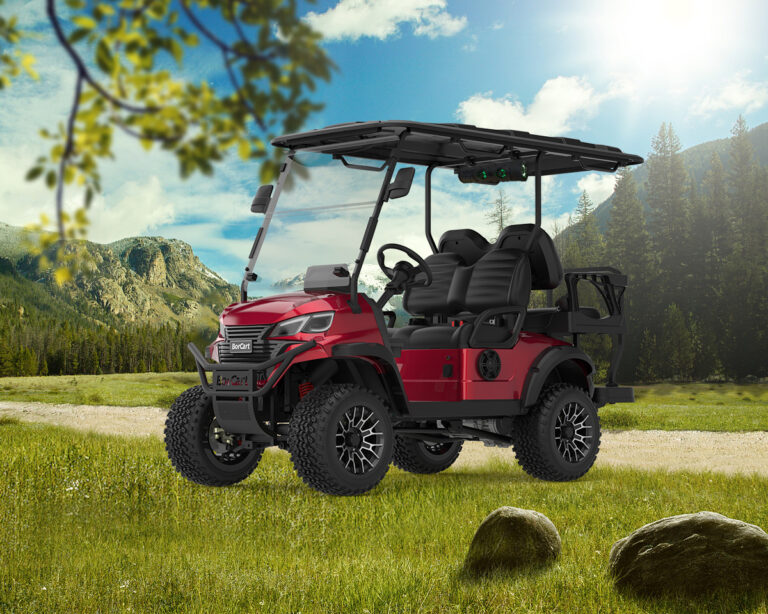
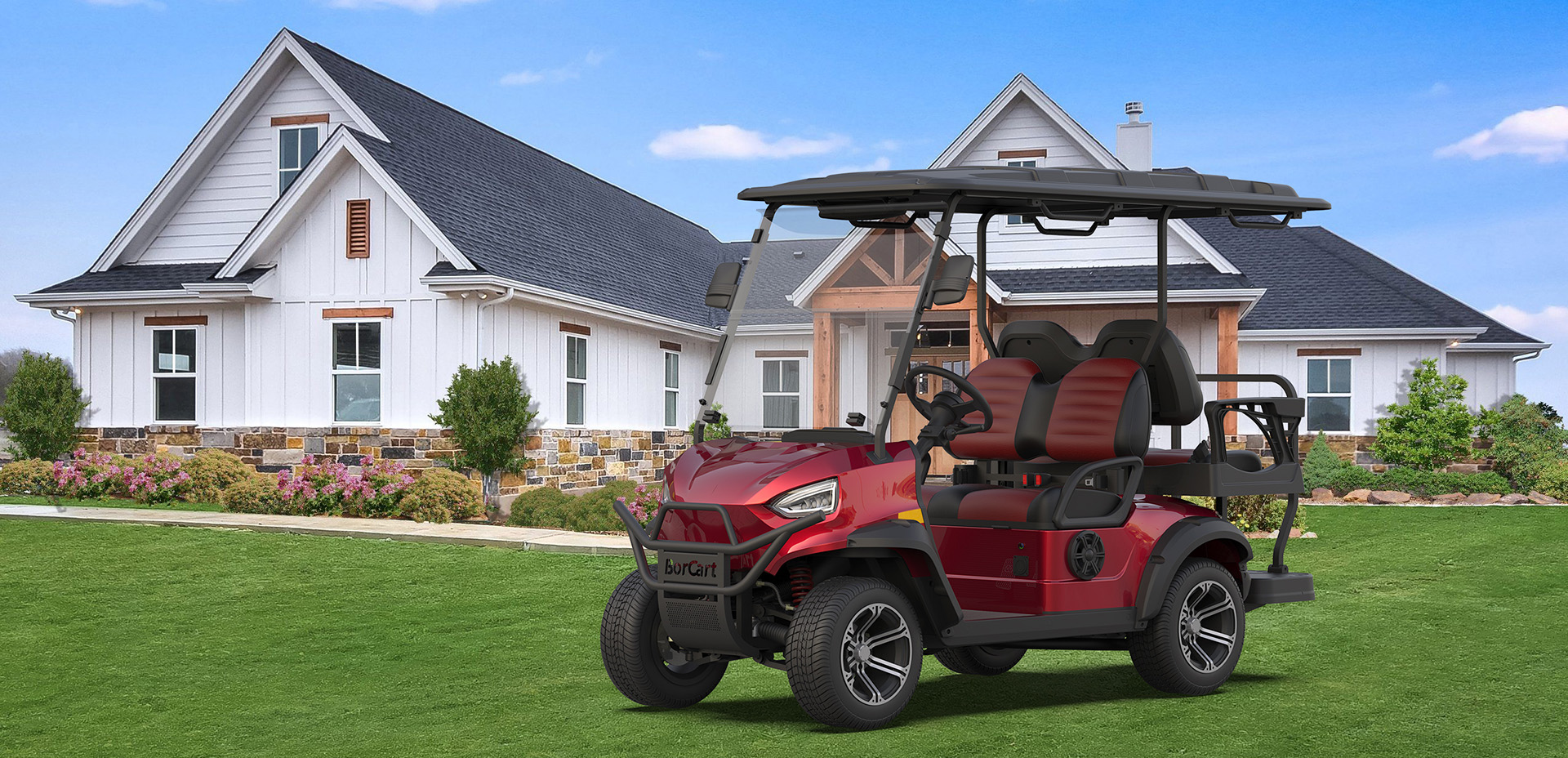
Ask for a model-specific review of the seating arrangement and supporting vehicle configuration. For new orders, discuss a factory-engineered passenger layout rather than leaving the conversion until after delivery.
Clear specifications before purchase help prevent fitment disputes, incomplete installations, and avoidable quality problems.
Frequently Asked Questions
1. Are golf cart rear seat kits universal?
No. Some assemblies share components, but brackets, supports, and installation requirements differ. Confirm the exact kit against the vehicle model, production details, and existing modifications.
2. Can I convert any two-seater golf cart into a four-seater?
Do not assume so. The chassis, approved passenger configuration, load limits, suspension, brakes, and mounting arrangement must support the conversion. Obtain model-specific confirmation first.
3. Do rear seat kits always require heavy-duty springs?
No. Requirements depend on the vehicle and approved configuration. Stronger springs do not independently increase the cart’s permitted payload or resolve every handling issue.
4. What should I do if the mounting holes do not line up?
Stop installation. Recheck vehicle identification, kit number, bracket orientation, and instructions. Do not force alignment or modify structural attachment points without an approved procedure.
5. Is a rear seat’s weight rating the same as the cart’s payload?
No. The seat assembly rating, cargo-platform rating, vehicle payload, and approved passenger count describe different limits. All applicable restrictions must be satisfied.
6. Can a flip-seat cargo deck carry passengers?
Only in the manufacturer-approved passenger configuration. Do not treat the unfolded cargo platform as a passenger seat, and follow its separate cargo limitations.
7. What documents should a commercial buyer request?
Request written fitment confirmation, dimensioned drawings, installation instructions, load limitations, hardware specifications, warranty terms, and replacement-parts information. For volume orders, retain an approved sample record.
References
1. MadJax – “Seating Manuals” – Model-specific rear-seat kit listings and installation-document identification for Club Car, E-Z-GO, Yamaha, and other platforms. https://madjax.com/product-support/seating-manuals/
2. MadJax / Nivel Parts and Manufacturing – “XSeries Owner’s Guide” – Issued November 2022, Part No. 27-012. Relevant sections: vehicle specifications; safety precautions, pages 9–11; pre-operation checks, page 13; maintenance, page 26; and warranty information, pages 36 onward. Used for modification warnings, passenger limitations, servicing precautions, and maintenance principles—not as a universal specification for other vehicles. https://madjax.com/wp-content/uploads/2023/01/MadJax-XSeries-Owners-Manual_v5.pdf
3. Club Car – “Villager 6 — Full Specifications” – Source for the model-specific 300 lb (136 kg) fold-down rear-seat cargo capacity example. https://www.clubcar.com/en-us/commercial/transport/villager-6/specifications
4. Club Car – “Select Rear Seat Kit” – Manufacturer description of a rear-seat assembly that converts into a cargo platform. https://www.clubcar.com/en/club-car-accessories/personal-golf-cart-accessories/golf-cart-rear-seat-kit-with-fold-out-flat-bed
5. Club Car – “Custom Solutions” – Manufacturer context for application-specific vehicle configurations and the dependence of road-use suitability on equipment and applicable requirements. https://www.clubcar.com/en-us/custom-solutions
Hot Tags: Golf Cart Seat Kits, Golf Cart Rear Seat Kits, Golf Cart Seat Kit Compatibility, Golf Cart Rear Seat Kit Manufacturer, Wholesale Golf Cart Seat Kits, OEM Golf Cart Seats, Custom Golf Cart Seats, Golf Cart Seat Kit Supplier, Golf Cart Flip Seat Kits, Golf Cart Replacement Seats